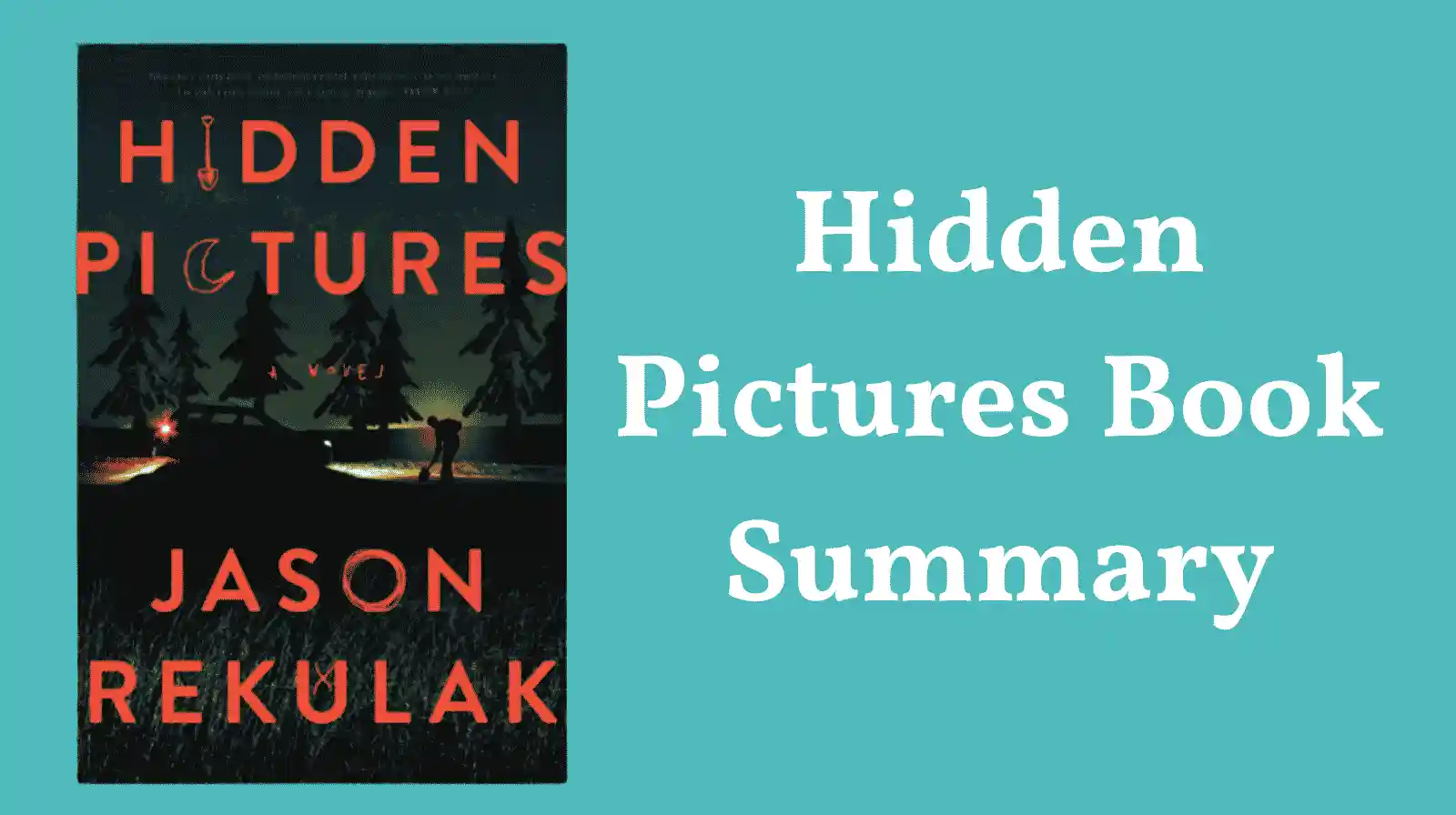
Hidden Pictures is about Mallory Quinn, a 23-year-old woman fresh out of rehab who takes a nanny job and finds herself pulled into a strange mystery through a child’s drawings. The main idea is that the past rarely stays buried when fear, guilt, and truth start to press against daily life. It is best for readers who enjoy supernatural thrillers, haunted-house tension, and mystery plots with pictures inside the story. It is worth reading if you like fast suspense, but the ending may divide readers.
Quick book details
| Detail | Information |
|---|---|
| Title | Hidden Pictures |
| Author | Jason Rekulak |
| Published | May 10, 2022 |
| Genre | Supernatural thriller, horror, mystery |
| Main topic | A nanny, a child’s disturbing drawings, and a long-buried mystery |
| Best for | Readers who like creepy thrillers with strong pacing |
| Main message | Truth can hide under comfort, status, and fear |
| Reading difficulty | Easy to moderate |
| Recommended? | Yes, for thriller readers who like spooky clues and twists |
Hidden Pictures was published by Flatiron Books, and the official publisher page lists it as a thriller with 384 pages. Jason Rekulak’s own page says the book has illustrations by Will Staehle and Doogie Horner, which matters because the drawings are a real part of the reading experience.
What is Hidden Pictures about?
Hidden Pictures follows Mallory Quinn, who is trying to rebuild her life after rehab. She gets a job in Spring Brook, New Jersey, caring for Teddy Maxwell, a quiet 5-year-old boy who loves to draw.
At first, the job feels stable. Mallory has a place to live, steady work, and a reason to stay sober. Teddy seems sweet, and his drawings seem normal.
Then the drawings change. Teddy starts making dark pictures that look too detailed for a child his age. Mallory begins to think the images may connect to a long-unsolved death on the property.
Readers search for a hidden pictures book summary because the novel has a strong hook. They want to know if it is scary, if it has major twists, and if the pictures make the book more interesting.
The book is popular because it is easy to read and hard to pause. It mixes nanny suspense, possible ghosts, family secrets, addiction recovery, and visual clues.
Hidden Pictures summary
Mallory starts the novel in a fragile but hopeful place. She has been sober and wants a clean start. The nanny job with Ted and Caroline Maxwell seems like the right next step.
The Maxwells look polished and safe. Their son Teddy is shy, bright, and attached to his sketchbook. Mallory builds a real bond with him, which makes the strange drawings harder to ignore.
The middle of the book turns the home into a place full of quiet fear. Teddy’s pictures begin to show scenes that suggest violence, death, and hidden history. Mallory questions what she sees because her past makes others doubt her.
The final part pushes Mallory to act. She follows clues from the drawings, asks hard questions, and risks her new life to protect Teddy. The ending gives answers, but it also asks readers to decide how they feel about the book’s final choices.
This hidden pictures book summary stays spoiler-light. The ending is a major part of the novel’s effect, and the full book works best when the final reveal lands on the page.
Chapter-by-chapter summary of Hidden Pictures
Verified chapter titles are not needed to understand the book. The story generally moves through these main ideas.
Main idea 1: Mallory gets a second chance
Mallory begins the story after rehab. She wants work, peace, and a reason to trust herself again.
This part matters because her past shapes how people treat her. When strange things happen, her history makes her easy to doubt.
Practical takeaway: a person’s past can explain their fear, but it should not erase their voice.
Main idea 2: Teddy’s drawings turn strange
Teddy’s early drawings seem harmless. Soon, the pictures become darker and more skilled than anyone expects from a young child.
This part gives the book its best hook. The drawings make the mystery feel physical because readers can see what Mallory sees.
Practical takeaway: small details often matter most when something feels wrong.
Main idea 3: Mallory questions her own mind
Mallory wants to believe there is a normal answer. She also knows people may blame her past if she sounds unstable.
This part adds pressure. Mallory has to decide whether to trust her fear, even when others may dismiss it.
Practical takeaway: self-doubt can keep you safe, but it can also keep you silent.
Main idea 4: The house hides more than it shows
The Maxwell home looks calm from the outside. As Mallory learns more, the safe setting starts to feel false.
This part gives the book its mystery shape. The danger is tied to family, money, image, and old secrets.
Practical takeaway: comfort and safety are different things.
Main idea 5: The drawings point toward the truth
Mallory starts to treat the pictures as clues. She looks for patterns and tries to understand what Teddy may be showing her.
This part works well because the book lets the art carry part of the plot. The pictures do more than decorate the story.
Practical takeaway: when facts are missing, patterns can still guide you.
Main idea 6: The ending changes the meaning of the mystery
The ending explains what has been happening around Teddy and the drawings. It changes how readers see earlier scenes.
Some readers enjoy the final twist. Others find it too neat or uncomfortable. My read is that the ending is bold, but it asks for patience.
Practical takeaway: a strong twist should answer questions without making earlier fears feel cheap.
Key takeaways from Hidden Pictures
1. Trust your instincts when something feels wrong
Mallory often senses danger before she has proof. Her fear is not always clean or easy to explain, but it pushes her to keep looking.
For example, if you’re trying to protect someone at work or home, this idea means you should write down patterns. Facts are easier to explain than feelings.
2. A clean image can hide ugly truth
The Maxwells seem stable, rich, and normal. The book uses that image to create tension.
For example, if a person or family looks perfect online, this idea means you should still pay attention to behavior. Manners can hide control.
3. Recovery needs structure and belief
Mallory’s sobriety is part of the plot. Her job, running, and routine help her stay steady.
For example, if you’re rebuilding after a hard season, this idea means you need habits that protect you when stress rises.
4. Children can notice what adults ignore
Teddy’s drawings make the story move. He cannot explain everything in plain words, but his pictures carry meaning.
For example, if a child keeps repeating the same fear, this idea means adults should listen with care. Dismissal can miss real danger.
5. Fear can be useful when it leads to action
The book has plenty of creepy scenes. The stronger point is how Mallory acts under pressure.
For example, if you’re scared of a hard truth, this idea means you should take one safe step. Ask a question. Save proof. Call someone you trust.
6. The past can return through small signs
The mystery grows through drawings, names, memories, and old stories. None of these clues looks complete alone.
For example, if you’re trying to understand a family secret, this idea means you should look at repeated details. People often reveal truth in pieces.
7. A thriller can use pictures to build fear
The illustrations make Hidden Pictures feel different from many adult thrillers. They let the reader share Mallory’s unease.
For example, if you enjoy visual storytelling, this idea means the print or ebook experience may matter more than usual.
Main themes in Hidden Pictures
Recovery
Mallory’s sobriety gives the story emotional weight. She is trying to prove herself, but she also needs people to see her as more than her past.
Trust
The book keeps asking who deserves trust. Mallory doubts herself, others doubt her, and the Maxwells control what they want people to see.
Fear
Fear drives much of the plot. The best parts of the book use quiet fear, strange drawings, and tense conversations.
Class and image
The Maxwell family lives in a world of money, status, and polished surfaces. The book uses that setting to show how power can protect secrets.
Truth
The mystery depends on buried truth. Mallory’s role is to follow the clues until the safe version of the story breaks.
Best ideas from the book
Pictures can say what words cannot
Teddy’s drawings make the mystery strange and personal. They give Mallory evidence that feels impossible to ignore.
This matters because the book is strongest when it lets images carry fear. The limit is that some readers may want more realism in how the clues work.
A flawed narrator can still be right
Mallory has a difficult past, and the story uses that to create doubt. Her weakness does not make her useless.
This matters because many thrillers use damaged narrators. Here, Mallory’s past adds pressure because she knows how easily people can stop believing her.
Safety can be a performance
The Maxwell home looks safe. The neighborhood looks safe. The parents look careful and polite.
This matters because the book warns readers to look at actions, not just appearances. The limit is that some parts of the plot are built for shock more than realism.
Recovery is active work
Mallory runs, works, follows rules, and tries to stay grounded. The book does not treat recovery as one clean moment.
This matters because her sobriety gives the thriller a human center. Her fight is not only against the mystery. She is also fighting for her future.
The best clue is often the one people dismiss
Teddy is a child, and his drawings seem easy to explain away. Mallory keeps watching because the details do not fit.
This matters because the book rewards attention. Readers who enjoy clue-based suspense will likely enjoy that part.
Best quotes from Hidden Pictures
I am skipping direct quotes from the novel because I do not want to include unverified lines. Here are the memorable ideas instead.
Memorable idea 1: Some drawings are warnings
Teddy’s art is the book’s main signal. The pictures tell Mallory that something hidden wants to be found.
Memorable idea 2: The past does not stay quiet forever
The mystery depends on old choices returning. Secrets may sleep, but they still shape the present.
Memorable idea 3: People deserve to be believed beyond their worst years
Mallory’s past makes her easy to judge. The story asks readers to watch what she does now.
Hidden Pictures review: is it worth reading?
Hidden Pictures is worth reading if you like supernatural thrillers that move fast. The short chapters, creepy drawings, and nanny setup make it easy to keep going.
What works best is the visual side of the book. The pictures create a different kind of suspense. They make the mystery feel closer to the reader.
Mallory also works well as the lead. She is flawed, scared, brave, and easy to root for. Her recovery story gives the book more depth than a basic haunted-child plot.
The weaker part is the ending. Some readers may feel the final reveal uses sensitive identity and family issues in a way that feels awkward. Others may accept it as a thriller twist and move on.
Beginners can read it without trouble. The writing is clear, the plot moves fast, and the scary scenes are tense without being too hard to follow.
Who should read Hidden Pictures?
Read Hidden Pictures if you enjoy mystery, horror, and supernatural suspense. It is a good fit for readers who want a creepy story that still reads quickly.
It also suits readers who like books with unusual formats. The drawings make the book more visual than most adult thrillers.
- Readers interested in supernatural thrillers
- Fans of Riley Sager, Ruth Ware, or Grady Hendrix
- People who like nanny or haunted-house suspense
- Readers who enjoy clue-based mysteries
- Fans of illustrated adult fiction
- Book clubs that want a fast thriller with debate points
Who might not like this book?
Some readers may not like Hidden Pictures because the ending is divisive. The story takes a sharp turn, and that turn will not work for everyone.
Other readers may want a more realistic mystery. The supernatural parts and the drawings ask readers to accept a lot.
- Readers who dislike ghost-story elements
- Readers who want strict realism
- Readers sensitive to addiction storylines
- Readers who dislike twist-heavy endings
- Readers who want slow literary suspense
If you want a softer romance after a dark thriller, November 9 Book Summary or Icebreaker Book Summary may fit your mood better.
How to apply the lessons from Hidden Pictures
- Trust patterns when repeated details feel wrong.
- Keep proof when others may doubt your concern.
- Build routines that support your mental health.
- Listen carefully when children express fear.
- Judge people by actions, not by a polished image.
Hidden Pictures vs similar books
| Book | Best for | Main difference |
|---|---|---|
| Hidden Pictures | Readers who want visual clues and ghostly suspense | Uses creepy drawings as part of the mystery |
| Home Before Dark by Riley Sager | Readers who like haunted-house twists | Focuses more on memory and family history |
| The Turn of the Key by Ruth Ware | Readers who like nanny suspense | Uses a more grounded psychological setup |
| Louise Penny’s Chief Inspector Gamache series | Readers who prefer detective mystery | Focuses on crime, community, and investigation |
Choose Hidden Pictures if you want a fast supernatural thriller with pictures. Choose Ruth Ware if you want tense nanny suspense with less visual horror. Choose Riley Sager if you like haunted-house stories with family secrets. For a more classic mystery path, see Louise Penny Books in Order with Summaries Review.
Common mistakes readers make with this book
A common mistake is expecting a normal ghost story. Hidden Pictures begins with a familiar setup, but it moves into mystery, recovery, family secrets, and social image.
Another mistake is reading only for the twist. The best parts are often the small scenes where Mallory notices what others ignore.
- Skipping over the drawings too quickly
- Judging Mallory only by her past
- Expecting a fully realistic mystery
- Missing the class tension around the Maxwells
- Treating Teddy’s drawings as a simple trick
Frequently asked questions
What is Hidden Pictures about?
Hidden Pictures is about Mallory Quinn, a young woman fresh out of rehab who becomes a nanny for a boy named Teddy. Teddy’s drawings grow darker and seem tied to an old mystery. The story blends supernatural suspense, family secrets, and recovery.
Is Hidden Pictures worth reading?
Yes, Hidden Pictures is worth reading if you enjoy fast thrillers with creepy clues. The pictures make the book feel different from many suspense novels. The ending may not work for every reader.
What are the main lessons from Hidden Pictures?
The main lessons are to trust repeated signs, listen when vulnerable people speak, and look past polished appearances. The book also shows how recovery needs routine, support, and self-trust.
Is Hidden Pictures better than Home Before Dark?
Hidden Pictures is better if you want drawings, ghostly clues, and a quick nanny mystery. Home Before Dark is better if you want a haunted-house story built around family memory and a famous old book.
Why do some readers dislike Hidden Pictures?
Some readers dislike Hidden Pictures because the ending feels too dramatic or uncomfortable. Others think the final twist handles sensitive issues in a clumsy way. The book is fun and tense, but it is not a perfect fit for every thriller reader.
My take
My take is that Hidden Pictures is a strong page-turner with a great hook. The drawings make it stand out, and Mallory is easy to follow as a lead character.
The best reader fit is someone who wants a spooky mystery that reads fast. It also works well for readers who like visual clues and tense family secrets.
The main limitation is the ending. I think it will split readers. Some will enjoy the shock, while others may feel the story takes one step too far.
The original book is worth reading if you want the full effect of the drawings and final reveal. A hidden pictures book summary can explain the setup, but the book’s real pull comes from seeing each clue appear at the right time.

6 thoughts on “Hidden Pictures Book Summary: Key Lessons, Themes, and Honest Review”