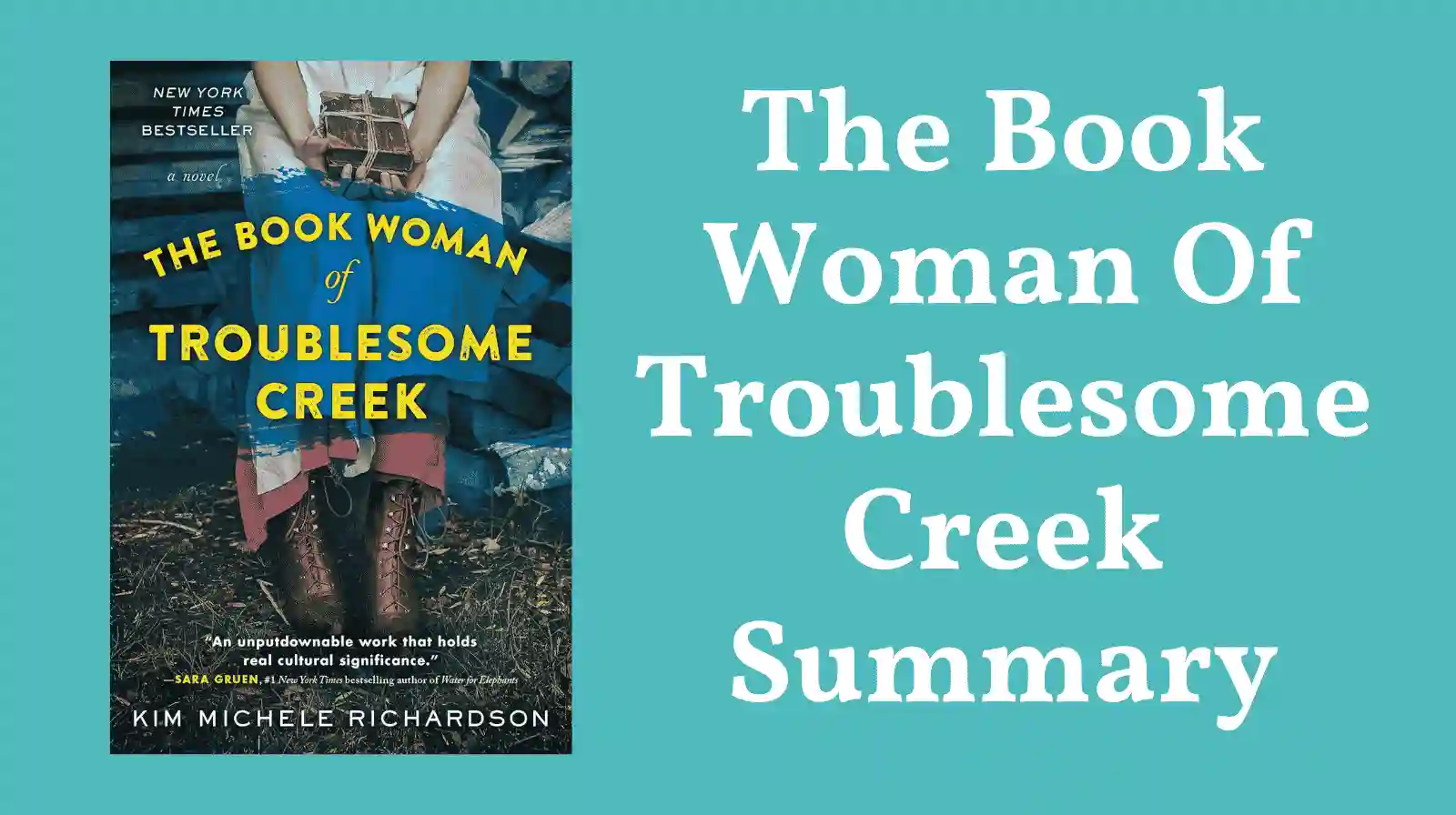
The Book Woman of Troublesome Creek is about Cussy Mary Carter, a young Pack Horse librarian in 1930s Kentucky. The novel shows how books, poverty, prejudice, and courage shape life in a remote Appalachian community.
The main idea is simple: reading can give people comfort, dignity, and hope, even when life is harsh. This book is best for readers who enjoy historical fiction with strong social themes. It is worth reading if you like emotional stories based on real history. Readers who want a fast plot may find it slow in parts.
Quick book details
| Detail | Information |
|---|---|
| Title | The Book Woman of Troublesome Creek |
| Author | Kim Michele Richardson |
| Published | 2019 |
| Genre | Historical fiction |
| Main topic | Pack Horse librarians, poverty, prejudice, literacy, Appalachian life |
| Best for | Historical fiction readers, book clubs, students, library lovers |
| Main message | Books can bring dignity and hope to people who are often forgotten |
| Reading difficulty | Easy to moderate |
| Recommended? | Yes, especially for readers who enjoy emotional historical fiction |
Kim Michele Richardson is a Kentucky-born author, and her background matters because the novel is rooted in Appalachian history and culture. Her official author site describes her as a native-born Kentuckian and bestselling author.
What is The Book Woman of Troublesome Creek about?
The Book Woman of Troublesome Creek is about Cussy Mary Carter, also called Bluet. She works as a Pack Horse librarian during the Great Depression. Her job is to carry books to poor families in the hills of eastern Kentucky.
The story is set in 1936. Cussy rides through rough mountain paths, bad weather, hunger, fear, and social hate. She serves people who have little access to schools, libraries, doctors, or steady food.
Cussy is also one of the “Blue People” of Kentucky. Her blue skin comes from a rare blood condition. In the novel, this makes her a target of fear, cruelty, and isolation.
Readers search for the book woman of troublesome creek summary because the novel mixes real history with a moving personal story. The Pack Horse Library Project was a real Works Progress Administration program that brought books to remote parts of Kentucky during the 1930s. The Smithsonian has also written about these horse-riding librarians and their work in Appalachia.
The Book Woman of Troublesome Creek summary
The novel follows Cussy Mary Carter as she works her library route in rural Kentucky. She delivers books, magazines, recipes, and stories to families who live far from town.
Her work means more than reading. For some people, the books are a rare joy. For others, they are a way to learn, dream, or feel seen. Cussy treats her patrons with care, even when her own life is filled with rejection.
At home, Cussy lives with her father, a coal miner whose health is failing. He worries about her future. He wants her married and protected, but Cussy wants to keep her freedom and her work.
The middle of the book shows the cost of being different in a strict and poor society. Cussy faces hate because of her skin color. She also sees hunger, illness, class pain, and gender limits.
The final message is quiet but strong. Cussy’s life shows that dignity can survive in hard places. Her books cannot fix every wound, but they do change how people see themselves and each other.
Chapter-by-chapter summary of The Book Woman of Troublesome Creek
Exact chapter titles are not needed for a useful The Book Woman of Troublesome Creek chapter summary. The book generally moves through these main ideas.
Main idea 1: Cussy’s work as a Pack Horse librarian
The story begins by showing Cussy’s life and job. She rides through the Kentucky hills to bring books to isolated families.
This matters because the reader sees how hard the work is. Cussy’s route is dangerous, but she keeps going.
Practical takeaway: good work can matter even when few people respect it.
Main idea 2: Poverty in Appalachian Kentucky
The novel shows families living with hunger, illness, and poor housing. Many people have little control over their future.
This part gives the book its emotional weight. The setting is never just background. It shapes every choice.
Practical takeaway: poverty affects education, health, safety, and hope.
Main idea 3: Cussy’s identity as a Blue
Cussy faces cruelty because of her blue skin. People judge her before they know her.
This part of the novel explores fear and social labels. It also shows how hard it is to live with constant public shame.
Practical takeaway: prejudice often grows when people refuse to understand difference.
Main idea 4: Books as comfort and connection
Cussy’s patrons wait for books with deep need. Some want escape. Some want learning. Some just want a visit from someone kind.
This is one of the best parts of the book. It shows reading as a human need, not a luxury.
Practical takeaway: small acts of service can change someone’s day.
Main idea 5: Cussy’s search for dignity
As the story moves on, Cussy has to decide what kind of life she wants. She wants safety, but she also wants purpose.
Her choices are shaped by family duty, public hate, and her love for books.
Practical takeaway: dignity often means choosing your own path, even when it costs you.
Key takeaways from The Book Woman of Troublesome Creek
1. Books can reach people who feel forgotten
The novel shows how reading can bring comfort to people in hard places. A book may not remove hunger, but it can give a person a moment of peace.
For example, if you’re trying to support someone who feels alone, this idea means you should offer presence, care, and something that feeds the mind.
2. Prejudice hurts whole communities
Cussy is treated badly because of something she cannot control. The book shows how fear turns into cruelty when people follow old social rules.
For example, if you’re working with people from different backgrounds, this idea means you should listen before judging.
3. Service can be brave
Cussy’s work is hard, risky, and low-paid. Still, she keeps serving her patrons.
For example, if you’re doing work that feels unseen, this idea means your effort may matter more than public praise.
4. Poverty limits choice
Many characters make painful choices because they have few options. The book shows how hunger and debt can trap people.
For example, if you’re reading the novel for class, this idea means you should look at both personal choices and social conditions.
5. Education can protect dignity
The Pack Horse Library gives people access to knowledge. That access changes how they think and how they feel about themselves.
For example, if you’re trying to build a reading habit, this idea means books can shape your confidence over time.
6. Love is not always simple
Cussy loves her father, her books, and her patrons. Each kind of love brings pressure and pain.
For example, if you’re caring for family while building your own life, this idea means you may need both duty and boundaries.
Main themes in The Book Woman of Troublesome Creek
Literacy and access
The novel’s strongest theme is the need for books. Reading gives people knowledge, comfort, and a sense of worth.
Prejudice and identity
Cussy’s blue skin makes her an outsider. The story shows how people can turn difference into danger.
Poverty and survival
The book does not soften the Great Depression setting. Hunger, sickness, mining work, and isolation shape the whole story.
Women’s work and independence
Cussy’s job gives her purpose. It also gives her a form of independence that society does not fully accept.
Community and kindness
Some people harm Cussy. Others protect her. The novel shows both sides of rural community life.
Best ideas from the book
Reading is a form of care
Cussy does more than drop off books. She notices people. She remembers what they like. She brings stories that fit their needs.
This matters because care often begins with attention. The limit is clear too: books alone cannot solve hunger or violence.
Work can give a person identity
Cussy’s job gives her pride. It lets her see herself as useful, skilled, and needed.
This matters for readers who feel stuck. Meaning can come from doing steady work for others.
Fear often comes from ignorance
Many people fear Cussy because they do not understand her condition. The book shows how ignorance can become social harm.
This matters because it still feels current. People still judge what they do not understand.
History feels personal through one life
The novel uses Cussy’s story to show a real library program. That makes the history easier to feel.
This matters for students and book clubs. One person’s story can make a larger time period clearer.
Memorable ideas instead of quotes from The Book Woman of Troublesome Creek
I am skipping exact quotes because I cannot verify short lines from the book with full confidence here. A fake quote would be unfair to the author and readers.
The most memorable ideas are still clear:
- Books can carry hope into poor and lonely homes.
- A person’s worth is not set by public fear.
- Education can give people a stronger sense of self.
- Service can be quiet and still brave.
The Book Woman of Troublesome Creek review: is it worth reading?
Yes, The Book Woman of Troublesome Creek is worth reading. The story has a strong setting, a memorable main character, and a subject that many readers know little about.
What works best is Cussy’s voice and the historical background. The Pack Horse Library Project gives the novel a strong reason to exist. The scenes with her patrons often feel warm and sad at the same time.
The weak point is the amount of suffering. Some readers may feel the book leans heavily on hardship. It can also feel slow if you prefer plot-driven fiction.
Beginners can understand it. The writing is clear. The emotional parts may feel heavy, so readers should expect scenes involving cruelty, poverty, and trauma.
Who should read The Book Woman of Troublesome Creek?
This book is a strong fit for readers who enjoy historical fiction based on lesser-known American history. It also works well for book clubs because it raises questions about race, poverty, class, women’s work, and access to education.
It is also a good choice for students studying Appalachian history, the Great Depression, or library history.
- Readers interested in historical fiction
- People who enjoy stories about books and reading
- Students of American literature or social history
- Book clubs looking for discussion topics
- Fans of The Giver of Stars by Jojo Moyes
- Readers who like character-focused fiction
For more reader-friendly summaries, you can visit Need any book summary visit Rise In reading.
Who might not like this book?
Some readers may not enjoy the pace. The novel spends a lot of time on daily hardship, social cruelty, and Cussy’s emotional life.
Readers who want light historical romance may also struggle with it. The book has warmth, but it carries a lot of pain.
It may not suit readers who dislike:
- slow historical fiction
- heavy social themes
- scenes of violence or cruelty
- sad family stories
- fiction that focuses more on character than action
How to apply the lessons from The Book Woman of Troublesome Creek
- Read more books from voices and places you know little about.
- Notice who lacks access to education in your own community.
- Treat people’s differences with patience and respect.
- Share books, articles, or learning tools with someone who needs them.
- Judge work by its human effect, not only by money or status.
The Book Woman of Troublesome Creek vs similar books
| Book | Best for | Main difference |
|---|---|---|
| The Book Woman of Troublesome Creek | Readers who want Appalachian historical fiction with social depth | Focuses on Cussy, Pack Horse librarians, and the Blue People of Kentucky |
| The Giver of Stars by Jojo Moyes | Readers who want friendship, romance, and book women history | Has a broader cast and a more commercial fiction feel |
| Where the Crawdads Sing by Delia Owens | Readers who like isolation, nature, and survival stories | More mystery-driven and coastal in setting |
| The Four Winds by Kristin Hannah | Readers who want Great Depression family drama | Focuses on the Dust Bowl and migration |
Choose The Book Woman of Troublesome Creek if you want a quieter, more place-based novel. Choose The Giver of Stars if you want a wider group story with more romance.
Common mistakes readers make with this book
Some readers treat the novel only as a story about librarians. That misses much of its force. The book also deals with color, class, hunger, gender, medical difference, and social shame.
Another mistake is reading it too fast. The small scenes with Cussy’s patrons carry much of the meaning.
Common mistakes include:
- expecting a light book about books
- missing the Great Depression context
- treating Cussy’s condition as only a plot device
- ignoring the role of poverty
- comparing it too closely to The Giver of Stars
Frequently asked questions
What is The Book Woman of Troublesome Creek about?
The Book Woman of Troublesome Creek is about Cussy Mary Carter, a Pack Horse librarian in 1930s Kentucky. She brings books to isolated families while facing poverty, prejudice, and fear because of her blue skin.
Is The Book Woman of Troublesome Creek worth reading?
Yes, it is worth reading if you enjoy emotional historical fiction. It is especially strong for readers who like stories about books, women’s work, and hidden parts of American history.
What are the main lessons from The Book Woman of Troublesome Creek?
The main lessons are about dignity, literacy, service, and prejudice. The book shows that reading can bring comfort, but it also shows how harsh life can be when society rejects people who are different.
Is The Book Woman of Troublesome Creek better than The Giver of Stars?
It depends on your taste. The Book Woman of Troublesome Creek is more focused on one woman’s inner life and social struggle. The Giver of Stars has a larger cast and more romance.
Why do some readers dislike The Book Woman of Troublesome Creek?
Some readers dislike the slow pace and heavy sadness. Others may find the repeated hardship hard to read. The book is strong, but it is not a light comfort read.
My take
My read is that The Book Woman of Troublesome Creek works because it gives one woman’s story real moral weight. Cussy is easy to care about, and the history behind her work is worth knowing.
The best reader for this book is someone who likes historical fiction with feeling, place, and social meaning. The main limit is the sadness. The novel asks a lot from the reader.
The original book is worth reading if you want the full emotional effect. A summary can explain the plot and lessons, but the heart of the book comes from walking Cussy’s route with her.






1 thought on “The Book Woman Of Troublesome Creek Summary”