Leil Lowndes’ book offers powerful techniques to improve social confidence. However, relying too heavily on these “tricks” can make interactions feel robotic. Below is a quick breakdown of how to talk to anyone pros and cons, to help you decide what works for you.
Quick Breakdown: The Benefits vs. The Risks
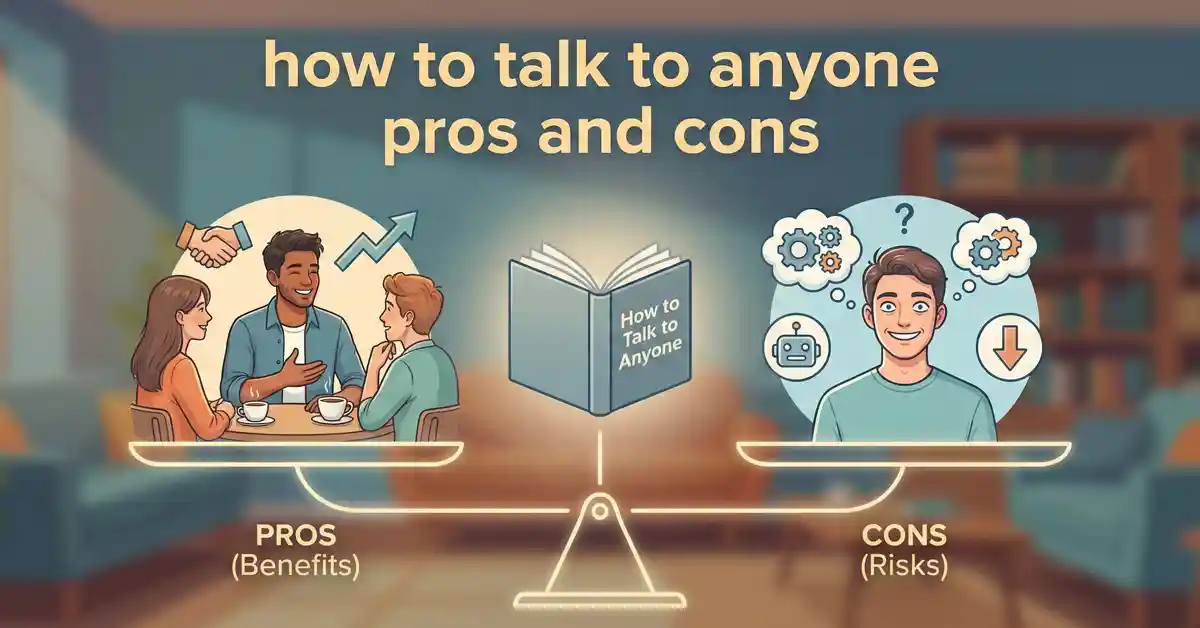
Applying these skills changes how people react to you. However, there are two sides to the story. Here is a clear summary of the benefits and the risks.
| The Pros (Benefits) | The Cons (Risks) |
| Instant Confidence You walk into a room with a plan. You know exactly what to do, which lowers anxiety. | Mental Exhaustion Trying to remember every rule (smile, look, turn) tires your brain. You might forget to listen. |
| Better First Impressions Techniques like the “Slow Smile” make you appear friendly, warm, and open immediately. | Looking “Robotic” If you focus too much on the technique, you can look stiff. You act like a script, not a human. |
| Clear Roadmap It removes guesswork. If you are shy, having specific steps makes socializing manageable. | Ignoring Context High-energy tricks work at parties but can feel weird in quiet, serious moments. |
| Professional Advantage Good posture and eye contact signal authority. This helps in interviews and meetings. | Risk of Being “Creepy” Staring too long to maintain eye contact can make others feel uncomfortable or unsafe. |
| Focuses Outward It forces you to pay attention to others, which stops you from worrying about yourself. | Feeling Fake You might feel like you are “tricking” people. This can make you feel empty later. |
What This Topic Means in Simple Words
When we look at these pros and cons, we are comparing the benefits of having a “social script” against the risk of losing our natural personality.
The Pros act like a map. They tell you exactly what to do with your eyes, hands, and voice when you feel nervous.
The Cons are the traps. Sometimes, following a map too closely means you stop looking at the road. If you focus too much on the “rules” of conversation, you might stop listening to the actual person in front of you.
Why This Problem Matters
Many people struggle with social anxiety. They do not know how to start a conversation or keep it going. This leads to loneliness and missed opportunities at work.
Books like How to Talk to Anyone are popular because they offer a solution. People think, “If I follow these steps, I will be safe.”
However, this mindset creates a new problem. You can become a “performer.” You might feel like you are acting a part rather than connecting with a human. It is critical to find a balance between using good techniques and staying authentic.
More: Why Reading Social Skills Books Alone Doesn’t Work
Key Ideas from “How to Talk to Anyone” (Simplified)
To understand the table above better, here are the four main concepts the book teaches:
1. The Slow Smile
- The Idea: Do not smile instantly. Pause for a second, look at the person, and then let a warm smile spread over your face.
- The Goal: It makes the smile feel genuine and personal.
2. Steady Eye Contact
- The Idea: Keep looking at the person even slightly after they finish talking.
- The Goal: This signals deep interest and confidence.
3. Full Body Attention
- The Idea: Turn your entire body (chest and toes) toward the person, like a baby turning to its parent.
- The Goal: This creates a strong non-verbal bond.
4. The “Old Friend” Mindset
- The Idea: Pretend the stranger is an old friend you already like.
- The Goal: This softens your face and body language instantly.
Who This Is Helpful For
Beginners
If you have no idea where to start, the “Pros” definitely outweigh the “Cons.” You need a foundation. Learning basic mechanics is essential.
Introverts
Introverts often dislike small talk. These specific techniques help introverts navigate parties efficiently without wasting energy on awkward pauses.
Professionals
If your job depends on sales or client management, these tools are very effective. They help build trust quickly.
More: Why Can’t I Talk Confidently to People? (And How to Start)
Common Mistakes People Make
When trying to balance these pros and cons, people often fall into these traps:
- Staring Contests: Some readers take “eye contact” too literally. They lock eyes and never blink. This feels aggressive, not friendly.
- The Frozen Smile: Trying to keep a “pleasant face” for too long looks painful. A natural face moves. A frozen face looks like a mask.
- Scripting Everything: You cannot plan a conversation like a movie. If you memorize lines, you will panic when the other person says something unexpected.
How to Apply This Safely & Naturally
To get the benefits without the drawbacks, follow these guidelines.
- Practice One Thing at a Time
- Do not try to change your whole personality in a day. Pick one small skill, like “Full Body Attention.” Do only that for a week.
- Focus on Warmth, Not Power
- Some social advice is about dominance. Avoid that. Focus on techniques that make the other person feel safe. If your intention is kindness, your behavior will rarely seem fake.
- Use Techniques as “Training Wheels.”
- Think of these rules as training wheels on a bike. You use them to learn balance. Once you know how to ride (communicate), you can take the training wheels off and just act naturally.
More: How to Start Talking Confidently as a Beginner
Related Questions People Ask
It depends on your intent. If you use them to make others feel comfortable and valued, it is not manipulation. It is simply good manners.
Yes. You do not need to be loud to be a good communicator. Listening and eye contact are perfect skills for quiet people.
You can see results in your very next conversation. A simple change in how you greet someone can change their reaction immediately.
What We Learned
Mastering communication is a journey. Understanding the how to talk to anyone pros and cons allows you to take the best parts of the advice—the clarity and confidence—while leaving behind the robotic elements.
Focus on making others feel good, and you will rarely go wrong. Use the tools to break the ice, but let your true self keep the conversation going.
Need Any self-help books visit our website - www.boirath.com