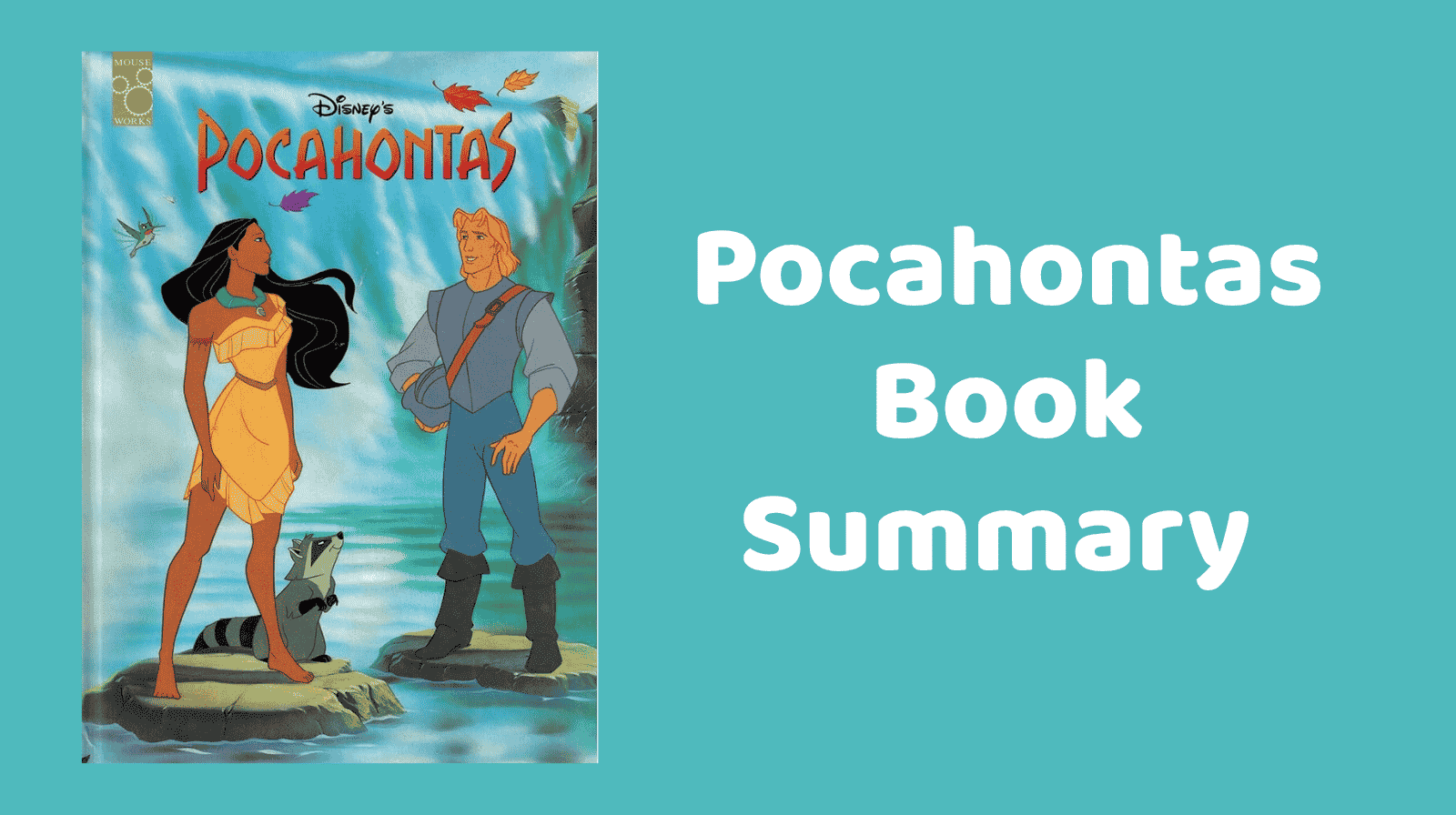
ARTICLE TITLE: Pocahontas Book Summary 2026
Ever feel like you know a historical figure, only to realize you’ve only scratched the surface? That’s often the case with Pocahontas. We all remember the Disney movie, right?
Beautiful animation, catchy songs, a star-crossed romance. But the real Pocahontas, the one from the history books, is a much more complex and, frankly, more interesting story. It’s a tale of survival, cultural collision, and a life lived at the very edge of two worlds.
If you're curious about the woman behind the legend, the one who navigated a drastically different landscape than what Hollywood presented, then you’re in the right place. This isn't just about reciting dry facts; it's about understanding her impact and the lessons her extraordinary life still holds for us today. We'll be diving deep into a "Pocahontas book summary" that goes beyond the fairytale, pulling out the real human story and what it can teach us.
Many people are drawn to Pocahontas because her story is so unique. It bridges the gap between Native American history and early American history, two narratives that are often told separately. Her life offers a window into a pivotal, often brutal, period of American development.
The author, exploring the historical accounts behind the legend, helps us see through the myths.
What can you expect from this deep dive? We'll break down the key aspects of her life as presented in historical narratives and scholarly works. We'll explore her culture, her interactions with the Jamestown settlers, and the significance of her existence.
Think of this as a conversation over coffee, where we unpack a fascinating historical figure.
The enduring popularity of Pocahontas, even with the Disney version overshadowing much of the historical understanding, comes from a deep-seated human fascination with the "other." She represents a connection to a primal, natural past that many feel has been lost. Her story, when told accurately, highlights themes of resilience, adaptability, and the clashing of worldviews that continue to resonate. Anyone interested in early American history, Native American studies, or simply understanding how myths are formed and perpetuated will find value here.
Quick Book Overview
Item Details
Book Title (Focus is on historical accounts and scholarly works summarizing Pocahontas's life, not a single text)
Author Various historians and biographers (e.g., Camille Paglia for a critical perspective, various Indigenous scholars)
Published Year Continuously evolving as new research emerges. Early accounts are from the early 17th century.
Genre Historical Biography, Non-Fiction, Cultural Studies
Main Theme The life of Pocahontas, cultural exchange, colonial encounters, historical myth-making.
Reading Difficulty Varies by source; scholarly works can be demanding, but accessible summaries exist.
Best For Students of history, those interested in Native American culture, readers debunking historical myths.
Key Takeaway Pocahontas was a real person whose life was far more nuanced and complex than popular portrayals suggest.
About Pocahontas (Historical Context)
When we talk about Pocahontas, we're often talking about a collection of historical accounts and scholarly interpretations rather than a single definitive book. These sources paint a picture of a young woman from the Powhatan Confederacy, a powerful group of Native American tribes in what is now Virginia. Her life unfolded during a critical and turbulent period: the early days of English colonization in Jamestown, starting in 1607.
Her father, Chief Powhatan (Wahunsunacock), was the paramount chief of the confederacy. He was a shrewd leader who initially viewed the English with a mix of curiosity and suspicion. Pocahontas, whose given name was Matoaka, was one of his many daughters.
The name "Pocahontas" was a nickname, reportedly meaning "playful one" or "unruly child," hinting at her vivacious spirit early on.
Historians believe she was born around 1596. Her early life would have been steeped in the rich traditions and complex social structures of the Powhatan people. This meant understanding their agricultural practices, their spiritual beliefs, their intricate kinship systems, and their methods of diplomacy and warfare.
Her role as a daughter of the chief undoubtedly gave her a unique position within her society.
The arrival of the English brought immense disruption. Their initial attempts at settlement were marked by starvation, disease, and conflict with the Powhatan people. Pocahontas, as a young girl, would have witnessed these dramatic changes firsthand.
Her interactions with the English, particularly with Captain John Smith, would become central to her story, though the nature and extent of these interactions are heavily debated by historians.
Scholars who analyze these historical records, like those from the early colonial period and later ethnographic studies, strive to move beyond the romanticized myths. They examine the political motivations behind the interactions, the cultural misunderstandings, and the harsh realities of survival for both the Powhatan people and the colonists. Many modern scholars, especially those from Indigenous backgrounds, emphasize the importance of understanding Pocahontas within her own cultural context, rather than solely through the lens of English narratives.
This approach helps us appreciate her agency and her role within her community, even amidst profound external pressures.
What Is This Book About? (The Historical Narrative)
The "book" we're summarizing here isn't a single volume but the accumulated historical understanding of Pocahontas's life. Its central idea is to present the historical figure of Pocahontas, Matoaka, as a real person, not a Disney character. The primary problem it seeks to solve is correcting the vast misconceptions and romanticized narratives that have overshadowed her true story for centuries.
The authorial philosophy, in this context, is one of historical accuracy and cultural sensitivity. It aims to reconstruct her life based on the best available evidence, acknowledging the biases inherent in the primary sources. Many historians reject the idea of a simple love story between Pocahontas and John Smith.
Instead, they focus on the complex political dynamics, the cultural exchange, and the survival strategies employed by both her people and the colonists.
The overall message is powerful: history is complex, and individual lives within it are often more profound and less straightforward than we imagine. Pocahontas was a young woman caught between worlds during a period of immense upheaval. Her story is a testament to resilience, adaptation, and the tragic consequences of cultural collision.
It shows us how legends are born and how crucial it is to seek out the factual basis beneath the myth. We learn that her life was about political alliances, cultural survival, and ultimately, a tragic fate far removed from a fairytale ending.
Chapter-by-Chapter Summary (Key Periods and Events)
Since there isn't one definitive "Pocahontas book," we'll break down her life into key periods and events as described in historical accounts and scholarly analyses. Think of these as thematic chapters in her life story.
Chapter 1: The Powhatan World
Main Idea: Understanding Pocahontas's life begins with understanding the sophisticated culture of the Powhatan Confederacy she was born into.
Important Lessons: The Powhatan people had a complex social structure, advanced agricultural knowledge, and a rich spiritual life. They were not a monolithic, unsophisticated group.
Key Quotes or Concepts: The term "Powhatan Confederacy" itself signifies a structured political alliance under Chief Powhatan. Their understanding of the land and its resources was integral to their survival and identity.
Real-Life Examples: The construction of their villages, their farming techniques for corn, beans, and squash (the "three sisters"), and their intricate systems of tribute and diplomacy all exemplify their developed society.
Practical Applications: This teaches us to approach any culture with respect for its inherent complexity and sophistication, avoiding ethnocentric judgments. It encourages us to look beyond superficial differences to understand underlying structures and values.
What Readers Can Learn: Readers learn about the depth of indigenous societies in North America prior to extensive European contact. They understand that Pocahontas was a product of a vibrant and established civilization.
Chapter 2: The Arrival of the English (1607)
Main Idea: The establishment of the Jamestown settlement marked a dramatic and disruptive turning point in the lives of the Powhatan people.
Important Lessons: The English arrived with different intentions and expectations, leading to immediate misunderstandings and conflict over land, resources, and sovereignty. Chief Powhatan's initial approach was pragmatic, aiming to understand and potentially control this new group.
Key Quotes or Concepts: Jamestown's establishment was driven by English ambition for wealth and expansion. Chief Powhatan’s strategic approach aimed to integrate or manage the newcomers.
Real-Life Examples: The early settlers suffered greatly from disease and starvation, unprepared for the environment. Their reliance on the Powhatan for survival, despite their intentions to dominate, created a volatile relationship.
Practical Applications: This highlights the dangers of unchecked colonial ambition and the devastating impact on indigenous populations. It shows how vastly different worldviews can lead to immediate friction.
What Readers Can Learn: Readers gain insight into the precarious beginnings of English settlement and the immediate challenges faced by both sides. They see the complex political landscape Chief Powhatan was navigating.
Chapter 3: Pocahontas and John Smith
Main Idea: The most famous, and most debated, interaction from Pocahontas's youth involves Captain John Smith.
Important Lessons: While Smith claimed Pocahontas saved his life from execution, historians widely interpret this event differently. It could have been a ritualistic ceremony, a test of Smith's character, or a political maneuver by Chief Powhatan, rather than a romantic rescue. Pocahontas was likely a child or young teenager at the time.
Key Quotes or Concepts: Smith's own accounts are the primary source, but their reliability and interpretation are questioned. The "saving" of Smith might have been a Powhatan ritual of incorporation or a display of power.
Real-Life Examples: Smith's description in his writings is the basis for the popular narrative. However, other interpretations suggest it was a symbolic act, as the Powhatan were known to adopt enemies into their society.
Practical Applications: This teaches us critical evaluation of historical sources, especially firsthand accounts. It shows how individual interpretations can shape historical narratives for centuries, often based on cultural biases.
What Readers Can Learn: Readers learn that the iconic "Pocahontas saves John Smith" moment is far more ambiguous and likely symbolic than portrayed in popular culture. They understand the differing perspectives of historians.
Chapter 4: Captivity and Marriage
Main Idea: Pocahontas was eventually captured by the English and held for ransom, leading to her marriage to colonist John Rolfe.
Important Lessons: Pocahontas's capture was a strategic move by the English to gain leverage over Chief Powhatan. Her subsequent marriage was not of her own choosing but a political alliance arranged by the English, intended to bring peace and demonstrate assimilation.
Key Quotes or Concepts: The marriage to John Rolfe marked a significant shift in her life, forcing her into English society. She was given the Christian name "Rebecca" and baptized.
Real-Life Examples: John Rolfe was a planter who developed a new strain of tobacco. Their marriage in 1614 was pivotal in a period of fragile peace between the settlers and the Powhatan.
Practical Applications: This illustrates the stark power imbalance and the use of individuals as pawns in political negotiations. It shows the pressure Indigenous people faced to conform to English ways.
What Readers Can Learn: Readers grasp the coercive nature of her life within the English settlement and the political motivations behind her marriage. They understand the personal cost of this forced integration.
Chapter 5: A Visit To England (1616-1617)
Main Idea: Pocahontas, now known as Rebecca Rolfe, was taken to London with her husband to be presented as a "civilized" example of the New World.
Important Lessons: This journey was a propaganda effort by the Virginia Company to garner support and funding for the colony. Pocahontas was exoticized and presented as a novelty, a stark contrast to her actual life and experiences.
Key Quotes or Concepts: Her appearance in London, though somewhat uncomfortable for her, was a calculated display. Some accounts suggest she met her father, Chief Powhatan, again, but this is debated.
Real-Life Examples: She was presented at court, and there are accounts of her being recognized and recognized by John Smith, though their reunion was reportedly strained. The reality of London for a Native American woman was likely overwhelming and disorienting.
Practical Applications: This highlights the historical practice of displaying marginalized peoples to serve the agenda of a dominant culture. It demonstrates how individuals can become symbols representing complex political and economic interests.
What Readers Can Learn: Readers understand the extent to which Pocahontas was used as a political tool. They also learn about the harsh realities of her life in England, far from her home and culture.
Chapter 6: Death and Legacy
Main Idea: Pocahontas died under mysterious circumstances in England at a young age, and her legacy has been continually reinterpreted.
Important Lessons: Her death, likely from illness, tragically cut short her life. Her legacy has been shaped by myth-making, often erasing the complexities of her identity and experiences, particularly her Indigenous heritage.
Key Quotes or Concepts: Pocahontas died in Gravesend, Kent, in March 1617, at around 21 years old. John Rolfe was delayed in returning to Virginia, meaning she died far from home.
Real-Life Examples: The Disney movie is the most prominent example of myth-making, focusing on romance and adventure. Modern scholarship works to reclaim her story, emphasizing her Powhatan identity and resilience.
Practical Applications: This teaches us the importance of questioning popular narratives and seeking out diverse historical perspectives. It underscores how dominant cultures can often instrumentalize and distort the stories of marginalized groups.
What Readers Can Learn: Readers understand the tragic end to her life and the ongoing struggle to preserve and understand her true historical significance beyond the fabricated myths. They see her as a symbol of lost cultural heritage and resilience.
Biggest Lessons From The Book (Historical Accounts)
Distinguishing Fact from Fiction is Crucial: Why it matters: Popular stories often oversimplify or entirely invent events. Understanding history requires critically examining sources.
Real-life example: The infamous "saving" of John Smith is a prime example of a dramatic retelling that likely has a much more complex, ritualistic origin.
How to apply it: When you hear a compelling story, especially about history or a public figure, take a moment to wonder about its source and look for corroborating evidence.
Indigenous Cultures Were Sophisticated Societies: Why it matters: Colonial narratives often portrayed Native Americans as primitive. Historical evidence shows advanced social, political, and spiritual systems.
Real-life example: The Powhatan Confederacy itself demonstrates a complex political structure with established leadership and land management.
How to apply it: Approach all cultures with the assumption of inherent complexity and value. Resist stereotypes and seek to understand the unique strengths and traditions of any group.
Cultural Collision is Often Tragic: Why it matters: The encounter between the Powhatan and English settlers led to devastating consequences for the Indigenous population due to disease, conflict, and displacement.
Real-life example: The early years of Jamestown were marked by starvation and warfare, directly impacting the lives of the Powhatan people.
How to apply it: Recognize that interactions between different groups can be fraught with challenges. Understanding these challenges helps us approach intercultural relations with greater empathy and caution.
Women Often Played Political Roles: Why it matters: Pocahontas was not just a passive observer. As the daughter of a chief, she held a position of importance and was involved in diplomacy, even if her agency was limited by circumstances.
Real-life example: Her marriage to John Rolfe was a political alliance designed to foster peace, demonstrating her value in negotiations.
How to apply it: Look for the often-understated roles women played in historical events and contemporary society. Recognize their contributions to political and social landscapes.
Individuals Can Become Symbols: Why it matters: Pocahontas was turned into a symbol for various agendas, from romantic lovers to "savages" tamed by civilization, divorcing her from her real identity.
Real-life example: Her depiction in England as a "civilized" Native was a propaganda tool for the Virginia Company.
How to apply it: Be aware when individuals or groups are used to represent broader, often biased, ideas. Question the narrative and seek the individual's actual story.
Language and Narrative Shape Reality: Why it matters: The way Pocahontas's story was told by the English founders, and later by Hollywood, profoundly shaped public perception, often to the detriment of historical accuracy.
Real-life example: John Smith’s potentially embellished account became the bedrock of a romantic myth that ignores political realities.
How to apply it: Understand the power of storytelling and language. Consider who is telling the story, why they are telling it, and what their perspective might be.
Survival Requires Adaptability: Why it matters: Pocahontas lived through immense change, from her traditional Powhatan life to English captivity and a visit to England. Her life was a testament to navigating these drastic shifts.
Real-life example: Her conversion to Christianity and adoption of an English name, while likely coerced, were part of adapting to her new reality.
How to apply it: Embrace flexibility when facing unexpected challenges. Being able to adapt your approach and mindset is key to enduring difficult circumstances.
Colonialism Had Profound Personal Costs: Why it matters: The expansion of European powers came at a tremendous human cost to Indigenous populations, disrupting lives, cultures, and families.
Real-life example: Pocahontas’s capture, forced marriage, and eventual death far from her homeland are direct consequences of colonial actions.
How to apply it: Develop a nuanced understanding of historical events, recognizing the human impact on all involved, particularly the most vulnerable.
History is Not Static; It's Constantly Reinterpreted: Why it matters: New evidence and perspectives, particularly from Indigenous scholars, are continually rewriting our understanding of historical figures and events.
Real-life example: Modern scholarship actively works to challenge the romanticized myths and reclaim Pocahontas's Powhatan identity.
How to apply it: Remain open to new information and different interpretations. History is an ongoing conversation, not a closed book.
Agency Exists Even in Oppressive Circumstances: Why it matters: While Pocahontas faced immense pressures, recognizing moments where she might have exercised influence or made choices is important. Her navigating of complex situations suggests a degree of internal strength.
Real-life example: Her reported interactions with John Smith or her ability to navigate English society, even if under duress, suggest a level of personal engagement.
How to apply it: In your own life, even when facing constraints, look for opportunities to exercise your own agency and make choices that align with your values.
Most Powerful Quotes And Their Meaning
It's challenging to find direct, verifiable quotes from Pocahontas herself, as the historical records are primarily from the English perspective. However, we can examine powerful statements and concepts associated with her life and the historical narratives surrounding her.
Attributed to John Smith about Pocahontas: "When her father should send her word he would have her come to him, she, understanding that the English had starved her son, was not a little grieved." What it means: This quote, from Smith's later writings, expresses Pocahontas's distress over potential harm to her son, or perhaps a symbolic son figure, due to the English actions against her father. It suggests she still had deep connections and loyalties within her community.
Why it matters: It humanizes Pocahontas, showing her emotional capacity and her ongoing concern for her family and people, even after being integrated into English society.
How it applies in daily life: It reminds us that personal relationships and familial bonds often persist and create emotional pressure, even in vastly changed circumstances. It highlights the impact of conflict on families.
The concept of "Matoaka" (her given name, possibly meaning "playful one"): What it means: This nickname suggests a spirited, lively young girl, a stark contrast to the stoic, tragic figure often portrayed. It points to her upbringing in a vibrant cultural context.
Why it matters: It provides a glimpse into her personality before her life was irrevocably altered by colonization. It emphasizes her youth and individuality.
How to apply it: It encourages us to remember the humanity and individuality of people, especially those who become historical symbols. Everyone has a unique spirit and personality beneath their public role.
John Rolfe's writings about his marriage to Pocahontas: "And that not only your Pocahontas, but my child by her, may live to see the glory of God in the conversion of these Gentiles." What it means: Rolfe viewed his marriage and Pocahontas's baptism not as a union of equals but as an opportunity for her and their future child to embrace Christianity, reflecting the colonial objective of religious conversion.
Why it matters: It overtly demonstrates the colonial mindset and the instrumentalization of Pocahontas for religious and political goals, stripping away her own beliefs and cultural autonomy.
How to apply it: This highlights how dominant cultures often project their values and beliefs onto others, believing their way is superior. It's a reminder to be aware of proselytizing and assimilationist agendas.
The legacy of Pocahontas as a "cultural bridge": What it means: This is not a direct quote but a concept used to describe her role in mediating between the Powhatan and English. However, this "bridge" was often built on her subjugation and exploitation.
Why it matters: It challenges the notion of her as a willing intermediary. It acknowledges the complex power dynamics and the trauma involved in such a role.
How to apply it: Be critical of narratives that paint complex intercultural interactions as simple friendships or smooth transitions. Recognize the power imbalances and potential for exploitation.
Key Concepts Explained Simply
The Powhatan Confederacy: Imagine a group of families living in neighboring villages, all agreeing to follow one main chief for protection and decisions. That's like the Powhatan Confederacy. Chief Powhatan was the big boss, but each tribe under him still had its own leaders and ways. It was a powerful alliance that controlled a large area in Virginia.
Jamestown Settlement: This was the first permanent English village in what is now the United States. Think of it like a new neighborhood being built in a place where people already lived. The English settlers wanted to establish a new life there, but they weren't always prepared for the challenges, and their arrival caused a lot of problems for the existing residents.
Cultural Assimilation: This is like someone trying to fit into a new school by changing their clothes, their way of speaking , and their interests to match everyone else. For Pocahontas, it meant adopting English customs, clothes, and eventually, Christianity. It was often a forced process, aiming to make people from one culture adopt the ways of another.
Myth-Making: This is how stories get told and retold, often changing over time. Think of a game of telephone where the message gets distorted. Pocahontas's story became a legend, transformed by each storyteller, especially by Hollywood, to fit different ideas about America, romance, or the "noble savage."
Indigenous Agency: This means having the power to make your own choices and act on them. Even though Pocahontas lived in difficult times and was often controlled by others, historians debate where and how she might have exercised her own will or influence within her circumstances. It's about recognizing that people aren't just passive victims.
How To Apply The Book In Real Life
Thinking about Pocahontas's story can teach us a lot about navigating our own lives.
Daily Habits: Cultivate Curiosity: Just as historians question narratives, approach new information with questions. Ask "why?" and "how do we know this?"
Practice Empathy: Try to understand situations from different perspectives, especially those unlike your own.
Stay Hydrated and Nourished: The Jamestown settlers' struggles highlight the basics of survival. Don't neglect your own well-being.
Weekly Habits: Read Critically: Make a habit of reading diverse sources. Compare different accounts of events or issues.
Reflect on Power Dynamics: Notice how power plays out in your workplace, family, or community.
Learn about Local Indigenous History: Connect with the history of the land you live on.
Mindset Shifts: Embrace Nuance: Life isn't usually black and white. Recognize the shades of gray in complex situations.
Challenge Assumptions: Don't accept things at face value, especially stories that seem too simple or romantic.
Focus on Resilience: Understand that challenges are part of life. Look for ways to adapt and grow through them.
Communication Techniques: Listen Actively: When speaking with others, truly listen to understand their viewpoint, not just to respond.
Be Mindful of Cultural Differences: Recognize that communication styles vary greatly.
Leadership Lessons: Understand Your People's Needs: Like Chief Powhatan, be aware of the well-being and needs of those you lead.
Be Cautious with New Encounters: The Jamestown settlers learned this the hard way. Approach new people or situations with a healthy dose of observation before full engagement.
Personal Growth Practices: Learn from History: Use historical examples, like Pocahontas's life, as case studies for understanding human behavior and societal dynamics.
Value Your Heritage (Whatever It Is): Recognize the importance of your own cultural background, while also being open to understanding others.
Common Mistakes People Make When Applying These Ideas
Mistake: Romanticizing the "noble savage" trope or, conversely, reducing Pocahontas to a victim with no agency. Why it happens: It's easier to cling to simple archetypes than to grapple with complex historical realities.
Better alternative: Acknowledge the nuances. She was a person from a complex society, forced into difficult circumstances, who likely navigated them with a degree of strength and resilience, within the constraints of her time.
Mistake: Over-applying the "cultural bridge" idea without acknowledging the power imbalance and coercion involved. Why it happens: The idea of bridging cultures sounds positive, but the historical context was often one of domination.
Better alternative: Understand that "intermediary" roles, especially in colonial contexts, were often born out of necessity, coercion, or political strategy, not necessarily a desire for equal partnership.
Mistake: Focusing solely on the John Smith romance and ignoring the rest of her life and her Powhatan identity. Why it happens: The Disney narrative is deeply ingrained in popular consciousness.
Better alternative: Prioritize understanding her life within the Powhatan Confederacy and the full arc of her interaction with the English, including her later marriage to John Rolfe and her time in England.
Mistake: Assuming Pocahontas's story is just an ancient history lesson with no present-day relevance. Why it happens: We sometimes see historical figures as disconnected from our current world.
Better alternative: Recognize that themes of cultural collision, adaptation, myth-making, and the impact of colonialism still resonate today in global relations and social justice issues.
Benefits Of Reading This Book (Understanding Historical Accounts)
Personal Growth Benefits: You gain a deeper understanding of human resilience and adaptability in the face of extreme change. You develop critical thinking skills by learning to question narratives.
Professional Benefits: Understanding historical context helps in analyzing current geopolitical situations, intercultural business interactions, and the history of corporate endeavors like the Virginia Company.
Emotional Benefits: You can develop greater empathy by learning about the struggles of individuals caught in larger historical forces. It can foster a sense of historical connection.
Relationship Benefits: Learning about the Powhatan and colonial interactions provides insights into the complexities and challenges of intergroup relationships and communication .
Leadership Benefits: The story offers lessons on diplomacy, strategic alliances, and the consequences of unchecked ambition, valuable for any leader trying to understand historical patterns of success and failure.
Criticisms And Limitations
Reliance on Unreliable Sources: Much of what we know about Pocahontas comes from John Smith's writings, which some historians consider self-serving and possibly exaggerated. His accounts were written years after the events.
Limited Indigenous Voice: The primary historical records were written by English men. Direct accounts from Pocahontas or other Powhatan people of her age are largely absent, leaving interpretations open to bias.
The "Pocahontas Problem": Historians grapple with the ethical implications of writing about an Indigenous woman whose life was heavily influenced and narrated by colonizers. Modern scholars, especially Indigenous ones, work to reclaim her narrative.
Interpretive Gaps: Due to the limited and biased sources, significant gaps exist in understanding Pocahontas's personal thoughts, feelings, and motivations.
Situations Where Advice May Not Work: The historical context is vastly different from today. Applying specific historical events directly to modern-day personal advice requires careful consideration of context. For example, her captivity and forced marriage are not direct analogies for typical modern life challenges.
Similar Books To Read Next
Book Author(s) Why Read It
The True Story of Pocahontas Dr. Helen C. Rountree A scholarly look that aims to debunk myths and present a historically accurate portrayal.
Native American Mythology Hartley Burr Alexander Provides context for the rich spiritual and storytelling traditions of various Native American tribes.
1491: New Revelations of the Americas Before Columbus Charles C. Mann Offers a broad understanding of the pre-Columbian Americas, highlighting sophisticated Indigenous societies.
Bury My Heart at Wounded Knee Dee Brown A powerful account of Native American resistance and suffering during the Indian Wars.
The Return of the Native Thomas Hardy While fictional, it explores themes of individuals caught between tradition and societal change.
Contact: The Story of Leonardo da Vinci Paul Strathern (or similar biography) For understanding how great figures are sometimes mythologized and how to approach their lives critically.
Who Should Read This Book? (Understanding Pocahontas's Story)
Students: Essential for understanding early American history, Native American studies, and the complexities of colonial encounters.
Entrepreneurs: Lessons on navigating new markets, understanding different cultures, and the long-term consequences of ambition.
Managers: Insights into communication, diplomacy, and the impact of decisions on individuals and groups.
Leaders: Learn from historical examples of political strategy, cultural negotiation, and the ethical considerations of power.
Professionals: Anyone in fields involving intercultural communication, history, or social studies will find deep value.
Parents: A way to teach children about history, critical thinking, and the importance of questioning narratives.
Self-Improvement Readers: For those interested in resilience, adaptability, understanding bias, and the human capacity to endure change.
Frequently Asked Questions (FAQ)
- Was Pocahontas a real person?
Yes, Pocahontas (Matoaka) was a real person of the Powhatan tribe. She lived in the early 17th century and interacted with the English settlers at Jamestown.
- Did Pocahontas and John Smith have a romance?
Most historians believe their relationship was not romantic. John Smith's account of her saving him is widely interpreted as a ritualistic adoption or a political act, not a love rescue. Pocahontas was also very young at the time.
- What was Pocahontas's native name?
Her given name was Matoaka. "Pocahontas" was a nickname, possibly meaning "playful one" or "unruly child."
- Was Pocahontas captured by the English?
Yes, she was captured and held by the English around 1613. They used her as a bargaining chip with her father, Chief Powhatan.
- Did Pocahontas marry John Rolfe?
Yes, she married John Rolfe, an English tobacco planter, in 1614. This marriage helped broker a period of peace between the Powhatan and the English.
- Did Pocahontas have children?
Yes, she had at least one son with John Rolfe, named Thomas Rolfe.
- Did Pocahontas really go to England?
Yes, in 1616, Pocahontas, then known as Rebecca Rolfe, traveled to England with her husband John Rolfe and their son.
- Why did Pocahontas go to England?
It was partly a promotional tour by the Virginia Company to showcase the "civilized" potential of Native Americans and to encourage further investment and settlement in Virginia.
- How did Pocahontas die?
She died in 1617 in Gravesend, England, likely from illness, possibly smallpox or pneumonia, at approximately 21 years old.
- Is the Disney movie about Pocahontas historically accurate?
No, the Disney movie is a fictionalized romance and adventure story that takes significant liberties with historical facts, characters, and events.
- What was the most important role Pocahontas played?
As the daughter of Chief Powhatan, she held a position of importance within her society. Her interactions with the English, regardless of interpretation, placed her in a unique, albeit often coercive, role as a mediator or symbol.
- Why is Pocahontas still remembered today?
Her story, particularly the romanticized version, has captured the popular imagination. More importantly, she represents a crucial, complex interaction at the start of American history and is a symbol of Indigenous resilience and the devastating impact of colonialism.
- What can we learn from Pocahontas's life about cultural differences?
Her life highlights the profound challenges and misunderstandings that arise when vastly different cultures collide, and the pressures faced by individuals caught in such transitions.
- How do modern historians view Pocahontas?
Modern historians, especially Indigenous scholars, strive to present a more accurate and nuanced picture of Pocahontas as a Powhatan woman who lived within her own cultural context, rather than solely through the lens of English colonizers or romantic myths.
Final Verdict
Understanding the historical accounts and scholarly analyses of Pocahontas's life offers a rich, complex, and vital counterpoint to the popular myths. It's not a single book but a continuously evolving understanding pieced together from historical records and critical interpretation.
The strengths lie in its power to correct historical inaccuracies, showcase the sophistication of Indigenous cultures, and highlight the profound human cost of colonialism. Its weakness is the inherent difficulty in definitively knowing Pocahontas's personal experiences due to the biased nature of the primary sources.
Is the "book" (i.e., the historical narrative about Pocahontas) worth reading? Absolutely. It's essential for anyone seeking a genuine understanding of early American history and the complex relationship between Native Americans and European settlers.
Those who will benefit most are critical thinkers, history enthusiasts, students of culture, and anyone eager to move beyond simplistic narratives. Learning about Pocahontas’s real story is a journey into the complexities of history, culture, and the enduring power of compelling, albeit often distorted, human tales. Her life serves as a powerful reminder of the importance of seeking truth behind the myths.

1 thought on “Pocahontas Book Summary 2026”