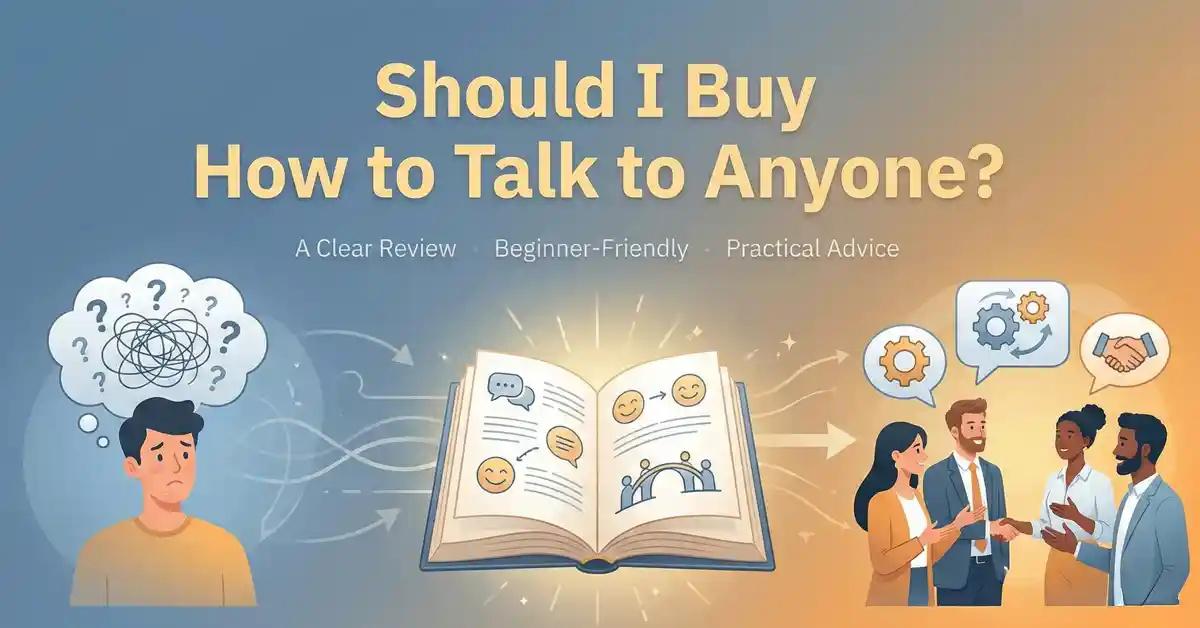
If you are wondering, “Should I buy How to Talk to Anyone?” the answer depends on your current social skills. This book is excellent for beginners who need specific, actionable steps to improve their conversations. However, if you prefer deep psychological theory over practical “tricks,” you might find it too focused on surface-level techniques.
What “How to Talk to Anyone” Means
At its core, this book is a manual for social interaction. Many people think good communication is a natural talent. They believe you are either born with it or you are not. This book argues that communication is a skill you can learn, just like driving a car or cooking.
The central idea is that small changes in your behavior can lead to big differences in how people react to you. It breaks down complex social interactions into tiny, manageable pieces. instead of just saying “be confident,” it tells you exactly what to do with your eyes, your smile, and your posture.
It focuses on “social mechanics.” This means it looks at the physical and verbal tools you use to connect with others. It teaches you how to look approachable before you even say a word. It also teaches you how to keep a conversation going without running out of things to say.
Why Communication Struggles Matter
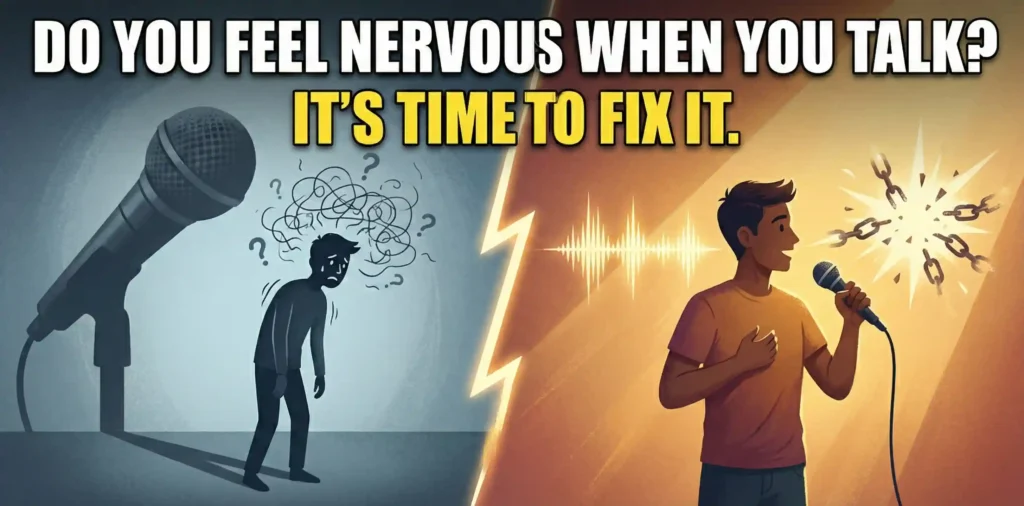
Many people find social situations stressful. You might walk into a room and feel like everyone is watching you. You might worry about saying the wrong thing. You might even stay silent because you are afraid of being judged.
This problem matters because humans are social creatures. We need to connect with others to feel happy and secure. When you struggle to talk to people, you miss out on opportunities. You might miss making a new friend. You might miss a chance for a better job.
Common struggles include:
- The awkward silence: Not knowing what to say next.
- The cold shoulder: Feeling like people do not want to talk to you.
- The misunderstood joke: Saying something that lands poorly.
- The visible nervousness: Shaking hands or a quivering voice.
These issues do not mean you are a bad person. They usually just mean you have not learned the specific rules of social engagement yet.
More: Why Can’t I Talk Confidently to People? (And How to Start)
Key Ideas from “How to Talk to Anyone” (Simplified)
This section breaks down the main concepts found in the book. The author, Leil Lowndes, presents these as specific techniques. Here is what they mean in plain English.
1. The Slow Smile Most people smile immediately when they meet someone. The book suggests waiting just a second. Look at the person’s face first, soak in who they are, and then let a big, warm smile flood over your face. This makes your smile feel more genuine and personal to them. It tells the other person that you are smiling specifically because of them, not just out of habit.
2. Eye Contact Balance Staring can be creepy, but looking away shows insecurity. The book teaches a technique often called “Sticky Eyes.” This means you should keep eye contact a little longer than you think is necessary. Even when you finish speaking, hold your gaze for a moment. This conveys deep interest and confidence.
3. Matching the Mood If someone is excited, you should be excited. If they are calm, you should be calm. This is often called “mirroring.” The book explains that people like those who are similar to them. By matching their voice volume and speed, you build instant rapport. You make them feel understood without saying “I understand.”
4. The “Parroting” Technique Running out of things to say is a common fear. This technique offers a simple fix. You simply repeat the last few words the other person said, but as a question.
- They say: “I just got back from a great trip to Paris.”
- You say: “A trip to Paris?” This prompts them to keep talking without you needing to come up with a new topic.
5. Acting Like an Old Friend This is a mindset shift. The book suggests you should treat every stranger as if they are an old friend you haven’t seen in a while. When you do this, your body language softens. You become less guarded. The other person subconsciously picks up on this warmth and usually responds with kindness.
How This Helps in Real Life
Applying these skills can change your daily experience. It moves you from being a passive observer to an active participant.
In Social Situations Parties and gatherings become less draining. Instead of standing in the corner looking at your phone, you have a mental checklist of things to do. You know how to approach someone. You know how to exit a conversation politely. This structure reduces anxiety because you have a plan.
Building Confidence Confidence often comes from competence. When you know how to handle a situation, you feel less afraid of it. As you try these techniques and see positive results, your belief in yourself grows. You stop worrying about “what if” and start focusing on the present moment.
Daily Conversations These tips are not just for big events. They help with the cashier at the grocery store, the receptionist at the doctor’s office, or your neighbor. Small interactions become smoother. You leave people feeling better than you found them. This creates a positive loop where people are happy to see you, which makes you happier to see them.
More: Why Reading Social Skills Books Alone Doesn’t Work
Should I Buy How to Talk to Anyone? Who This Is Helpful For
This book is not for everyone. It targets a specific type of reader who wants practical guidance.
Beginners If you feel completely lost in social settings, this is for you. It assumes zero prior knowledge. It holds your hand through the basics of body language and small talk.
Introverts Introverts often find small talk exhausting. This book provides “scripts” and methods that save mental energy. You do not have to invent a personality; you just use the tools provided to navigate the interaction efficiently.
Professionals While the tone is casual, the advice applies to business. Networking events are just social events with business cards. Learning how to make people feel important is a crucial career skill.
Who Should Avoid It? If you are looking for deep scientific research or academic studies on psychology, this book might annoy you. It is written in a pop-psychology style. It uses catchy names for techniques rather than scientific terms. If you are already very socially skilled, you might find some tips too basic.
Common Mistakes People Make
When learning social skills, it is easy to go overboard. Here are common errors to watch out for.
- Staring Too Hard: Trying to maintain strong eye contact can turn into an intense stare. This makes people uncomfortable. You must remember to blink and break contact naturally now and then.
- Smiling Fake: If you force the “slow smile” technique without feeling genuine warmth, it looks manipulative. People are good at spotting fake emotions. You must actually find something to appreciate in the other person.
- Over-Parroting: Repeating people’s words works well once or twice. If you do it for every sentence, you sound like a robot or a mockingbird. Use it only when the conversation stalls.
- Focusing on Rules, Not People: You might get so busy thinking, “Am I smiling right? Is my posture correct?” that you stop listening. The goal is connection, not perfection.
More: How to Start Talking Confidently as a Beginner
How to Apply This Safely & Naturally
The biggest criticism of social skills books is that they teach “manipulation.” This is a valid concern. To avoid this, you must change your intent.
Check Your Motivation Are you using these techniques to trick someone into liking you? That is manipulation. Are you using them to make the other person feel comfortable and heard? That is genuine communication.
Practice Slowly Do not try to use all 92 techniques from the book at once. You will look strange and feel overwhelmed. Pick one skill per week.
- Week 1: Focus only on eye contact.
- Week 2: Focus only on smiling.
- Week 3: Focus on listening.
Be Authentic These techniques are just tools. You are still the craftsman. Use your own words. If a specific tip feels wrong for your personality, do not use it. You can be a quiet, thoughtful person and still be a great communicator. You do not have to become a loud extrovert.
Related Questions People Ask
Some references to technology (like answering machines or fax machines) are dated. However, human psychology has not changed. The advice on eye contact, listening, and body language is timeless.
Yes. Many of the techniques create a feeling of intimacy and interest. This is very effective in dating scenarios where building a connection quickly is important.
Yes. The chapters are very short—often just 2 or 3 pages. You can read it in small bursts. The language is simple and conversational.
It can help manage the symptoms of anxiety. By giving you something specific to do, it takes your mind off your fear. However, it is not a cure for severe anxiety disorders.
What to Remember
So, should you buy How to Talk to Anyone? If you want a practical toolkit to improve your social life, the answer is likely yes. It provides clear instructions that take the mystery out of conversation.
Do not expect to become a social master overnight. Read the book, pick a few techniques that feel right for you, and practice them gradually. Improvement comes from action, not just reading.
Need this book? visit our website - www.boirath.com
1 thought on “Should I Buy How to Talk to Anyone? A Clear Review”