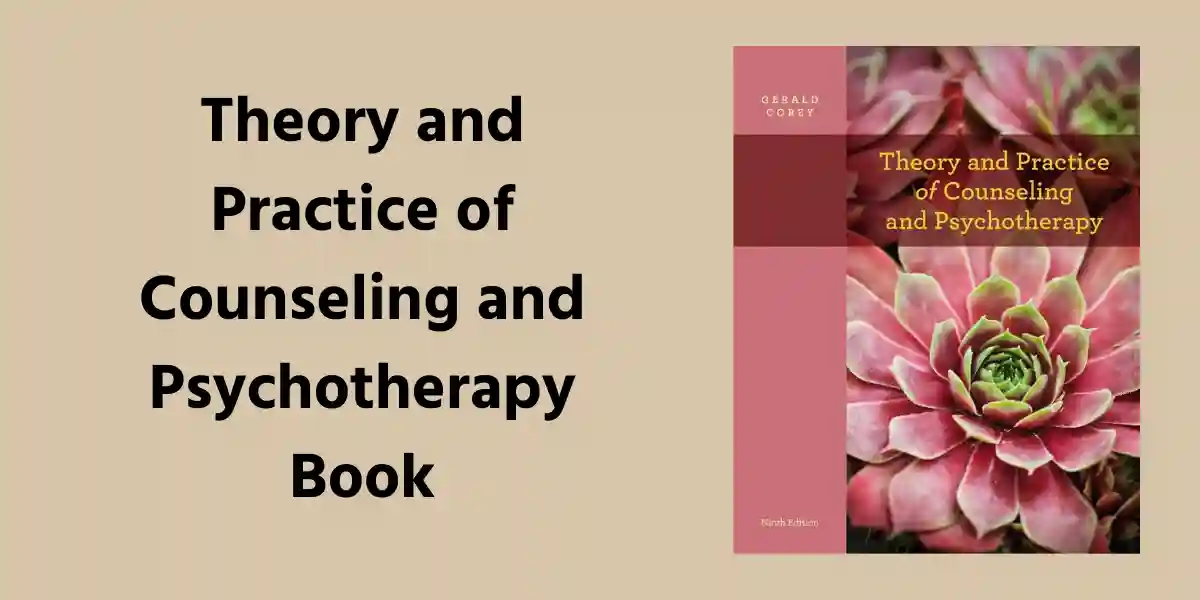
The theory and practice of counseling and psychotherapy book is Gerald Corey’s well-known textbook on major counseling models. It explains how each theory works, then shows how to apply it with real client issues. The book is often used by counseling, psychology, human services, and mental health students.
The main value is simple. It helps you compare therapy models without getting lost. It also pushes you to build your own counseling style, not copy one method blindly. The 11th edition has 550 pages and covers models such as psychoanalytic, Adlerian, existential, person-centered, Gestalt, behavior, cognitive-behavior, feminist, family systems, postmodern, and integrative approaches. (Barnes & Noble)
Gerald Corey Counseling Textbook
Gerald Corey wrote this book for students who need a clear start. From experience, that matters a lot. Many students enter counseling courses with big terms in front of them. They need a map first.
Corey gives that map. He takes each theory and breaks it into core ideas, goals, client-counselor links, and key methods. That makes the book easier to follow than many theory texts.
What I’ve found is this. The book works best when you read it as a guide, not as a rule book. Counseling is not a script. A good counselor learns theory, then listens to the person in front of them.
The ninth edition also shows Corey’s strong teaching background. It notes that he taught counseling theory, group counseling, and ethics, and wrote many books in the field.
Download Theory and Practice of Counseling and Psychotherapy Book PDF
Theory and Practice of Counseling and Psychotherapy Book Overview
The theory and practice of counseling and psychotherapy book is about linking ideas to action. That’s the part many readers miss. They think the book is just a list of theories.
It’s not. Each model asks a different question. Psychoanalytic therapy asks about the past and hidden drives. Behavior therapy asks what can be changed through action. Person-centered therapy asks how safety and respect help growth.
Know what that means? You don’t just memorize names. You learn how each model sees pain, change, and the helper’s role.
Who Should Read This Book?
This book is best for counseling students. It also helps new therapists, psychology students, social work learners, and exam takers. It can also help curious readers who want to know how therapy models differ.
From experience, beginners should not rush it. Read one theory at a time. Then ask one plain question. “How would this theory explain a client’s problem?”
That one habit makes the book useful fast. It turns reading into practice.
Counseling Theories and Techniques
Counseling theories and techniques are the heart of this book. Corey does not treat theories as old school notes. He shows how they shape the session.
The book’s table of contents shows a clear pattern. Each theory chapter covers key ideas, the helping process, methods, cultural points, and a case use. That pattern makes comparison much easier.
Here’s the thing. Most students struggle because they read each theory alone. They don’t compare them. Corey’s layout helps fix that.
You can ask simple questions. What does this theory say causes pain? What does it say creates change? What does the counselor do? What does the client do?
Major Psychotherapy Approaches in Corey’s Book
The book covers the main psychotherapy approaches most students meet in class. These include psychoanalytic, Adlerian, existential, person-centered, Gestalt, behavior, cognitive-behavior, reality, feminist, postmodern, family systems, and integrative work. Google Books also lists these major approaches in the tenth edition record. (Google Books)
Each approach has its own lens. CBT looks at thoughts and actions. Gestalt looks at present awareness. Family systems looks at patterns between people.
Sound familiar? This is why one client can be understood in many ways. Theory shapes what the counselor notices first.
Counseling Ethics and Multicultural Practice
Ethics and culture are not side topics here. They sit near the front of the book. That makes sense.
Before a counselor uses a method, they need boundaries. They need consent. They need care with power, values, and culture. The ninth edition contents include ethics, informed consent, confidentiality, assessment, evidence-based practice, and multicultural issues.
In my experience, this is where many new learners grow the most. They start by asking, “Which technique works?” Later, they ask, “Is this right for this client?”
That second question is better.
Case of Stan Counseling Example
The Case of Stan is one of the most useful parts of the book. It shows how theories work with the same client case. That makes the ideas less dry.
The tenth edition also uses Stan and Gwen to show theory in use. This helps students see how a theory can move from page to session. (Google Books)
What I’ve found is that case work teaches faster than plain notes. A case forces you to think. You stop asking, “What is the theory?” You ask, “What would I do next?”
That’s the shift students need.
How the Case Helps Students Learn
The case helps you compare counseling styles. A psychoanalytic counselor may listen for old wounds. A CBT counselor may test thoughts. A family systems counselor may look at family rules.
None of these views tells the whole story. But each view can show part of it. That’s why the case method works.
Ever wondered why teachers like this book? This is one reason. It gives students a shared client example. Then the class can debate choices.
Integrative Counseling Approach
The integrative counseling approach is one of the book’s strongest lessons. Corey does not push you to choose one theory forever. He helps you build a personal style.
That matters in real counseling. Clients don’t fit clean boxes. One person may need safety first. Another may need skill practice. Another may need meaning, grief work, or family support.
The theory and practice of counseling and psychotherapy book helps readers see these links. It shows that theory can guide you, but it should not control you.
The eighth edition notes that the book ends with integration and application, including an integrative case with Stan.
Building Your Own Counseling Style
A good counseling style grows slowly. You study the models. You notice what fits your values. Then you test your ideas in practice.
I’d suggest a simple three-part method. First, learn the theory’s view of people. Second, learn its change tools. Third, ask where it may fail.
That last part matters. Every theory has limits. Real skill comes from knowing both strength and risk.
More Post: How to Talk to Anyone Pros and Cons
Common Mistakes People Make About This Topic
Most mistakes come from reading too fast. The book has many models, so people try to memorize names only. That leads to shallow learning.
A better way is to link each theory to one client problem. Then compare it with another theory. Use plain words.
- Reading the book like a dictionary, not a practice guide.
- Memorizing founders but missing client change.
- Treating one theory as the only right answer.
- Skipping ethics and culture chapters.
- Ignoring the case examples and study tools.
How to Study This Book Well
Start with the overview chapter. Don’t skip it. It gives the frame for the rest of the book.
Next, make a one-page chart for each theory. Use four boxes. View of human nature. Main goal. Counselor role. Key methods.
Then use a case. It can be Stan, Gwen, or a made-up client. Ask how each theory would understand the same problem. This builds real skill.
The theory and practice of counseling and psychotherapy book is not meant for passive reading. Write notes in your own words. Talk through each model out loud. Teach one idea to a friend.
That final step works. If you can explain a theory in simple words, you know it better.
Final Thought
This book is best read slowly. Don’t try to master every theory in one week. Start with the big idea behind each model. Then ask how it helps a real client. That’s where the book starts to make sense.
Frequently Asked Questions
What is the Theory and Practice of Counseling and Psychotherapy book about?
It’s about major counseling theories and how they work in practice. It explains ideas, methods, ethics, culture, and case use.
Who wrote Theory and Practice of Counseling and Psychotherapy?
Gerald Corey wrote the book. He is a counseling scholar, licensed psychologist, and long-time teacher of counseling theory. (Google Books)
Is this book good for beginners?
Is this book good for beginners?
Which edition should I read?
Use the edition your course asks for. For self-study, a recent edition is better because it includes newer cases, media tools, and updated topics.




8 thoughts on “Theory and Practice of Counseling and Psychotherapy Book”