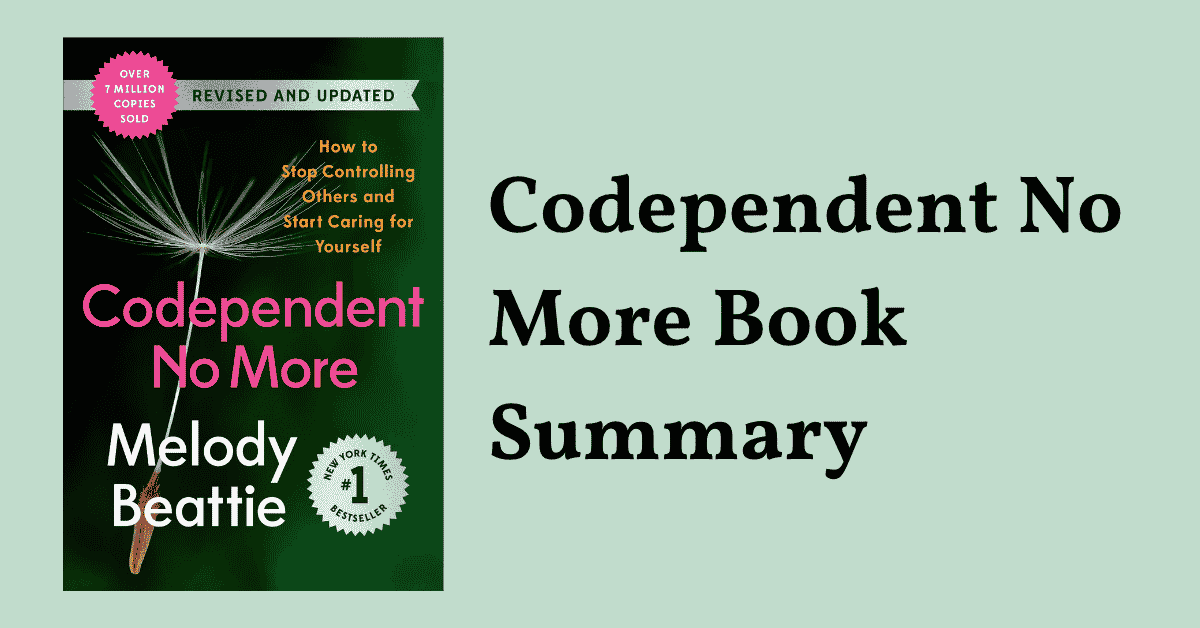
You know, some books just hit you at the right time. They feel like a warm hug, a stern talking-to, and a roadmap all rolled into one. Melody Beattie’s “Codependent No More” is one of those books for so many people.
If you’ve ever felt like you’re constantly trying to fix everyone else, or that your worth comes from what you do for others, this book is probably speaking directly to your soul.
This isn’t just a summary; think of it as us chatting over a steaming mug of coffee, breaking down why this book is such a big deal. We’ll explore who Melody Beattie is, what the book is really about, and how its ideas can actually change your life. We’ll also dive deep into its popularity and who will benefit most from picking up this classic.
Quick Book Overview
| Item | Details |
|---|---|
| Book Title | Codependent No More |
| Author | Melody Beattie |
| Published Year | 1986 |
| Genre | Self-Help, Psychology, Personal Development |
| Main Theme | Overcoming codependency and learning to live a self-directed life. |
| Reading Difficulty | Easy to Moderate. Clear, approachable language. |
| Best For | Anyone struggling with people-pleasing, unhealthy relationships, or a lack of personal boundaries. |
| Key Takeaway | You can’t control others and shouldn’t try. Focus on your own life, needs, and well-being first. |
About the Author
Melody Beattie is a true beacon in the world of self-help. She’s lived through what she writes about, which is why her words have such power. She struggled with her own codependent patterns for years.
This personal journey fuels her incredible insight and empathy.
Her career took off with “Codependent No More.” It became an instant bestseller and remains a foundational text for understanding codependency. She’s a licensed counselor and has dedicated her life to helping others find freedom from unhealthy relationship dynamics. Her expertise comes from a blend of professional knowledge and raw, lived experience.
Beattie’s major achievement is undoubtedly this book and its impact. It’s helped millions take their first steps toward a healthier, happier life. She has several other popular books, like “Beyond Codependency” and “The Language of Letting Go,” which continue to offer guidance.
Readers trust her because she’s honest about her own struggles. She doesn’t present herself as perfect but as someone who has found a way through, offering hope and practical tools.
What Is This Book About?
At its heart, “Codependent No More” is about breaking free from the cycle of trying to control others and fixing their problems, often at the expense of your own well-being. The central idea is that codependency isn’t just about being dependent; it’s about relying on people, on approval, on substances, or on possessions for our sense of self-worth.
The book tackles the pervasive problem of individuals whose lives revolve around trying to manage or “fix” other people, whether it’s a family member, friend, or romantic partner. This often leads to a loss of self, anxiety, and a feeling of being trapped. Beattie’s philosophy is simple yet profound: you are not responsible for other people’s feelings, actions, or happiness.
The overall message is one of empowerment. It’s about redirecting that energy back onto yourself. “Codependent No More” is a call to reclaim your life, to discover your own needs, and to build a life that centers on your own growth and happiness.
It teaches you that letting go of control isn’t abandonment; it’s about self-preservation and true love.
Chapter-by-Chapter Summary
Let’s dive into the core of the book. Beattie structures it in a way that walks you through understanding codependency and then actively working through it.
Chapter 1: The Human Being’s Guide to the Codependent
- Main Idea: This chapter introduces the concept of codependency and how it manifests in our lives. It defines codependency not just as relationship dependence but as a form of survival illness driven by a need for control.
- Important Lessons: Codependent behaviors are learned. We often become codependent trying to cope with difficult or chaotic environments, especially in childhood. It’s not a moral failing but a pattern of coping.
- Key Quotes or Concepts: Beattie often uses phrases like “you are not responsible for other people’s feelings.” The core concept is recognizing that you’ve been living for others.
- Real-Life Examples: Think of the child who constantly tries to keep the peace in a fighting household, or the adult who always says “yes” to favors, even when exhausted. They are trying to manage the emotional climate around them.
- Practical Applications: Start observing your own reactions. Do you feel responsible for others’ moods? Do you often say yes when you mean no? Awareness is the first step.
- What Readers Can Learn: Readers learn to identify codependent patterns in their own lives. They begin to understand that these behaviors developed for a reason, often to protect themselves.
Chapter 2: A Look at the Problem, The Disease of Codependency
- Main Idea: Beattie delves deeper into codependency as an illness. She explains how it affects our feelings, thoughts, and actions, much like a physical ailment but rooted in our emotional and psychological lives.
- Important Lessons: Codependency is progressive and can impact all areas of your life if left unaddressed. It’s characterized by denial, control, and a lack of self-identity.
- Key Quotes or Concepts: The idea that codependency is a “disease” emphasizes its seriousness and the need for a treatment plan, not just willpower.
- Real-Life Examples: Consider someone who constantly checks their partner’s phone, or someone who rearranges their entire schedule to accommodate a friend’s crisis, even if it means neglecting their own work or health. This is control in action.
- Practical Applications: Begin to notice the physical symptoms of stress related to these controlling behaviors. Do you get headaches? Upset stomach? These are signals.
- What Readers Can Learn: Readers understand that codependency is a genuine problem that requires a dedicated effort to heal. They see how pervasive its influence can be.
Chapter 3: The Characteristics of a Codependent
- Main Idea: This chapter breaks down the common traits and behaviors associated with codependency. It paints a picture of who a codependent person is, looking beyond stereotypes.
- Important Lessons: Codependents often have low self-esteem, fear abandonment, are people-pleasers, feel guilt or shame easily, and have trouble setting boundaries. They may also be perfectionists or have difficulty expressing their feelings.
- Key Quotes or Concepts: Phrases like “I’m sorry” become a reflex. The feeling of “not being good enough” is a constant companion.
- Real-Life Examples: Someone who apologizes for taking up space, or who feels responsible for the happiness of their entire family at every gathering. They can’t relax because they’re constantly monitoring and trying to manage the atmosphere.
- Practical Applications: Track how often you apologize unnecessarily or how often you put others’ needs before your own without feeling resentful.
- What Readers Can Learn: Readers start spotting these characteristics in themselves and others, fostering a sense of recognition and validation. They see they are not alone.
Chapter 4: The Role of Denial
- Main Idea: Denial is a cornerstone of codependency. This chapter explains how denial allows codependent patterns to persist by preventing us from seeing the reality of our situation.
- Important Lessons: Denial can be about minimizing problems, blaming others, forgetting things, or rationalizing unhealthy behaviors. It keeps us stuck in the past and prevents growth.
- Key Quotes or Concepts: “They made me do it” or “It’s not that bad” are classic denial phrases. The book highlights how we often choose to believe our comforting lies.
- Real-Life Examples: Someone whose partner is constantly late, but they tell themselves, “Oh, they’re just always busy, not disrespectful.” Or someone who overlooks obvious red flags in a relationship, convincing themselves it will get better.
- Practical Applications: Challenge your own rationalizations. When something feels off, ask yourself if you’re truly seeing the situation, or if you’re making excuses to avoid discomfort.
- What Readers Can Learn: Understanding denial is crucial. It shows readers the mental gymnastics they might be performing to shield themselves from painful truths.
Chapter 5: Other People’s Problems
- Main Idea: This chapter focuses on how codependents become enmeshed in the lives and problems of others, often to avoid their own feelings or issues.
- Important Lessons: We can become so focused on fixing others that we neglect our own emotional, physical, and spiritual needs. This obsession prevents us from addressing our own lives.
- Key Quotes or Concepts: “I’m fine, how are you?” is often asked with the underlying thought, “Please tell me you’re not going to ask me about my problems.” The focus is always outward.
- Real-Life Examples: A friend constantly calls you with their latest drama, and you spend hours listening and trying to solve it. Meanwhile, your own bills are piling up, or you’re feeling incredibly lonely.
- Practical Applications: Start creating a list of your own concerns or needs that you’ve been putting off. Make a conscious effort to spend time on one of those items each day.
- What Readers Can Learn: This chapter helps readers recognize when they are taking on the burdens of others and how that actually disempowers both them and the other person.
Chapter 6: Learning to Let Go
- Main Idea: Letting go is about releasing the need to control people, situations, and outcomes. It’s a form of self-trust and acceptance.
- Important Lessons: True release comes from acknowledging that you cannot change people or make them do what you want. It’s about relinquishing that burden and focusing on what you can control: yourself.
- Key Quotes or Concepts: “I can do this,” meaning not that you can fix everything, but “I can handle this outcome, whatever it is.” It’s about detaching with love.
- Real-Life Examples: You might have been trying to push a family member to get a job. When they don’t, instead of getting angry or anxious, you accept that it’s their choice and focus on your own life.
- Practical Applications: Practice short “letting go” exercises. When you feel a surge of worry about someone else, consciously tell yourself, “I can’t control this. I’m letting it go.”
- What Readers Can Learn: Readers learn that letting go is not passive resignation but an active choice to reclaim their peace of mind and energy. It’s about trusting the process of life.
Chapter 7: Setting Boundaries
- Main Idea: Establishing healthy boundaries is fundamental to escaping codependency. It defines where you end and others begin.
- Important Lessons: Boundaries are not walls to keep people out, but rather guidelines for how you want to be treated and what you will and will not accept. They protect your energy and self-respect.
- Key Quotes or Concepts: “No” is a complete sentence. Your feelings are valid, and you have a right to protect them.
- Real-Life Examples: Saying no to an overtime request when you’re already overloaded, or stating that you won’t tolerate disrespectful language. It’s about enforcing your limits.
- Practical Applications: Start with small boundaries. Practice saying “no” to minor requests or stating your preference in a low-stakes situation.
- What Readers Can Learn: Readers gain the courage to define their needs and limits, understanding that saying “no” allows them to say “yes” to themselves and healthier interactions.
Chapter 8: Learning to Live for Yourself
- Main Idea: This chapter is a powerful call to prioritize your own needs, desires, and happiness. It’s about rediscovering who you are outside of your relationships.
- Important Lessons: Your worth doesn’t come from pleasing others or solving their problems. You deserve to have your needs met and to pursue your own joy.
- Key Quotes or Concepts: “I am responsible for my own happiness.” This is a fundamental shift in perspective from codependency.
- Real-Life Examples: Taking up a hobby you’ve always wanted to try, even if others don’t understand it. Or scheduling a solo vacation to recharge.
- Practical Applications: Make a “self-care” list and commit to doing one thing on it daily, no matter how small.
- What Readers Can Learn: Readers are encouraged to build a life that feels authentic and fulfilling for them, rather than one dictated by the expectations or needs of others.
Chapter 9: Reclaiming Your Life
- Main Idea: This is the practical application chapter. It provides strategies for actively rebuilding your life based on the principles learned.
- Important Lessons: Healing is a process. It involves consistent effort, self-compassion, and seeking support when needed. You can create a life filled with self-respect and authentic connections.
- Key Quotes or Concepts: The journey of recovery is ongoing. Celebrate small victories.
- Real-Life Examples: Developing a daily routine that includes checking in with your feelings, engaging in enjoyable activities, and practicing gratitude.
- Practical Applications: Identify one area of your life you want to reclaim and set one small, actionable goal for it this week.
- What Readers Can Learn: Readers receive concrete steps and encouragement to implement the changes discussed throughout the book, fostering a sense of hope and agency.
Biggest Lessons From The Book
Here are some of the most impactful lessons from “Codependent No More”:
-
You are not responsible for other people’s feelings or problems.
- Why it matters: This is the bedrock of breaking free. Carrying others’ emotional weight is exhausting and prevents them from learning to handle their own issues.
- Real-life example: Your friend is upset because you can’t make their party. Instead of feeling guilty and forcing yourself to go, you acknowledge their disappointment and state that you have a prior commitment, without over-explaining or apologizing profusely.
- How readers can apply it: When you feel the urge to apologize for someone else’s reactions, stop. Remind yourself: “Their feelings are theirs.”
-
You can’t control others, but you can control yourself.
- Why it matters: Trying to manipulate situations or people into behaving how you want is futile and breeds resentment. Focus your energy on your own choices and reactions.
- Real-life example: You’ve been trying to get a family member to stop a destructive habit. The effort is draining you. You decide to stop nagging and instead focus on your own well-being and creating healthy boundaries for yourself.
- How readers can apply it: When you find yourself getting frustrated with someone’s behavior, ask, “What can I do differently?” rather than “What can they do differently?”
-
“No” is a complete sentence.
- Why it matters: Saying no protects your time, energy, and mental health. It’s essential for setting boundaries and preventing burnout.
- Real-life example: Your colleague asks you to take on extra work that will make you miss your child’s soccer game. You politely say, “I can’t take that on right now; I have a prior commitment.”
- How readers can apply it: Practice saying no to small, low-stake requests. Notice that the world doesn’t end, and you feel a sense of relief.
-
Your feelings are valid and deserve attention.
- Why it matters: Codependents often suppress their own emotions to please others or avoid conflict. Recognizing and honoring your feelings is key to self-awareness and healing.
- Real-life example: You feel hurt when a friend cancels plans last minute. Instead of brushing it off, you acknowledge, “I feel disappointed and a little hurt by that.”
- How readers can apply it: Set aside time each day to check in with yourself: “How am I feeling right now?” Don’t judge the feeling; just acknowledge it.
-
Self-care is not selfish; it’s necessary.
- Why it matters: You cannot pour from an empty cup. Taking care of your physical, emotional, and spiritual needs is crucial for your own well-being and your ability to show up effectively in life.
- Real-life example: You’re feeling overwhelmed. Instead of powering through, you decide to take a long bath, read a book, or go for a walk, knowing this will help you feel more balanced.
- How readers can apply it: Schedule one act of self-care into your week, just like any other important appointment.
-
Loss of self is a hallmark of codependency.
- Why it matters: When you’re focused on others, you lose touch with your own identity, passions, and desires. Reclaiming your sense of self is vital for a fulfilling life.
- Real-life example: You used to love painting, but you stopped because your partner didn’t understand its importance. You decide to pick up your brush again, even if it’s just for an hour a week.
- How readers can apply it: Make a list of things you enjoyed doing before you became deeply enmeshed in caring for others. Start by revisiting one activity.
-
Addiction isn’t just to substances; it’s to people, behaviors, and control.
- Why it matters: Codependency can be an addiction to the chaos, dependency on others, or the feeling of being needed. Recognizing this addictive pattern is the first step to breaking it.
- Real-life example: You find yourself constantly seeking out people who need “fixing,” even if it harms you. This is an addiction to the role of rescuer.
- How readers can apply it: Identify the “fix” you get from your codependent behaviors. Is it a temporary sense of purpose? A distraction from your own emptiness?
-
Letting go of the past is essential for healing.
- Why it matters: Holding onto past hurts, resentments, or perceived injustices keeps you tethered to pain. Forgiveness and acceptance allow you to move forward.
- Real-life example: You keep replaying a hurtful incident from years ago. You consciously decide to acknowledge the pain, then let the memory go, recognizing it no longer serves you.
- How readers can apply it: Practice mindfulness. When a past memory surfaces and causes distress, gently acknowledge it and bring your focus back to the present moment.
-
Trust yourself and your intuition.
- Why it matters: Codependents often doubt their own judgment because they’ve been conditioned to prioritize others’ opinions. Rebuilding self-trust is crucial.
- Real-life example: You have a gut feeling that a business opportunity isn’t right, even though everyone else is excited. You learn to listen to that inner voice and act on it.
- How readers can apply it: Pay attention to your initial gut feelings in everyday situations. Over time, you’ll learn to trust them more.
-
You are worthy of love and happiness, just as you are.
- Why it matters: This is the ultimate message. Your inherent worth doesn’t depend on your achievements or your ability to fix others. You deserve a life free from excessive obligation and full of genuine connection.
- Real-life example: You treat yourself with kindness and compassion, even on days when you don’t feel productive or perfectly “together.”
- How readers can apply it: Repeat affirmations like “I am worthy” or “I deserve happiness” daily.
Most Powerful Quotes And Their Meaning
“We can only give what we have. We can only love from where we are. We can only heal as much as we have healed.”
- What it means: This quote highlights the importance of self-nourishment. You can’t effectively help others if you yourself are depleted or wounded. Your capacity to give is directly tied to your own well-being.
- Why it matters: It reframes codependent giving as potentially harmful if it comes from a place of scarcity. It encourages introspection and self-care before outward service.
- How it applies in daily life: If you’re feeling drained and unable to support a friend, this quote reminds you it’s okay to say, “I need to take care of myself right now so I can be present later.”
“The goal of recovery is to have a life. Not just to survive, but to live fully and happily.”
- What it means: Recovery from codependency isn’t just about stopping unhealthy behaviors. It’s about actively building a rich, meaningful existence that includes joy, fulfillment, and self-discovery.
- Why it matters: It shifts the focus from a negative to a positive. It’s not just about ending suffering, but about creating a life you love.
- How it applies in daily life: Instead of just trying to avoid stressful situations, actively seek out activities that bring you genuine happiness and a sense of purpose.
“We are interested in what we want to live for, not just what we want to live out.”
- What it means: This is about shifting your focus from the problems you want to escape to the positive vision you want to create. It’s about having something to move towards, not just something to move away from.
- Why it matters: A life without a positive goal can feel empty. This quote inspires forward-thinking and purposeful living.
- How it applies in daily life: Instead of dwelling on what you dislike about your job, think about what kind of work would truly excite you and start taking steps in that direction.
“If you have been feeling like a victim, you have been acting like one. If you want to stop being treated like a victim, you have to stop acting like one.”
- What it means: This is a powerful statement of personal responsibility. It suggests that our perception and outward behavior create the reality we experience. By changing how we act, we can change how others treat us.
- Why it matters: It empowers individuals to recognize their agency. Codependents often feel powerless, and this quote offers a way to reclaim that power.
- How it applies in daily life: If you feel people constantly take advantage of you, examine your interactions. Are you consistently allowing it? If so, start practicing assertive communication and boundary setting.
Key Concepts Explained Simply
Codependency: Think of it like a plant that’s grown so used to being propped up by stakes and strings that it can’t stand up on its own. A codependent person has learned to rely so heavily on others for their sense of self-worth and for external validation that they struggle to stand on their own two feet.
Control: Codependents try to control everything and everyone around them. It’s like being a puppeteer who’s constantly trying to move everyone else’s strings, convinced that if they just move them perfectly, things will be okay. This is often driven by fear, fear of abandonment, fear of chaos, or fear of not being good enough.
Boundaries: Imagine your personal space or your energy field like a force field. Boundaries are the rules for how close people can come to that field and how they can interact with it. Healthy boundaries protect you from being overwhelmed or harmed by others, like a polite but firm velvet rope around your private garden.
Enabling: This is when you do things for others that they could and should do for themselves. It’s like constantly rescuing someone from drowning without teaching them how to swim. You might think you’re helping, but you’re actually preventing their growth and reinforcing their dependence.
Letting Go: This doesn’t mean giving up or not caring. It means releasing the need to manage or fix things that are outside your control. It’s about accepting what is, trusting that you can handle the outcome, and freeing yourself from the burden of responsibility for others’ lives.
It’s like finally setting down a heavy bag you’ve been carrying for years.
How To Apply The Book In Real Life
Putting “Codependent No More” into practice is a journey, not a destination. Here’s how you can start weaving its wisdom into your daily life:
Daily Habits:
- Morning Check-in: Before you even get out of bed, ask yourself: “How am I feeling today?” Acknowledge your emotions without judgment.
- Intentional “No”: Practice saying “no” to one small, non-essential request per day. It could be declining an extra social engagement or a minor work task you don’t have capacity for.
- Self-Care Moment: Dedicate 10-15 minutes to something purely for you. This could be meditating, listening to music, stretching, or simply enjoying a cup of tea in silence.
Weekly Habits:
- Boundary Review: At the end of the week, reflect on any boundaries you set or wished you’d set. What worked? What can you try differently next time?
- “Me Time” Activity: Schedule at least one longer block of time (an hour or more) for an activity you genuinely enjoy, disconnected from others’ needs.
- Gratitude Journal: Write down 3-5 things you’re grateful for, focusing on aspects of your own life and well-being.
Mindset Shifts:
- Challenge the “Fixer” Urge: When you feel the instinct to jump in and solve someone else’s problem, pause. Ask yourself if it’s truly your responsibility, or if intervening might be enabling.
- Own Your Feelings: Instead of saying “You make me feel…” practice saying “I feel…” This shifts ownership of emotions back to you.
- Focus on Your Needs: Regularly ask yourself, “What do I need right now?” and then try to meet that need.
Communication Techniques:
- “I” Statements: Use “I” statements to express your feelings and needs without blaming others. For example, “I feel overwhelmed when I have too many tasks” instead of “You always pile work on me.”
- Assertive Voice: Practice speaking your truth calmly and directly. This means stating your needs and boundaries clearly, without aggression or passivity.
- Active Listening (for Yourself): Listen to your own inner voice, your intuition, and your physical sensations as much as you listen to others.
Personal Growth Practices:
- Identify Your Values: What is truly important to you? Living in alignment with your values will naturally steer you away from codependent compromises.
- Celebrate Small Wins: Acknowledge and celebrate every small step you take towards living your own life, like setting a boundary or prioritizing a need.
- Seek Support: Consider joining a support group or talking to a therapist who understands codependency. This isn’t a sign of weakness, but of strength and commitment to healing.
Common Mistakes People Make When Applying These Ideas
Even with the best intentions, people sometimes stumble when trying to implement these principles.
-
Mistake: Feeling guilty for saying “no.”
- Why it happens: Decades of people-pleasing and conditioning make saying no feel inherently wrong or selfish.
- Better alternative: Reframe “no” as saying “yes” to yourself, your time, or your well-being. Remind yourself that you are not responsible for managing others’ disappointment.
- Benefits: Reduces burnout and resentment, allows for more capacity for genuine giving.
-
Mistake: Swinging from people-pleaser to aggressive boundary-setter.
- Why it happens: The pendulum effect, trying to correct a deficit by going to the extreme opposite.
- Better alternative: Aim for assertiveness, not aggression. Be clear, firm, and respectful. Practice gradual boundary setting.
- Benefits: Maintains healthier relationships while protecting yourself. Avoids alienating others unnecessarily.
-
Mistake: Expecting immediate results and getting discouraged.
- Why it happens: We want the pain to stop now, and healing feels slow.
- Better alternative: Understand that recovery is a marathon, not a sprint. Celebrate small progress and be patient with yourself.
- Benefits: Prevents giving up prematurely and fosters a sustainable change process.
-
Mistake: Focusing on fixing others’ codependency instead of your own.
- Why it happens: The ingrained habit of trying to “fix” others.
- Better alternative: Keep the focus squarely on your own patterns and behaviors. You can only change yourself.
- Benefits: Saves emotional energy and leads to actual personal growth.
Benefits Of Reading This Book
The impact of “Codependent No More” ripples through every aspect of a person’s life.
- Personal Growth Benefits: You gain a profound understanding of yourself, your motivations, and your patterns. This self-awareness is the foundation for all personal growth.
- Professional Benefits: Setting clear boundaries and managing your energy leads to better productivity and less burnout. You become more focused and effective in your work.
- Emotional Benefits: You experience less anxiety, guilt, and shame. There’s a profound sense of relief that comes from releasing the burden of controlling others.
- Relationship Benefits: Your relationships become more authentic and balanced. You attract healthier connections and learn to navigate existing ones with greater respect for yourself and others.
- Leadership Benefits: In leadership, understanding boundaries and people’s core needs (without trying to fix them) makes for a more empathetic and effective leader. You empower others rather than controlling them.
Criticisms And Limitations
While incredibly valuable, no book is perfect for everyone in every situation.
- Common Criticisms: Some readers find the language a bit dated, given it was published in 1986. Occasionally, the focus can feel very individualistic, which might not fully capture complex systemic issues in families or societies.
- Weak Points: The book primarily focuses on the individual’s internal work. While it touches on relationships, it might not delve deeply enough for those in actively abusive situations where safety is the paramount concern and professional intervention is absolutely critical.
- Situations Where Advice May Not Work: For individuals experiencing severe mental health crises or active abuse, this book should be considered a supplemental resource, not a sole solution. The advice assumes a level of personal agency that might be severely compromised in these extreme circumstances. Professional help is vital.
Similar Books To Read Next
If “Codependent No More” resonated with you, you’ll likely find these books equally insightful.
| Book | Author | Why Read It |
|---|---|---|
| Boundaries | Henry Cloud & John Townsend | This is THE book on setting healthy boundaries. It delves into the biblical and psychological reasons why boundaries are crucial for healthy relationships. |
| The Four Agreements | Don Miguel Ruiz | Offers simple yet profound principles for personal freedom and happiness, focusing on honesty, integrity, and self-awareness. Great for mindset shifts. |
| Daring Greatly | Brené Brown | Explores vulnerability, courage, and shame. It helps build the resilience needed to step out of codependency and into authenticity. |
| Attached | Amir Levine & Rachel Heller | Explains the science of adult attachment styles. Understanding your attachment can shed light on why you might fall into codependent patterns. |
| When Things Fall Apart | Pema Chödrön | A Buddhist nun’s perspective on dealing with difficult emotions and life’s challenges, offering wisdom on acceptance and finding peace. |
| The Language of Letting Go | Melody Beattie | A natural follow-up to “Codependent No More,” this book offers daily reflections and meditations for practicing detachment and self-care. |
Who Should Read This Book?
Honestly, so many people can benefit from “Codependent No More.”
- Students: Learning about healthy relationships and self-worth early can prevent years of struggle.
- Entrepreneurs: Those who pour everything into their business can learn to balance drive with self-care and healthy boundaries.
- Managers & Leaders: Understanding how to empower employees without enabling or becoming overly responsible is key. This book helps build healthier work environments.
- Professionals: Anyone in a helping profession sometimes needs to be reminded of their own limits and self-care needs.
- Parents: Learning to parent without over-involving yourself in your children’s problems, allowing them to grow independently.
- Self-improvement readers: If you’re on a path of personal growth, understanding codependency is a vital piece of the puzzle.
If you find yourself constantly saying “yes” when you want to say “no,” feeling responsible for the happiness of others, or like you can’t quite find your own footing, this book is for you.
Frequently Asked Questions (FAQ)
Q1: Is “Codependent No More” only for women?
A: Absolutely not! Codependency affects people of all genders. While the book’s initial popularity might have leaned towards women, its principles are universal for anyone struggling with unhealthy relationship dynamics.
Q2: I don’t think I’m “codependent.” Should I still read this book?
A: If you ever find yourself people-pleasing, struggling to say no, or feeling drained by your relationships, you’ll find valuable insights. Many people who don’t identify as “codependent” discover they exhibit many codependent traits.
Q3: Is this book about enabling addiction?
A: It addresses themes of enabling, especially in the context of relationships where addictive behaviors might be present. However, it’s broader than just addiction; it covers unhealthy relationship patterns in general.
Q4: Can this book help me if I’m in an abusive relationship?
A: “Codependent No More” can be a starting point for understanding the dynamics, but it’s crucial to seek professional help and support specifically for abuse. Safety is the priority. This book is best used as a complement to, not a replacement for, specialized support.
Q5: How long does it take to see results after reading this book?
A: Recovery is a process. You might feel immediate relief from understanding, but behavioral and mindset shifts take time and consistent practice. Some people see changes in weeks, others in months or years.
Q6: Is codependency a recognized psychological disorder?
A: While “codependency” isn’t a formal diagnosis in the DSM-5 (the diagnostic manual for mental disorders), it is a widely recognized pattern of behavior and psychological distress that therapists treat. The principles in the book are based on sound psychological concepts.
Q7: What if I try to set boundaries and people get angry?
A: That’s a common reaction, especially from those accustomed to your previous behavior. Your responsibility is to set the boundary, not to manage their reaction to it. Consistent, calm assertion is key.
Q8: Is there a difference between codependency and healthy interdependence?
A: Yes. Healthy interdependence is about mutual support and reliance where individuals maintain their autonomy. Codependency is an unhealthy reliance where one person’s identity is lost in trying to control or please another.
Q9: What should I do if I constantly feel guilty after setting a boundary?
A: This guilt is a common sign of ingrained codependent patterns. Acknowledge the guilt, remind yourself why the boundary is necessary for your well-being, and perhaps practice a self-compassionate exercise.
Q10: How does this book relate to self-love?
A: The book is fundamentally about learning to love and value yourself. By releasing the need for external validation and prioritizing your own needs, you cultivate a deeper sense of self-love.
Q11: Can I apply these concepts in a business setting?
A: Absolutely. Understanding boundaries, not over-extending yourself, and focusing on your own responsibilities are crucial for professional success and healthy work relationships.
Q12: What’s the biggest takeaway from “Codependent No More”?
A: The core message is that you are not responsible for controlling others or their happiness. Your primary responsibility is to yourself and your own well-being.
Final Verdict
“Codependent No More” is more than just a book; it’s a lifeline for anyone feeling trapped in cycles of unhealthy relationships and self-neglect. Melody Beattie masterfully blends personal insight with practical advice, making complex psychological concepts accessible and actionable. Its enduring popularity is a testament to its deep resonance with real human struggles.
The book’s strengths lie in its clear identification of codependent traits, its empowering message of reclaiming personal power, and its straightforward strategies for building self-worth and boundaries. It provides a much-needed permission slip to put yourself first. While some of its framing might feel a little dated, the core message of detaching from the need to control and focusing on self-care remains profoundly relevant.
Its weakness, if any, is that it’s a starting point. For severe trauma or abuse, additional professional intervention is essential. However, for the vast majority of people experiencing relationship difficulties, anxiety, or a loss of self, this book is an invaluable guide.
Is it worth reading? A resounding yes. If you’ve ever felt like you’re living for other people, or that your sense of self is tied to fixing others, you will benefit immensely.
It’s a foundational text for anyone on a journey of self-discovery and healing.
The memorable takeaway is this: You are not the caretaker of the world’s problems. You are the creator of your own life. Start building it with intention, courage, and a whole lot of self-compassion.

2 thoughts on “Codependent No More Book Summary”