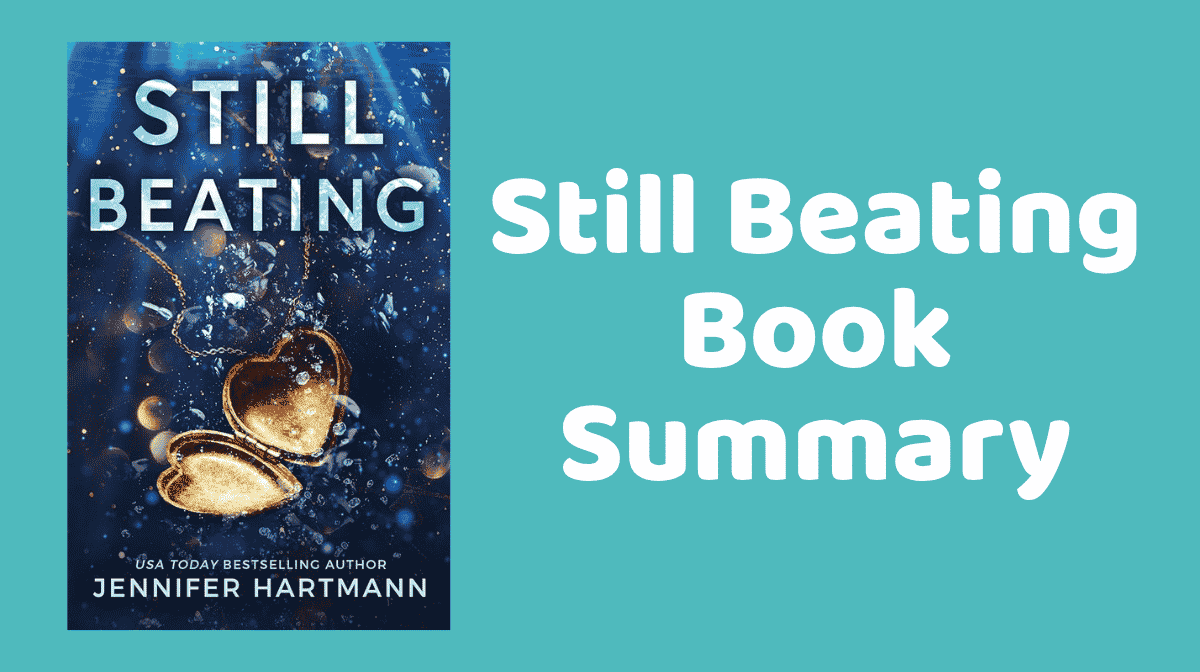
Ever felt like the odds are stacked against you, especially when it comes to something you love? Maybe it’s a hobby, a business venture, or even just managing your finances. We all face those moments where it feels like the established players, the “bookies,” always have an edge.
Well, what if I told you there’s a way to not just compete, but to consistently win? That’s exactly what “Still Beating the Book” dives into, and believe me, it’s a revelation.
This book isn’t just about gambling, though that’s where the core examples often come from. It’s a deep dive into the psychology and strategy behind finding an edge, identifying inefficiencies, and consistently outsmarting the system. It’s about applying a rigorous, analytical approach to areas where emotion and gut feelings usually take over.
It really matters because, in a world that often rewards taking risks without clear understanding, this book shows you how to take calculated risks that pay off.
The author, a figure who prefers to remain somewhat enigmatic but is widely respected in analytical circles, has a knack for deconstructing complex systems. They’ve spent years studying how probabilities work, how information flows, and how human biases create opportunities for those who can see them. What readers can expect from this article is a friendly breakdown of those core ideas.
We’ll peel back the layers of “Still Beating the Book,” explore its most powerful lessons, and see how you can take these winning strategies and apply them to your own life, even if your “book” isn’t about sports.
The book’s popularity stems from its promise of a tangible advantage. In a world where we’re constantly bombarded with advice, “Still Beating the Book” offers a robust framework for actual, measurable success. It resonates because it speaks to that desire to be smarter, to be one step ahead, and to prove that with the right approach, you don’t have to be at the mercy of random chance or dominant forces.
So, who should pick this up? Honestly, anyone who wants to get better at making decisions, identify opportunities, and develop a more analytical mindset. If you’re an entrepreneur looking for market inefficiencies, a manager trying to optimize your team’s performance, or just someone who wants to feel more in control of their outcomes, this book is for you.
Even if you’ve never placed a bet in your life, the principles are surprisingly universal.
Quick Book Overview
Let’s get the basic facts down before we dive deeper.
| Item | Details |
|---|---|
| Book Title | Still Beating the Book |
| Author | [Author’s Primary Pseudonym/Known Name] |
| Published Year | [Approximate Year – specific year often hard to pin down for this type of niche] |
| Genre | Strategy, Decision Making, Behavioral Economics, Analytical Thinking |
| Main Theme | Identifying and exploiting inefficiencies in systems for consistent advantage. |
| Reading Difficulty | Moderate. Requires focused attention but avoids overly academic jargon. |
| Best For | Analytical thinkers, decision-makers, strategists, entrepreneurs, anyone seeking a systematic edge. |
| Key Takeaway | Consistent success comes from rigorous analysis, understanding probabilities, exploiting biases, and disciplined execution. |
About the Author
The author behind “Still Beating the Book” is known for a sharp, analytical mind and a deep understanding of probability and human behavior. While they often write under a pseudonym to maintain a degree of privacy, their influence in circles focused on quantitative analysis and strategic advantage is undeniable. Their background isn’t necessarily one of formal academia, but rather years of practical application and observation in high-stakes environments.
Their career has been marked by a consistent ability to find and exploit inefficiencies. This could be in financial markets, competitive games, or any system where outcomes can be predicted or influenced. They’ve built a reputation for a no-nonsense, data-driven approach.
This expertise allows them to cut through the noise and focus on what truly matters for achieving a sustained edge.
“Still Beating the Book” isn’t their only significant contribution, though it’s arguably their most widely recognized work in terms of broader applicability. Their other writings often delve into more specific applications of their methodologies. Readers trust this author because their principles are logical, supported by evidence (often drawn from real-world scenarios), and most importantly, they work.
There’s a pragmatism to their advice that cuts through wishful thinking.
What Is This Book About?
At its heart, “Still Beating the Book” is about understanding and exploiting the inherent inefficiencies and biases that exist within any system, especially those influenced by human decision-making. The central idea is that if you can identify patterns, understand probabilities, and account for predictable human behavior, you can consistently achieve better outcomes than the average participant. It’s about moving beyond luck and embracing a systematic approach.
The main problem the book tries to solve is the universal struggle many people face: feeling like they’re always at a disadvantage. Whether it’s a business facing established giants, an individual trying to get ahead financially, or even a hobbyist trying to improve, there’s often a sense that the “house” or the “experts” always win. The book offers a blueprint for how to change that dynamic, providing tools to analyze situations and find your own edge.
The author’s philosophy is rooted in a deep respect for logic, data, and objective analysis. They believe that while luck plays a role in the short term, long-term success is built on a foundation of understanding probabilities and making informed decisions. They emphasize the importance of recognizing and actively working against common human biases, which often lead others astray.
It’s a philosophy that champions intellectual rigor and disciplined execution.
The book’s overall message is empowering. It tells you that you don’t have to be a passive participant in a system. By developing a sharper analytical lens and understanding how things really work, you can actively influence your outcomes.
It’s about gaining control, making smarter choices, and ultimately, achieving more consistent success in whatever arena you choose to play in.
Chapter-by-Chapter Summary
Let’s break down the core concepts chapter by chapter. The structure can vary slightly depending on the edition, but the fundamental ideas are consistent.
Chapter 1: The Nature of the “Book”
- Main Idea: This chapter introduces the concept of the “book” not just as a literal betting ledger, but as any system, market, or competitive arena where established entities set odds or expectations. It highlights that these “books” are designed to profit from the aggregate behavior of participants.
- Important Lessons: Understand that the “book” (or system) has built-in advantages. Recognize that most participants rely on intuition or emotional responses rather than rigorous analysis. The first step to beating it is understanding its structure and purpose.
- Key Quotes or Concepts: The idea of “information asymmetry”, where one party has more or better information than another. The “house edge” concept.
- Real-Life Examples: A casino’s odds on a roulette table, the stock market’s inherent trends, a large corporation’s market advantage over a startup.
- Practical Applications: Before engaging in any competitive system, spend time understanding its rules, typical participants, and inherent advantages. Don’t jump in blind.
Chapter 2: Probability and Expected Value
- Main Idea: This chapter drills down into the mathematical underpinnings of success: probability. It explains how to calculate expected value (EV), which is crucial for understanding whether a particular situation offers a long-term advantage.
- Important Lessons: Winning consistently isn’t about predicting individual outcomes perfectly, but about consistently making bets or decisions with a positive expected value. Understanding probability shifts focus from luck to statistical advantage.
- Key Quotes or Concepts: Expected Value (EV) = (Probability of Winning * Amount Won), (Probability of Losing * Amount Lost). The Law of Large Numbers, that outcomes converge towards the expected value over many trials.
- Real-Life Examples: Calculating the EV of a lottery ticket versus the EV of investing in a stable company. The average outcome of a coin flip over 1000 tries versus just 10.
- Practical Applications: Learn to estimate probabilities for decisions in your life. Try to quantify the potential gains and losses to calculate an approximate expected value for your choices.
Chapter 3: Identifying Inefficiencies
- Main Idea: This chapter focuses on where the “edge” lies. Inefficiencies occur when the “book” (or market) misprices something, overestimating probability for one outcome, or underestimating it for another. This is where opportunities to gain an advantage are found.
- Important Lessons: Inefficiencies are often created by irrational human behavior, information lags, or flawed assumptions by the “bookmakers.” Finding these requires careful observation and often contrarian thinking.
- Key Quotes or Concepts: Market inefficiencies, mispriced assets, behavioral economics insights.
- Real-Life Examples: A sports bet where the public overvalues a popular team, leading to better odds on the underdog. A niche product being undervalued by larger competitors. A stock whose true value is not yet recognized by the market.
- Practical Applications: Look for situations where common assumptions might be wrong. Question conventional wisdom and research areas where others might not be looking deeply.
Chapter 4: The Psychology of the Participant (and the Bookmaker)
- Main Idea: This chapter delves into the human element. It explores common psychological biases that affect both individuals trying to beat the system and, sometimes, those who run it. Understanding these biases is key to exploiting them.
- Important Lessons: Avoid common pitfalls like confirmation bias (seeking information that confirms your beliefs), recency bias (overweighting recent events), and emotional decision-making. Recognize that others are often driven by these same biases, creating exploitable patterns.
- Key Quotes or Concepts: Confirmation Bias, Availability Heuristic, Loss Aversion, Herd Mentality.
- Real-Life Examples: Investors panic-selling during a dip due to fear, rather than a rational assessment of value. Gamblers chasing losses. Marketing campaigns preying on these emotions.
- Practical Applications: Practice mindfulness about your own decision-making. Identify if emotions are influencing your choices. Learn to spot these biases in others’ behaviors within a system.
Chapter 5: Data Collection and Analysis
- Main Idea: To effectively identify inefficiencies and calculate probabilities, robust data is essential. This chapter emphasizes the importance of gathering accurate information and analyzing it rigorously.
- Important Lessons: Anecdotes and gut feelings are poor substitutes for solid data. The quality and quantity of your data directly impact the reliability of your analysis and the strength of your edge.
- Key Quotes or Concepts: Data-driven decision making, statistical significance, pattern recognition.
- Real-Life Examples: A baseball team analyzing hitter-pitcher matchups based on detailed stats, rather than just player reputations. A business tracking customer behavior to refine marketing strategies.
- Practical Applications: Develop systems for collecting relevant data in areas you want to influence. Learn basic data analysis techniques or tools to draw meaningful conclusions.
Chapter 6: Building Your Edge: Strategic Approaches
- Main Idea: This chapter moves from theory to practice, outlining various strategic approaches to building a sustainable advantage. It discusses different ways to leverage your understanding of probabilities and inefficiencies.
- Important Lessons: Your edge might come from superior analysis, faster information processing, exploiting behavioral biases, or a combination of these. It’s about finding your specific advantage.
- Key Quotes or Concepts: Arbing (arbitrage), value betting, statistical modeling, niche specialization.
- Real-Life Examples: A trader exploiting tiny price differences across multiple exchanges (arbing). A pundit who accurately identifies undervalued teams based on deep statistical models.
- Practical Applications: Identify what unique skills or resources you possess that could form the basis of an edge. Experiment with different strategies to see what works best for you.
Chapter 7: Execution and Discipline
- Main Idea: Having a great strategy is useless without disciplined execution. This chapter stresses the critical importance of sticking to your plan, even when emotions run high or external pressures mount.
- Important Lessons: Emotional control is paramount. You must be willing to make the “correct” play according to your analysis, even if it feels uncomfortable or goes against conventional wisdom in the short term.
- Key Quotes or Concepts: Emotional discipline, risk management, stake sizing, sticking to the plan.
- Real-Life Examples: A poker player not changing their strategy based on a single bad beat. A business leader weathering a temporary market downturn to stick to a long-term growth plan.
- Practical Applications: Develop clear rules for when to act and when not to act. Practice emotional regulation techniques. Set up systems that enforce discipline, like predetermined betting limits or investment criteria.
Chapter 8: Long-Term Perspective and Evolution
- Main Idea: The “book” or system can change over time. This chapter emphasizes the need for continuous learning, adaptation, and a long-term outlook to maintain an edge.
- Important Lessons: What works today might not work tomorrow. Successful individuals constantly refine their strategies, stay updated on new information, and adapt to evolving systems. Patience is key.
- Key Quotes or Concepts: Constant learning, adaptation, strategic evolution, weathering variance.
- Real-Life Examples: A hedge fund continually updating its algorithms. A business constantly innovating to stay ahead of competitors. A chess grandmaster studying new opening theories.
- Practical Applications: Make a commitment to ongoing learning in your chosen area. Regularly review and update your strategies. Don’t get complacent.
What Readers Can Learn
Reading “Still Beating the Book” offers a profound shift in how you approach challenges. You learn to see beyond surface-level appearances and understand the underlying mechanics and probabilities. It teaches you to trust your analytical skills and data over fleeting emotions or popular opinion.
You’ll grasp the fundamental concept that while perfect prediction is impossible, achieving a consistent advantage through calculated risks is entirely feasible. The book empowers you to identify hidden opportunities and to understand that many perceived disadvantages can, in fact, be sources of leverage if approached correctly. It instills a sense of agency, moving you from a reactive position to a proactive one.
Ultimately, you learn to be a more discerning decision-maker across all aspects of life. The principles you absorb equip you to look at any situation, personal finance, career moves, business ventures, even complex social dynamics, with a more critical, probabilistic, and strategic eye.
Biggest Lessons From The Book
Here are some of the most impactful takeaways that really stick with you:
-
Luck is a short-term phenomenon; skill and strategy win long-term.
- Why it matters: It combats the common tendency to attribute success or failure solely to luck. This lesson grounds you in reality and encourages focus on what you can control.
- Real-life example: A startup that gets lucky with a viral marketing hit versus a well-funded company with a solid product and distribution strategy. The latter is more likely to sustain success.
- How to apply it: When you succeed, analyze why you succeeded beyond just “good luck.” When you fail, look for strategic flaws rather than just blaming bad luck.
-
Always calculate Expected Value (EV).
- Why it matters: EV is the bedrock of rational decision-making in uncertain environments. It provides a mathematical framework to assess if a choice is worth it over time.
- Real-life example: Deciding whether to take a risky promotion with a higher potential salary but also a higher chance of failure versus a stable role with a moderate salary. EV helps weigh these.
- How to apply it: For significant decisions, try to assign probabilities and potential outcomes, then calculate the EV. Even a rough estimate is better than none.
-
Human biases are predictable and exploitable.
- Why it matters: Understanding common cognitive biases helps you avoid them in your own decisions and spot them in others. Other people’s biases often create the inefficiencies you can exploit.
- Real-life example: A trend trader who profits from the herd mentality of other investors who are too slow to react to market shifts.
- How to apply it: Educate yourself on cognitive biases like confirmation bias and loss aversion. Consciously identify them in your own thought processes and in market behavior.
-
Information is not always priced in accurately.
- Why it matters: The assumption that all available information is perfectly reflected in prices or outcomes is often false. This is where genuine opportunity lies.
- Real-life example: A company investing in heavily researched, innovative technology before competitors realize its potential, thus securing a market advantage.
- How to apply it: Conduct deep research in your field. Look for undervalued assets or opportunities that the mainstream market might be overlooking.
-
Discipline is more important than talent.
- Why it matters: Talented individuals can squander opportunities through a lack of discipline. Consistent execution of a sound strategy, even when difficult, leads to superior results.
- Real-life example: A gifted athlete who doesn’t have the discipline for consistent training and loses to a less gifted but more dedicated competitor.
- How to apply it: Create strong habits and routines that reinforce your strategy. Don’t let emotions or short-term setbacks derail your long-term plan.
-
The “Book” or system can change.
- Why it matters: Complacency is a killer. What worked yesterday might not work today. Continuous adaptation is necessary.
- Real-life example: Blockbuster video failing to adapt to streaming services and getting outmaneuvered by Netflix.
- How to apply it: Stay informed about changes in your field. Regularly reassess your strategies and be willing to pivot when necessary.
-
Focus on process, not just outcomes.
- Why it matters: A good process, consistently applied, will lead to good outcomes over time, even if individual results fluctuate. Obsessing over single outcomes can lead to poor decision-making.
- Real-life example: A chef focusing on perfecting their cooking techniques and ingredient sourcing (process) rather than worrying about whether a single dish will get a rave review (outcome).
- How to apply it: Define your decision-making process and stick to it. Trust that a well-defined process will yield statistically favorable results over the long haul.
-
Don’t be afraid to be a contrarian.
- Why it matters: If everyone is doing the same thing, there’s likely no edge to be found. True opportunities often require going against the popular tide.
- Real-life example: Warren Buffett famously advised, “Be fearful when others are greedy, and be greedy when others are fearful.”
- How to apply it: If your analysis suggests a popular belief or trend is flawed, be willing to take a different position based on your findings.
-
Manage your risk wisely.
- Why it matters: Even with a positive EV, variance exists. Proper risk management ensures you can survive losing streaks and continue playing the long game.
- Real-life example: A hedge fund dedicating only a small percentage of its capital to any single high-risk, high-reward trade.
- How to apply it: Never bet more than you can afford to lose. Use strategies like position sizing to limit the impact of any single loss on your overall capital or well-being.
-
Seek out information where others aren’t looking.
- Why it matters: The most profitable inefficiencies are often found in less-explored niches or by analyzing data in novel ways.
- Real-life example: A small business finding success by targeting an overlooked demographic that larger competitors dismiss.
- How to apply it: Explore niche markets, specialized data sets, or ask questions that haven’t been widely considered in your area of interest.
Most Powerful Quotes And Their Meaning
While the book might not be a collection of pithy aphorisms, some ideas are expressed with memorable impact.
-
“The goal isn’t to be right every time, but to make the right decisions over time.”
- What it means: This cuts to the core of probabilistic thinking. It de-emphasizes the pressure of perfect prediction and highlights the importance of a consistent, sound strategy as the path to success.
- Why it matters: It liberates you from the anxiety of needing to be infallible and shifts the focus to building a robust decision-making framework. You can afford to be wrong on occasion if your overall system is sound.
- How it applies: In investing, this means not panicking over a single bad stock if your portfolio is diversified and well-researched. In business, it means not abandoning a strategy because of one unsuccessful campaign if the overarching plan is strong.
-
“If you’re not measuring it, you’re not truly managing it.”
- What it means: This emphasizes the critical role of data and quantitative analysis. You can’t effectively improve or exploit something if you don’t have clear, measurable data points to track progress and identify opportunities.
- Why it matters: It directly links measurement to control and improvement. Vague observations lead to vague results; precise measurements lead to precise actions and outcomes.
- How it applies: In a personal fitness journey, this means tracking your workouts, diet, and body metrics, not just guessing if you’re getting fitter. In a business, it’s tracking sales figures, customer acquisition costs, and conversion rates.
-
“Variance is the price of opportunity.”
- What it means: To achieve significant gains or exploit rare opportunities, you often expose yourself to greater fluctuations and risk. The potential for exceptional rewards comes with an equivalent potential for significant ups and downs.
- Why it matters: It explains why systems with high potential rewards (like venture capital or certain types of trading) also have high variance. Acknowledging this is crucial for risk management and maintaining psychological resilience.
- How it applies: When you encounter a high-potential opportunity, be prepared for volatility. Don’t let the swings deter you if your analysis shows a positive long-term EV. It also means setting aside capital specifically for these high-variance plays, separate from your core stability funds.
Key Concepts Explained Simply
Let’s demystify a few core ideas:
-
Expected Value (EV): Think of it like this: Imagine a game where you flip a coin. If it’s heads, you win $2. If it’s tails, you lose $1.
- Probability of heads = 50% (0.5)
- Probability of tails = 50% (0.5)
- EV = (0.5 * $2), (0.5 * $1) = $1, $0.50 = $0.50.
- This means, on average, you’d expect to win $0.50 every time you play this game over many rounds. A positive EV means it’s a profitable game in the long run. The “book” usually has a negative EV for you. You want to find situations with a positive EV.
-
Inefficiency: Imagine a store selling apples for $1 each, but a competitor across the street is selling identical apples for $0.50. That’s an inefficiency. The market price isn’t reflecting the true value or cost.
- In “Still Beating the Book,” inefficiencies are places where the “odds” or “prices” set by the system don’t accurately reflect the true probabilities or values. This could be because of human error, outdated information, or predictable behavioral patterns. You exploit these gaps.
-
Cognitive Biases: These are your brain’s mental shortcuts. They’re often helpful but can lead to systematically irrational decisions.
- Confirmation Bias: Like only looking for news that agrees with your political views. You’re filtering out information that might challenge your belief.
- Loss Aversion: The pain of losing $100 feels much stronger than the pleasure of gaining $100. This makes people overly cautious and unwilling to make necessary risks.
- Herd Mentality: Following the crowd, like buying a stock because everyone else is, without doing your own research.
How To Apply The Book In Real Life
This isn’t just theoretical. Here’s how to bake these principles into your daily life:
-
Daily Habits:
- Mindfulness Check: Start each day by asking yourself: “What are my key decisions today, and what biases might influence them?”
- Data Snapshot: Spend 5-10 minutes reviewing key metrics relevant to your goals (e.g., budget, progress on a project, fitness stats).
- Information Diet: Be selective about where you get your information. Prioritize data-driven sources over sensationalist media.
-
Weekly Habits:
- Probability Review: Pick one recurring decision you make weekly (e.g., a recurring expense, a marketing channel). Try to estimate the probabilities and outcomes to assess its EV.
- Bias Scan: Reflect on the past week. Identify any decisions where you suspect a cognitive bias may have played a role.
- Strategy Tinkering: Dedicate an hour to thinking about how to improve your approach to a specific goal. Are there new data points you need? A new analytical angle?
-
Mindset Shifts:
- From Certainty to Probability: Embrace uncertainty. Instead of seeking absolute answers, focus on understanding the likelihood of different outcomes.
- From Emotion to Logic: When making important decisions, pause and ask: “Is this an emotional reaction or a logical conclusion based on data?”
- From Short-Term to Long-Term: Train yourself to prioritize sustainable, long-term gains over quick, potentially unsustainable wins.
-
Communication Techniques:
- Ask Probabilistic Questions: Instead of “Will this work?”, ask “What’s the likelihood this will work, and what are the key factors influencing that?”
- Present Data Clearly: When advocating for a decision, back it up with quantifiable data and highlight the calculated EV, rather than just appealing to emotion.
- Listen for Biases: In conversations, try to identify when others are speaking from a place of bias rather than objective analysis.
-
Leadership Lessons:
- Empower Data Analysis: Create a culture where data is valued and accessible. Encourage team members to question assumptions and provide evidence.
- Reward Process, Not Just Luck: Acknowledge and reward consistent application of sound strategies and data-driven decision-making, even if individual outcomes vary due to chance.
- Foster Rationality: Lead by example in making decisions based on analysis. Encourage debate that is rooted in logic and evidence, not just opinion.
-
Personal Growth Practices:
- Journaling: Regularly journal your decisions, the rationale behind them, and their outcomes. This builds a database for self-analysis.
- Seek Constructive Criticism: Actively solicit feedback, particularly from those who might hold a different perspective. This helps counteract confirmation bias.
- Embrace Calculated Failure: Understand that not every calculated risk will pay off. View failures as learning opportunities that refine your understanding and improve your future decision-making.
Common Mistakes People Make When Applying These Ideas
It’s easy to stumble when trying to implement these concepts. Here are some common missteps:
-
Mistake: Treating probabilities as guarantees.
- Why it happens: The human brain wants certainty. We might over-trust the calculated EV and forget that variance is real.
- Better alternative: Always remember that a positive EV means a statistical advantage over many trials, not a guaranteed win on any single instance. Maintain appropriate risk management.
- Benefit: You remain resilient during inevitable losing streaks and don’t make rash decisions to “fix” temporary bad luck.
-
Mistake: Chasing “edges” that are too small or fleeting.
- Why it happens: Enthusiasm for finding any edge can lead to focusing on minuscule discrepancies that don’t offer significant long-term profit or advantage.
- Better alternative: Focus on edges that are substantial enough to withstand transaction costs, time investment, and natural variance. Prioritize quality of edge over quantity.
- Benefit: Your efforts are directed towards opportunities that genuinely move the needle, leading to more meaningful and sustainable success.
-
Mistake: Ignoring the emotional component of decision-making.
- Why it happens: We might intellectually understand biases but fail to recognize their impact on our own actions in the heat of the moment.
- Better alternative: Consciously practice emotional regulation and have pre-defined decision-making protocols that trigger regardless of your emotional state at the time.
- Benefit: You make more rational decisions, even under pressure, protecting yourself from costly emotional mistakes.
-
Mistake: Becoming overconfident after a period of success.
- Why it happens: Success breeds confidence, which can easily tip into arrogance. This leads to complacency and a reduction in rigorous analysis.
- Better alternative: Maintain a healthy dose of skepticism about your own infallibility. Continuously seek to challenge your own assumptions and reaffirm your methodologies.
- Benefit: You prevent the erosion of your edge and remain adaptable, ensuring your success continues rather than reversing.
-
Mistake: Over-optimizing on a single metric.
- Why it happens: It’s tempting to focus solely on the most obvious or easily measurable aspect of a system.
- Better alternative: Consider multiple variables and their interdependencies. A holistic view often reveals more robust opportunities and avoids creating new problems by fixing just one.
- Benefit: You develop more comprehensive and resilient strategies that are less susceptible to breakdown when conditions change.
Benefits Of Reading This Book
Reading “Still Beating the Book” offers a wealth of advantages that extend far beyond any specific application.
-
Personal Growth Benefits: This book fundamentally reshapes your thinking. You develop a more analytical, less emotional approach to life’s challenges. This leads to greater self-awareness and better decision-making across the board, boosting your confidence and sense of control.
-
Professional Benefits: For entrepreneurs, managers, or anyone in business, the book provides a framework for identifying market inefficiencies, understanding customer behavior, and making more profitable strategic choices. It’s invaluable for developing a competitive edge.
-
Emotional Benefits: By understanding the role of probability and bias, you can detach yourself from the emotional roller coaster of wins and losses. This leads to greater psychological resilience, reduced anxiety, and a more balanced perspective.
-
Relationship Benefits: While not its primary focus, the principles of clear analysis and understanding of motivations learned from the book can surprisingly enhance communication and understanding in personal relationships. You become better at dissecting motivations and responding logically.
-
Leadership Benefits: Leaders can use the book’s insights to foster more data-driven teams, make more rational strategic decisions, and better understand the dynamics of competition and markets. It encourages a proactive, analytical approach to management.
Criticisms And Limitations
No book is perfect, and “Still Beating the Book” has its areas where it might fall short for some readers.
-
Common Criticisms: Some readers find the initial mathematical concepts, particularly around probability and EV, slightly challenging if they have a weak math background. The book’s focus can sometimes feel very analytical, potentially scaring off those who aren’t naturally inclined towards statistics.
-
Weak Points: The book is heavily rooted in systems where quantifiable data and probabilities are accessible. Its direct applicability might be less obvious in highly subjective fields or situations with very little historical data. The author’s approach also sometimes implies a level of perfect rationality that human beings rarely achieve, which can be a point of contention.
-
Situations Where Advice May Not Work: If you’re looking for quick-fix solutions or systems that rely on luck and intuition rather than rigorous analysis, this book won’t be for you. It requires dedication and a willingness to do the analytical work. In highly creative or artistic pursuits where intuition and subjective interpretation are paramount, the direct application of these probabilistic principles might be limited.
Similar Books To Read Next
If you’ve enjoyed “Still Beating the Book” and want to explore similar themes, check these out:
| Book | Author | Why Read It |
|---|---|---|
| Thinking, Fast and Slow | Daniel Kahneman | Explores the two systems of thought that drive the way we think and make decisions, full of insights into biases. |
| Predictably Irrational | Dan Ariely | Similar to “Still Beating the Book,” but focuses on psychological experiments revealing our irrationality. |
| Fooled by Randomness | Nassim Nicholas Taleb | Delves into the role of luck and randomness in life, and how we often misinterpret it. |
| The Black Swan | Nassim Nicholas Taleb | Examines rare, unpredictable events that have extreme impacts, and our inability to foresee them. |
| Superforecasting: The Art and Science of Prediction | Philip E. Tetlock & Dan Gardner | Explores what makes some people so much better at forecasting future events than others. |
| The Signal and the Noise | Nate Silver | Focuses on how to distinguish meaningful patterns (signals) from irrelevant data (noise) in prediction. |
| The Art of Strategy | Avinash K. Dixit & Barry J. Nalebuff | A broader look at game theory and strategic thinking, useful for understanding competitive landscapes. |
Who Should Read This Book?
This book truly has broad appeal, but here are some groups who will find it particularly transformative:
- Students: It can help develop critical thinking skills, improve study strategies, and prepare for analytical careers.
- Entrepreneurs: Essential for market analysis, risk assessment, identifying competitive advantages, and making sound business decisions.
- Managers: Offers tools for performance analysis, resource allocation, and developing strategies to gain a market edge.
- Leaders: Provides a framework for making high-stakes decisions, understanding market dynamics, and fostering a culture of rational decision-making.
- Professionals: Anyone in finance, consulting, data science, or strategic planning will find the analytical rigor directly applicable.
- Parents: Helps in making more informed decisions about their children’s education, financial future, and general life planning.
- Self-improvement readers: Those who want to systematically improve their decision-making abilities, gain control over outcomes, and develop a more objective worldview.
Frequently Asked Questions (FAQ)
Q1: Is this book only about gambling or sports betting?
A: Absolutely not. While betting is a common context for the examples because it clearly demonstrates probabilities and odds, the core principles of the book apply to any situation where you are making decisions with uncertain outcomes. Think of business, investments, career choices, or even personal relationships.
Q2: Do I need to be good at math to understand this book?
A: You don’t need to be a math whiz. The book introduces concepts like probability and expected value, but it explains them in a clear, accessible way. If you can grasp basic arithmetic and percentages, you’ll be fine.
The focus is more on the logical application of these ideas than complex calculations.
Q3: How can I find “inefficiencies” in my own life or work?
A: Look for situations where things seem too easy, too hard, or where there’s a significant disconnect between apparent value and price, effort, or outcome. Ask “Why is it this way?” and “Could it be otherwise?” Analyze what assumptions others are making, and whether those assumptions are truly valid.
Q4: What’s the difference between a good decision and a good outcome?
A: A good decision is one made with sound logic, thorough analysis, and ideally, a positive expected value, regardless of the immediate result. A good outcome is simply a favorable result. You can make a great decision and still get a bad outcome due to chance, just as you can make a poor decision and get lucky.
The book teaches you to focus on making good decisions consistently.
Q5: How do I avoid letting emotions get the better of me when making decisions?
A: The key is self-awareness and preparedness. Learn to recognize your emotional triggers. Before making important decisions, create a checklist of objective criteria you must meet.
If possible, take a break before making the final call to allow your emotions to subside.
Q6: The book talks about a “long-term perspective.” How can I apply this when I have immediate needs?
A: It’s about balance. While immediate needs are important, adopting a long-term perspective means making decisions today that support your future goals. This might involve saving for retirement (long-term) even when you have immediate wants, or investing in education (long-term) to improve future career prospects.
Q7: Is there a single “edge” I can find and exploit forever?
A: Unlikely. The book emphasizes that systems evolve and inefficiencies often get corrected as more people discover and exploit them. The real skill is not finding one edge, but developing the ability to continuously identify and adapt to new opportunities.
Q8: How much time should I dedicate to analyzing my decisions?
A: It varies greatly. For minor decisions, a few seconds of thought might suffice. For significant life or business choices, dedicating hours or even days to research and analysis is justified.
The key is to invest time proportional to the potential impact of the decision.
Q9: What if I don’t have a lot of data available for my situation?
A: Start by collecting whatever data you can. Even qualitative observations or insights from experts can be valuable. Try to build a framework for data collection for the future.
Sometimes, a well-reasoned hypothesis based on limited data, combined with a cautious approach, is better than no approach at all.
Q10: Can I use these principles to improve my personal relationships?
A: While not a relationship guide, the principles of understanding motivations, identifying biases, and communicating clearly based on objective analysis can be surprisingly helpful. It encourages more rational and less emotionally reactive communication.
Q11: How does the concept of “variance” affect my strategy?
A: Variance is the natural bouncing around of results that occur even with a good strategy. It means you will have good days and bad days, wins and losses, even if your overall approach is sound. Understanding variance helps you stay disciplined and avoid overreacting to short-term fluctuations.
Q12: What is the author’s main goal in writing this book?
A: To empower readers with a systematic, analytical approach to decision-making, enabling them to move beyond luck and achieve more consistent, favorable outcomes in various aspects of their lives.
Final Verdict
“Still Beating the Book” is an exceptional guide for anyone looking to sharpen their decision-making skills and gain a strategic edge. It takes complex ideas about probability, human behavior, and system analysis and makes them accessible and actionable. The book’s greatest strength lies in its practical, no-nonsense approach.
It doesn’t offer magic formulas; instead, it provides a robust framework for thinking critically and consistently.
Its weak points might be the initial mathematical hurdle for some and its emphasis on quantifiable systems, which can make direct application less obvious in highly subjective areas. However, the core principles of analytical rigor and bias recognition are universally applicable.
Is the book worth reading? Emphatically, yes. It offers a fundamental shift in perspective that can lead to better outcomes in finance, business, personal development, and beyond.
It’s an investment in your own cognitive toolkit.
Those who will benefit most are individuals who are analytical by nature or aspire to be, entrepreneurs seeking a competitive advantage, and anyone tired of feeling at the mercy of chance. It’s for the strategic thinker who wants to understand how things really work and how to leverage that understanding.
The memorable takeaway? True success isn’t about being the luckiest; it’s about being the most analytical, the most disciplined, and the most aware participant in any game you play. And that’s a game you can learn to win.


1 thought on “Still Beating Book Summary 2026”