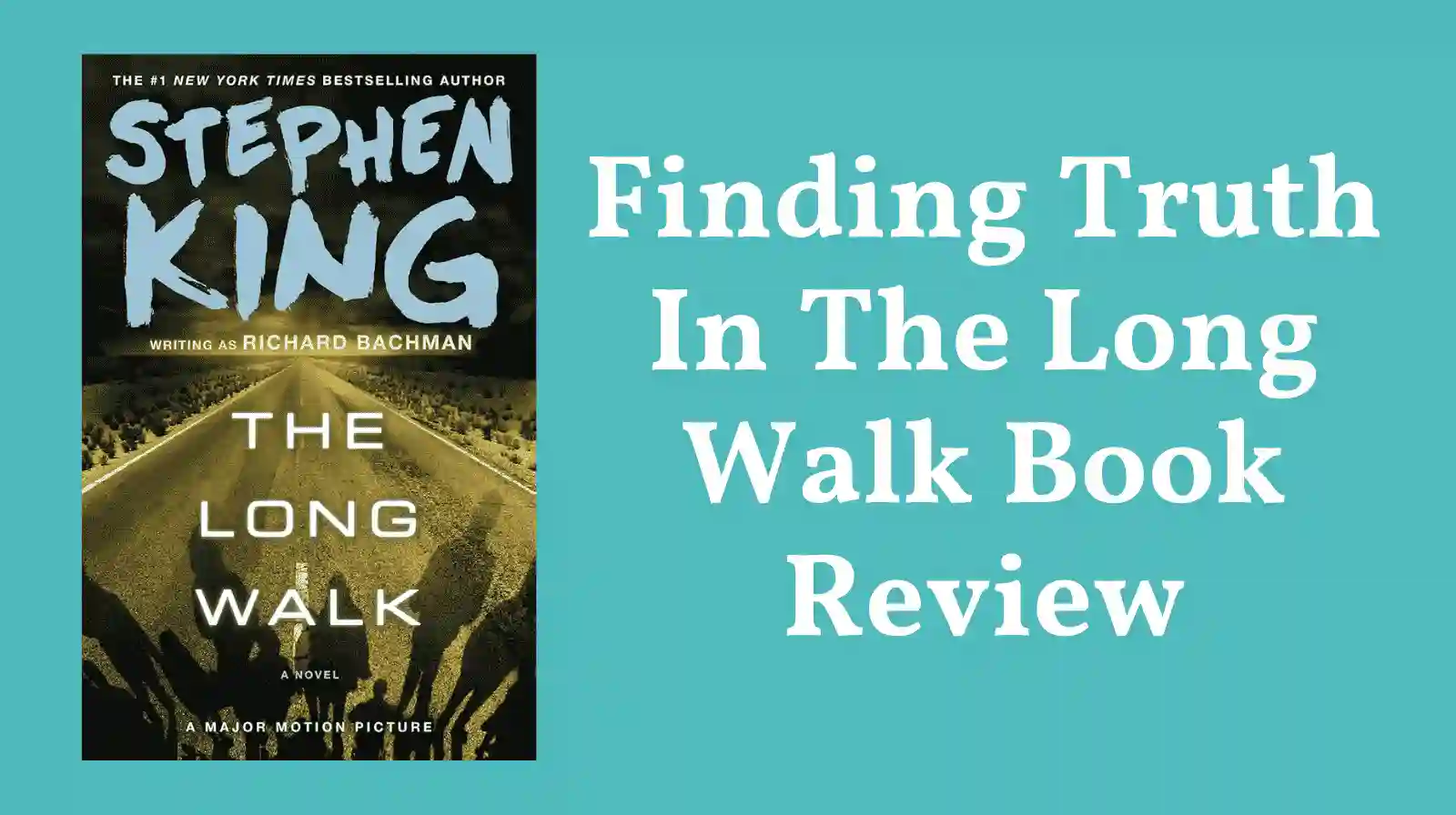
The Long Walk is about a deadly contest where 100 teenage boys must walk without stopping. The book argues that extreme pressure strips away our masks and reveals true human nature. It is best for readers who want deep psychological tension and lessons on mental endurance. It is worth reading if you enjoy dark, character-driven stories. However, it may feel too bleak for readers who prefer uplifting endings. Writing an honest the long walk book review requires looking past the horror. We must examine the powerful lessons on grit, society, and survival hidden inside.
Quick Book Details
| Detail | Information |
| Title | The Long Walk |
| Author | Stephen King (written as Richard Bachman) |
| Published | 1979 |
| Genre | Dystopian Thriller / Psychological Horror |
| Main Topic | Endurance, survival, and societal cruelty |
| Best For | Fans of dark fiction and mental toughness psychology |
| Main Message | The mind breaks long before the physical body does. |
| Reading Difficulty | Easy to read, but emotionally heavy |
| Recommended? | Yes, for readers who can handle dark themes |
What Is The Long Walk About?
The book follows a horrifying annual event in a dystopian America. One hundred teenage boys gather at the Maine border. They must start walking south. The rules are brutal. They must maintain a speed of exactly four miles per hour.
If a boy drops below that speed, he gets a warning. If he gets three warnings and slows down again, he receives his “ticket.” In this world, a ticket means death by soldiers watching from the sidelines. The last boy standing wins whatever he wants for the rest of his life.
Readers often search for a the long walk book review to understand why this old story remains so popular. The answer is simple. It is not just about walking. It is a deep look into the human mind. The book forces you to ask yourself how long you could endure.
The story was written by Stephen King under his Richard Bachman pen name. It came out long before modern survival games became popular. It remains a raw, intense look at what people will do for a prize.
The Long Walk Summary
The story focuses on a sixteen-year-old boy named Ray Garraty. He is Number 47 in the walk. He joins the event mostly out of foolish pride and teenage confusion. He quickly meets other walkers. Some become his close friends. Others become bitter rivals.
As the days pass, the physical pain becomes unbearable. The boys suffer from blisters, cramps, and exhaustion. However, the mental battle hits them much harder. They watch their peers fail. They must keep moving forward while dealing with extreme grief and fear.
The story moves from a physical race to a psychological nightmare. The boys talk about life, death, and why they entered the race. Many realize they signed up because they secretly wanted to die. Just like the intense emotional journey found in our Summary of Ugly Love, this book pushes its characters to the absolute edge of their feelings.
In the end, only a few boys are left. The physical toll destroys them. The mental cost is even worse. The final message is dark. It suggests that even if you win a brutal system, the trauma destroys the victory.
Chapter-by-Chapter Summary of The Long Walk
The original book the long walk does not use standard chapter names. It groups the journey into broad sections based on locations and time. Here is how the story generally moves through its ideas.
Part 1: The Starting Line
The boys gather at the Canadian border. Everyone is nervous but energetic. They joke around and form early alliances. Garraty meets McVries, Stebbins, and the abrasive Barkovitch. At this stage, the reality of the walk has not hit them yet. The major takeaway here is that ignorance is a shield. We often start difficult journeys without grasping the true cost.
Part 2: The Mental Wall
The walk continues into the first night and the following day. The first few boys fail. The gunshots shock the remaining walkers into reality. The physical pain starts. Garraty struggles with cramps but is saved by McVries. They learn that survival requires help. Isolation leads to a quick defeat.
Part 3: The Crowd and the Spectacle
As the boys move through larger towns, massive crowds gather to watch them. The boys realize the crowd does not care about them as people. The crowd just wants entertainment. The walkers feel disgusted. This section teaches us a hard truth. Society often cheers for the struggle, not the person.
Part 4: The Final Stretch
Only a handful of boys remain. They are hallucinating and losing their minds. The physical pain is secondary. Their minds are completely broken. The final showdown happens between Garraty and Stebbins. The ending reveals that extreme suffering changes a person forever. You cannot simply walk away from severe trauma.
Key Takeaways from The Long Walk
Here are the strongest lessons you can pull from this dark story.
1. Your Mind Breaks Before Your Body
The characters in the book prove that physical strength is not enough. The strongest boys often die early. The ones who survive are the ones who can handle extreme mental stress.
For example, if you are trying to finish a massive project at work, your brain will tell you to quit long before your energy actually runs out. Mental resilience keeps you moving.
2. Fear Is a Weak Motivator
Early in the walk, the fear of death keeps the boys moving fast. After a day, the fear wears off. They become numb to the gunshots.
This shows that negative motivation does not last. If you manage a team by using fear, they will eventually stop caring. You need a positive purpose to sustain long-term effort.
3. Empathy Keeps You Human
The boys who treat it purely as a competition lose their minds quickly. Garraty and McVries survive longer because they support each other.
In real life, hyper-competition can destroy your soul. Helping others often gives you the strength to help yourself.
4. Small Distractions Save Lives
When the pain becomes too much, the boys play word games. They tell stories. They focus on the road ahead instead of the big picture.
If you are facing a massive problem, looking at the whole thing will crush you. You must focus on the next step. Just take one more step.
5. Beware of Toxic Systems
The boys willingly signed up for a game designed to kill them. They wanted the prize too much.
This is a warning for real life. Do not join a toxic company or a bad relationship just because the eventual reward looks shiny. The system will drain you before you get there.
6. Success Can Be Empty
The winner of the walk gets whatever he wants. But by the time he wins, he is entirely broken. He cannot enjoy the prize.
This means you must protect your health and your mind. If you destroy yourself to get rich or successful, the victory will mean nothing.
Main Themes in The Long Walk
This story covers several deep themes.
- Endurance: Pushing past extreme physical and mental limits.
- Society: How crowds consume tragedy for entertainment.
- Mortality: Facing the reality of death at a young age.
- Authoritarianism: Blind obedience to cruel rules.
- Friendship: Finding connection in the worst possible moments.
Best Ideas from the Book
Here are the most memorable concepts Stephen King the long walk introduces.
The Warning System
The rules are strict. Drop below four miles an hour, get a warning. Walk fast for an hour, lose a warning. It creates a terrifying mental math. This idea highlights how humans try to manage tiny mistakes in a high-stress environment.
The Major
The Major runs the event. He is cold, distant, and wears dark glasses. The boys both hate him and seek his approval. He represents toxic authority figures. We often try to please the very people who hurt us.
The Spectator Sickness
People line the streets holding signs and cheering. They treat dying kids like sports stars. This is a brilliant critique of media and reality TV. It warns us not to lose our humanity when consuming entertainment.
Stebbins’ Secret
Stebbins is the quiet, strange boy in the back. He reveals a secret late in the book that changes how Garraty sees the entire race. It shows that unfair advantages exist in every system. You are never fighting on a truly level playing field.
Best Quotes from The Long Walk
Here are a few powerful lines that capture the mood of the story.
- “They walked.”This simple phrase repeats often. It shows the brutal, mechanical nature of their survival.
- “It was just a matter of walking.”A dark, ironic statement. Walking is basic, but under these rules, it becomes impossible.
- “I’m going to dance on your grave.”A common taunt among the boys. It highlights the desperate need to feel superior when facing death.
The Long Walk Book Review: Is It Worth Reading?
Any honest the long walk book review must state that this is a difficult read. It is not difficult because the words are hard. It is difficult because the story is emotionally exhausting.
What works well is the character development. You feel like you are walking on the road with Garraty. You feel his exhaustion. The tension never stops. The psychology of how the boys handle their incoming doom is written perfectly.
What feels weak is the repetition. They walk. They talk. Someone dies. This cycle repeats for the entire book. Some readers may find this boring.
It is absolutely worth reading if you enjoy psychological thrillers. Beginners to Stephen King will find it very accessible. However, the advice and lessons are hidden behind a wall of horror. You have to be willing to look for the meaning.
Who Should Read The Long Walk?
This book fits a specific type of reader.
You will likely enjoy this if you belong to these groups:
- readers interested in extreme psychological endurance
- people struggling with mental blocks who want to read about pushing limits
- students of dystopian literature
- entrepreneurs looking for dark metaphors about the cost of extreme competition
- fans of survival games and psychological thrillers
Who Might Not Like This Book?
Not everyone will enjoy a long walk with these characters.
You should skip this book if:
- too repetitive: The setting rarely changes. It is just a road.
- too bleak: There are no happy moments here.
- not practical enough: This is fiction. It does not give direct self-help advice.
- too slow: It is a slow burn. There are no sudden plot twists or action scenes.
How to Apply the Lessons from The Long Walk
Even though this is fiction, you can use its lessons in your own life.
- Break large tasks down. When you feel overwhelmed, do not look at the finish line. Just look at the next hour.
- Find a partner. Do not tackle massive life changes alone. Find your own McVries to pull you forward.
- Check your motivation. Are you working hard out of fear, or out of purpose? Switch to purpose.
- Ignore the crowd. People will judge your progress. Do not perform for them. Focus on your own pace.
- Protect your mind. Sleep. Rest. If you push yourself until you break, winning will not matter.
The Long Walk vs Similar Books
Here is how this classic compares to other famous survival stories.
| Book | Best For | Main Difference |
| The Long Walk | Deep psychological focus | Slower, focuses entirely on mental breakdown rather than action. |
| The Hunger Games | Fast-paced action and romance | Features physical combat, arena traps, and a clear villain to fight. |
| The Running Man | Sci-fi action and media critique | Faster pace, older protagonist, and more action-oriented escapes. |
| Lord of the Flies | Classic group dynamics | Focuses on society breaking down rather than an organized contest. |
The Hunger Games is better for readers who want action and hope. The Long Walk is better for readers who want raw, realistic psychology. If you prefer emotional stories over dark thrillers, you might want to skip this and read our November 9 Summary & Plot instead.
Common Mistakes Readers Make with This Book
Many people misunderstand this story when they first read it.
- expecting an action thriller: They get bored because there are no fights.
- missing the metaphor: They think it is just a horror story and miss the critique of society.
- treating the rules literally: They focus too much on the math of the walking speed.
- expecting a happy ending: They read to the last page expecting a hero’s reward.
- ignoring the bond between characters: They focus only on who dies, not how they try to save each other.
Frequently Asked Questions
What is The Long Walk about?
The book is about an annual contest where 100 boys must walk at exactly four miles per hour. If they stop or slow down too many times, they are killed. The last boy standing wins a prize.
Is The Long Walk worth reading?
Yes, it is highly worth reading if you enjoy psychological tension. It is a brilliant study of fear, friendship, and human endurance.
What are the main lessons from The Long Walk?
The main lessons are that the mind gives up before the body does, and that extreme competition can destroy your soul. It teaches us to rely on others when we are weak.
Is The Long Walk better than The Hunger Games?
It depends on your taste. This book is much darker, slower, and more psychological. The Hunger Games is faster and has more action.
Why do some readers dislike The Long Walk?
Some readers dislike it because the plot is very repetitive. The entire story takes place on a road, and the ending is vague and depressing.
My Take
This book is a masterpiece of tension. Reading it feels like running a marathon. You feel heavy and tired by the end of it. The best reader fit for this novel is someone who loves character studies.
One honest limitation is the pacing. Because the setting never changes, the middle of the book can feel like a chore to read. It drags intentionally to make you feel the exhaustion, but that can test your patience.
Ultimately, the original book is entirely worth reading. A standard the long walk book review cannot capture the deep dread you feel on the final pages. If you want to test your own mental endurance through a story, pick this up. Just remember to take breaks.

5 thoughts on “Finding Truth In The Long Walk Book Review”