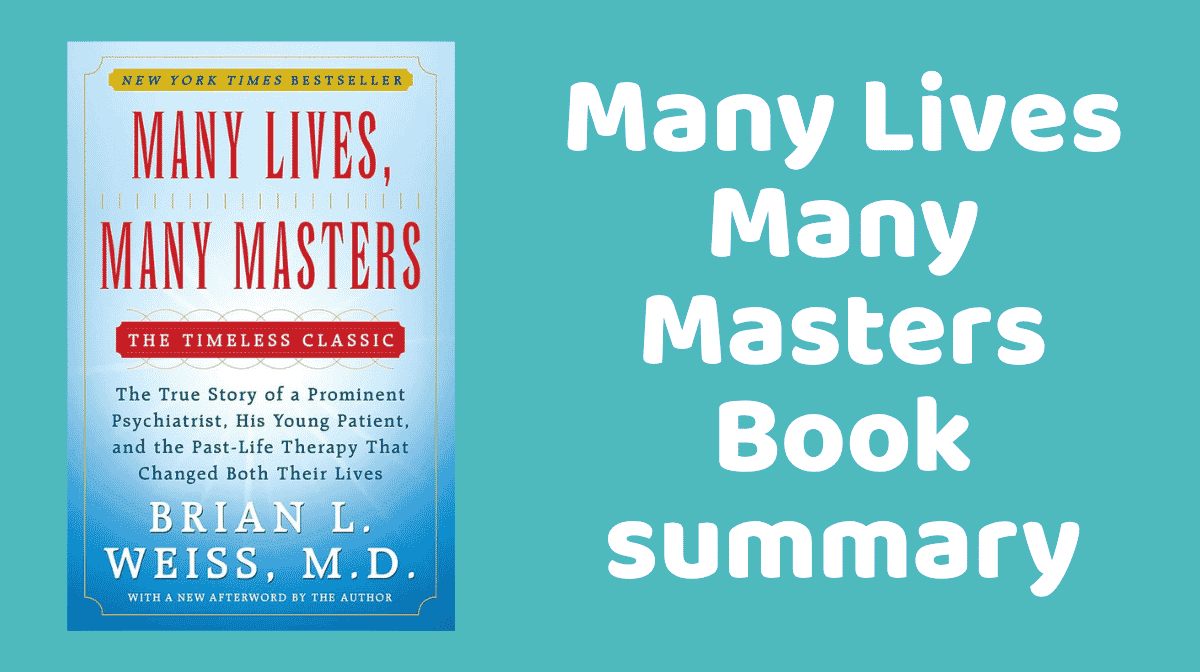
It’s funny how sometimes a book can hit you at just the right moment, right? Like it was waiting for you. That’s how I feel about “Many Lives, Many Masters.” You’ve probably heard of it, or maybe you’re just wondering what all the buzz is about.
It’s a book that really got people talking, and for good reason.
This isn’t just another self-help book. It’s a real-life story. It’s about a doctor who found herself in a situation completely outside her scientific understanding.
It’s about what happens when the lines between logic and spirit get a little… fuzzy.
I’m going to walk you through this book, chapter by chapter. We’ll unpack the big ideas, share some powerful quotes, and figure out how you can actually use what the book teaches in your own life. Think of it as us chatting about it over coffee.
So, why did “Many Lives, Many Masters” become such a phenomenon? Well, it tapped into something deep for a lot of people. It offered a different perspective on life, death, and what comes next.
It’s for anyone who’s ever questioned the big mysteries, or who’s just curious about what else might be out there beyond what we can see and touch.
About the Author
Dr. Brian L. Weiss is a pretty interesting guy.
He was a trained psychiatrist, totally grounded in science and Western medicine. He earned his M.D. from Columbia University and went on to be the chairman of psychiatry at Mount Sinai Medical Center in Miami. He spent years working with patients, using established therapeutic methods.
But then, something extraordinary happened in his practice. It challenged everything he thought he knew. His career took a sharp turn from conventional psychiatry towards exploring the spiritual and unexplainable aspects of the human mind.
His expertise lies in hypnotherapy and its potential for uncovering hidden memories and promoting healing.
His major achievement, of course, is this book. It brought the concept of past-life regression into mainstream conversation. While he’s written other books like “Through Time into Healing” and “Messages from the Masters,” “Many Lives, Many Masters” is the one that really put him on the map.
People trust him because he comes from a place of scientific skepticism. He didn’t just jump on a spiritual bandwagon; he was dragged there by his own experiences, which makes his story so compelling.
What Is this Book About?
The central idea of “Many Lives, Many Masters” is that our souls have lived before and will live again. It’s about exploring past lives not as a morbid curiosity, but as a path to understanding our present lives. Dr.
Weiss uses hypnotherapy to help his patients access these memories.
The main problem the book tries to solve is the deep-seated anxieties, phobias, and unresolved emotional blocks that plague people. Many of these, Weiss suggests, have roots in past experiences that we don’t consciously remember. By bringing these to the surface, patients can begin to heal.
Weiss’s philosophy, as presented here, is that we are eternal beings. Death isn’t an end, but a transition. The universe is filled with love and guidance, and our souls are constantly learning and growing.
He believes that remembering past lives can bring immense peace, acceptance, and joy to our current existence.
The book’s overall message is one of hope and wholiness. It suggests that everything happens for a reason, and that we are all part of a grand, interconnected spiritual journey. It’s about recognizing that we are more than our physical bodies and that our experiences shape us in profound, often unseen ways.
Chapter-by-Chapter Summary
Let’s dive into the meat of the book. It’s structured around Dr. Weiss’s sessions with a patient named Catherine.
Chapter 1: Meeting Catherine
Main Idea: Introduction to Catherine, a patient suffering from severe anxiety and phobias, and the beginning of her sessions with Dr. Weiss.
Important Lessons: Even seemingly unexplainable and debilitating emotional issues can have hidden causes. A therapist must remain open to possibilities beyond their initial understanding.
Key Quotes or Concepts: The chapter sets the stage for a journey beyond conventional psychiatric treatment.
Real-Life Examples: Catherine’s symptoms are described in detail, uncontrollable panic attacks, nightmares, and a pervasive sense of unease. Her fear of drowning, for instance, is a major concern.
Practical Applications: This chapter highlights the importance of a thorough diagnostic process when encountering complex patient issues. It also introduces the idea that not all answers lie within present-day life.
What Readers Can Learn: Readers learn about the challenges faced by patients with intense psychological distress and the initial, skeptical approach of a scientifically-minded doctor.
Chapter 2: The Breakthrough
Main Idea: During a hypnotherapy session, Catherine unexpectedly communicates with a spirit guide.
Important Lessons: Our consciousness might extend far beyond our current physical form, and there’s guidance available from non-physical realms.
Key Quotes or Concepts: The concept of spirit guides, entities who offer wisdom and support from a higher plane.
Real-Life Examples: Catherine, under hypnosis, begins speaking in different voices and describes events and people from past eras, attributing this information to “masters” who are guiding her.
Practical Applications: This marks the beginning of Weiss’s own exploration into past-life memories as a therapeutic tool. It encourages therapists to consider unconventional avenues for healing.
What Readers Can Learn: The astonishing moment when a clinical session veers into the realm of the paranormal, planting the seeds of doubt and curiosity in Dr. Weiss.
Chapter 3: An Unveiling of Past Lives
Main Idea: Catherine begins to recall specific details from her past lives, revealing compelling narratives.
Important Lessons: Our present personality traits and challenges can often be traced back to unresolved issues or significant events in previous lifetimes.
Key Quotes or Concepts: The idea that past-life experiences can explain current fears, relationship patterns, and even physical ailments.
Real-Life Examples: Catherine recounts lives as a young Spanish girl named Maria, who drowned, explaining her hydrophobic fear, and as a wealthy woman in the 19th century named Elizabeth, who experienced significant loss.
Practical Applications: Weiss starts correlating Catherine’s past-life stories with her current psychological state, beginning to find explanations for her symptoms. This encourages readers to look for patterns in their own lives.
What Readers Can Learn: The power of narrative from past lives to illuminate present-day struggles and the potential for understanding the origins of our deepest emotional burdens.
Chapter 4: The Masters Speak
Main Idea: Catherine’s spirit guides begin to offer direct messages of wisdom and comfort to both Catherine and Dr. Weiss.
Important Lessons: There is a higher plan, and we are constantly supported by benevolent entities. Love is the most powerful force in the universe.
Key Quotes or Concepts: The guides emphasize that suffering is often a result of misunderstanding, and that healing comes from love and acceptance.
Real-Life Examples: The guides explain the concept of karma not as punishment, but as lessons learned and experiences we choose to grow from. They talk about the purpose of life as spiritual evolution.
Practical Applications: Weiss himself begins to find solace and answers to his own existential questions through these channeled messages. This opens the door for readers to consider their own spiritual beliefs.
What Readers Can Learn: The profound philosophical insights offered by the spirit guides, which offer a comforting perspective on life, death, and suffering.
Chapter 5: Healing the Scars
Main Idea: Weiss uses the information revealed in past-life regressions to help Catherine heal her emotional wounds.
Important Lessons: Understanding the origin of our pain is the first step toward releasing it. Forgiveness, both of others and ourselves, is crucial for healing.
Key Quotes or Concepts: The idea that by acknowledging and accepting past-life traumas, their energetic hold on the present can be broken.
Real-Life Examples: Catherine confronts and processes the pain of her past-life deaths and relational losses, gradually releasing her phobias and anxiety.
Practical Applications: This chapter provides concrete examples of how therapeutic intervention, guided by past-life insights, can lead to significant emotional breakthroughs. It shows how to confront fears by understanding their roots.
What Readers Can Learn: The transformative power of confronting and integrating past traumas to achieve a more peaceful and fulfilling present life.
Chapter 6: The Lessons of Love and Loss
Main Idea: The book explores the recurring themes of love, loss, and connection across Catherine’s various past lives.
Important Lessons: Relationships, especially those that are difficult, often span lifetimes. We are drawn to certain souls repeatedly to learn and grow together.
Key Quotes or Concepts: The guides explain that the “masters” are advanced souls who have completed their earthly learning cycles and are now in a position to help others.
Real-Life Examples: Catherine recalls lives where she experienced profound love with some souls, and deep conflict with others, suggesting these connections were meant for specific spiritual lessons.
Practical Applications: Readers are encouraged to look at their own significant relationships and consider if they extend beyond this lifetime, offering a new perspective on relationship dynamics.
What Readers Can Learn: The notion that our most important relationships might be soul connections that transcend a single lifetime, offering a deeper understanding of love and connection.
Chapter 7: The Purpose of Life
Main Idea: The spirit guides elaborate on the ultimate purpose of our existence.
Important Lessons: Life is a school for the soul, designed for learning, growth, and spiritual evolution. Every experience, good or bad, serves a purpose in our soul’s journey.
Key Quotes or Concepts: We are here to experience, to learn, and to love. The physical life is just one stage in an eternal process.
Real-Life Examples: The guides explain that the challenges we face are opportunities for the soul to develop strength, compassion, and wisdom.
Practical Applications: This chapter encourages readers to reframe their challenges not as random misfortunes, but as valuable learning experiences. It fosters a sense of purpose and meaning in everyday life.
What Readers Can Learn: A profound shift in perspective regarding life’s challenges, viewing them as essential components of our soul’s growth rather than mere hardships.
Chapter 8: Preparation for Death
Main Idea: The guides offer insights into the process of death and what happens afterward.
Important Lessons: Death is not to be feared; it is a natural, gentle transition back to a spiritual state. The soul carries on, continuing its journey.
Key Quotes or Concepts: The spirit world is a place of peace and love, where souls are reunited with loved ones and continue their learning.
Real-Life Examples: The guides reassure Catherine (and the reader) that the fear of death experienced in her past lives can be overcome by understanding its true nature.
Practical Applications: This can help reduce the reader’s own anxiety about death, offering a comforting framework for understanding its spiritual significance.
What Readers Can Learn: A more peaceful and spiritual understanding of death, transforming it from an end into a new beginning.
Chapter 9: Dr. Weiss’s Own Journey
Main Idea: Weiss reflects on how Catherine’s sessions profoundly affected his own beliefs and life.
Important Lessons: Even the most ardent skeptic can have their worldview transformed by compelling evidence. Openness to the unknown is key to personal growth.
Key Quotes or Concepts: Weiss openly shares his initial disbelief and his gradual acceptance of these extraordinary phenomena. He discusses his own healing and spiritual awakening.
Real-Life Examples: He shares personal moments of doubt and wonder, and how his wife’s initial skepticism mirrored his own, until she too experienced evidence of the phenomena.
Practical Applications: This encourages readers to be open to new ideas and to question their own deeply held beliefs, especially when presented with new information or experiences.
What Readers Can Learn: The personal transformation of a respected scientist, showcasing the potential for profound change when one allows for the possibility of the miraculous.
Chapter 10: The Future and Continuing Education
Main Idea: Weiss discusses his ongoing work with past-life regression and the implications for future therapy and understanding.
Important Lessons: The exploration of past lives is a valid and powerful therapeutic tool. We are all on a journey of continuous learning.
Key Quotes or Concepts: Weiss outlines his continued research and his commitment to sharing these discoveries with the world.
Real-Life Examples: He mentions numerous other patients whose lives were positively impacted by this form of therapy, reinforcing the broader applicability of these techniques.
Practical Applications: This chapter encourages readers to consider seeking out therapists who are open to these alternative healing modalities, or to further explore these concepts themselves through other resources.
What Readers Can Learn: The potential for this field of study to revolutionize our understanding of psychology, spirituality, and the human experience, and the ongoing nature of personal and collective spiritual evolution.
Biggest Lessons From The Book
This book is packed with wisdom. Here are some of the biggest takeaways that really stick with you:
-
Our Lives Are Interconnected: Why it matters: It shows we’re not isolated beings. Our experiences ripple outwards, and past experiences shape who we are now.
-
Real-life example: If you feel an inexplicable connection to a certain historical period or a recurring dream, it might be a soul echo from a past life.
-
How to apply it: Be more mindful of your connections to others and the world around you. Understand that every interaction has a deeper significance.
-
Death is Not an End, But a Transition: Why it matters: This significantly reduces the fear of death. It offers comfort knowing that our essence, our soul, continues.
-
Real-life example: When someone passes, the grief can be immense. This lesson suggests their spirit is moving on, not ceasing to be.
-
How to apply it: Shift your focus from fearing death to living a meaningful life. Prepare for your spiritual journey with peace, not dread.
-
We Choose Our Lessons: Why it matters: It takes away the victim mentality. Our challenges are often soul contracts, chosen for growth.
-
Real-life example: A difficult relationship might be a chosen lesson to learn patience or unconditional love.
-
How to apply it: Frame current struggles as opportunities for learning and spiritual development, rather than random misfortunes.
-
Love is the Universal Healer: Why it matters: It’s the most powerful force, capable of dissolving pain, fear, and misunderstanding.
-
Real-life example: Unconditional love in a family or community can heal deep-seated trauma.
-
How to apply it: Practice more love, compassion, and forgiveness towards yourself and others. Let love guide your actions.
-
Phobias and Anxieties Have Roots: Why it matters: Understanding the origin of our fears can disarm them. They’re often echoes of past-life traumas.
-
Real-life example: A fear of heights might stem from a fall in a previous life.
-
How to apply it: If you have a persistent fear, try to explore its potential origin, even if it’s emotional or metaphorical, to begin to release it.
-
We Are Guided and Protected: Why it matters: Knowing we have spiritual helpers provides immense comfort and reassurance.
-
Real-life example: A sudden intuition or a fortunate coincidence might be guidance from spirit guides.
-
How to apply it: Be open to intuitive nudges and coincidences. Trust that you are not alone on your journey.
-
Karma is About Lessons, Not Punishment: Why it matters: It reframes our understanding of consequences. It’s about learning and balancing energy, not retribution.
-
Real-life example: A difficult situation you’re in might be a consequence of an action in a past life, a lesson you agreed to experience.
-
How to apply it: Take responsibility for your actions and understand that consequences are natural parts of growth, not divine punishments.
-
The Importance of Forgiveness: Why it matters: Holding onto grudges causes suffering. Forgiveness frees both the forgiver and the forgiven.
-
Real-life example: Catherine had to forgive people from her past lives to heal her present wounds.
-
How to apply it: Consciously practice forgiveness, especially for yourself, to release emotional burdens carried across lifetimes.
-
Life is a School for the Soul: Why it matters: It gives our entire existence purpose and meaning. Every experience contributes to our soul’s evolution.
-
Real-life example: The struggle of learning a new skill, or navigating a tough project, all contribute to soul growth.
-
How to apply it: Approach life with a learner’s mindset, seeking opportunities for growth in every situation.
-
Skepticism Can Lead to Deeper Truths: Why it matters: It shows that even a rigid, scientific worldview can be expanded by evidence.
-
Real-life example: Dr. Weiss’s own transformation from a hard-nosed psychiatrist to an advocate for past-life exploration.
-
How to apply it: Be open to new ideas and evidence, even if they challenge your current beliefs. Genuine exploration can lead to profound discoveries.
-
Our Souls Are Eternal: Why it matters: It provides a perspective of continuity and purpose beyond a single lifespan.
-
Real-life example: A feeling of ancient wisdom or familiarity with a certain place or person can be a sign of an eternal soul.
-
How to apply it: Live your life with the understanding that your essence is eternal, encouraging a focus on spiritual values over material ones.
-
The Power of Intention: Why it matters: Our intentions, both conscious and unconscious, shape our reality and our spiritual journey.
-
Real-life example: The intention of a spirit guide is always to help and guide; this intention influences Catherine’s sessions.
-
How to apply it: Be clear about your intentions, both in therapy and in life. Set positive intentions for your day and your spiritual growth.
Most Powerful Quotes And Their Meaning
“We are eternal beings. We are never alone. We are always loved.”
-
What the quote means: This is the core reassurance from the spirit guides. It tells us that our spirits exist beyond our physical life, we have constant support, and we are deeply cherished by the universe.
-
Why it matters: It combats feelings of isolation, insignificance, and fear of abandonment. It grounds us in a sense of belonging within a loving cosmos.
-
How it applies in daily life: When you feel alone or overwhelmed, remember this. You are part of something vast and loving. This can bring a deep sense of peace and resilience.
“The purpose of life is to learn, grow, and evolve.”
-
What the quote means: Our earthly existence is a classroom for our souls. Every experience is a lesson designed to help us become more evolved, more conscious beings.
-
Why it matters: It gives purpose to both joys and struggles. It shifts the focus from mere survival to spiritual development.
-
How it applies in daily life: When faced with a challenge, ask yourself: “What is this teaching me?” This perspective turns obstacles into opportunities for growth.
“Death is nothing to be feared. It is a natural, gentle transition.”
-
What the quote means: This reframes our most primal fear. Death isn’t an ending, but a passing from one state of being to another, like waking from a dream.
-
Why it matters: It alleviates the terror associated with dying, offering peace to those facing their own mortality or the loss of loved ones.
-
How it applies in daily life: By accepting this concept, you can approach life with less fear of its inevitable end, living more fully in the present.
“There is no death, only a change of worlds.”
-
What the quote means: This is a direct statement about the continuity of consciousness. Our existence continues, just in a different form or dimension.
-
Why it matters: It offers hope and continuity beyond physical life, reassuring those who mourn or fear annihilation.
-
How it applies in daily life: This can bring comfort when dealing with loss, reminding you that the essence of a person lives on, even if their physical presence is gone.
Key Concepts Explained Simply
Past-Life Regression:
Imagine your mind is like a computer with a very long memory. Most of the time, you only access the files from your current “session” (this life). Past-life regression, often done through hypnosis, is like accessing older files, memories from previous experiences your soul has had.
It’s not about proving reincarnation scientifically, but about using these recalled memories as metaphors or actual explanations for present-day issues.
Spirit Guides:
Think of spirit guides as your personal spiritual support team. They are advanced souls who have learned a lot and are here to help us. They don’t interfere with our free will, but they offer guidance, wisdom, and comfort.
They’re like wise mentors who are always available, providing gentle nudges and insights when we’re open to receiving them.
Karma:
This isn’t about punishment. It’s more like a cosmic bookkeeping system for learning. If you do something, there’s a natural consequence, and that consequence is an opportunity for growth.
It’s about balancing energies and learning lessons. So, if you struggled with patience in one life, you might choose a life where you’re forced to be incredibly patient to master it.
Soul Contracts:
This idea suggests that before we even come into a lifetime, our souls make agreements with other souls about what lessons we will learn together. This explains why we meet certain people at specific times in our lives, they might be part of your soul contract, there to help you learn something important. It makes you look at relationships in a whole new light.
How To Apply The Book In Real Life
“Many Lives, Many Masters” isn’t just for pondering; it offers practical ways to enrich your life.
Daily Habits:
-
Mindful Reflection: Take a few minutes each day to simply be present. Notice your thoughts and feelings without judgment. Ask yourself, “What am I learning today?”
-
Gratitude Practice: Start or end your day by listing things you are grateful for. This shifts your focus to abundance and positive energy, a core message from the guides.
-
Sending Love: Make it a habit to consciously send love to people you interact with, and even to those you find challenging. This fosters connection and peace.
Weekly Habits:
-
Journaling Your Insights: Write down any recurring dreams, intuitions, or feelings. Look for patterns that might connect to deeper themes of past lives or soul lessons.
-
Practicing Forgiveness: Dedicate time each week to consciously forgive someone (or yourself) who has caused you pain. This releases energetic blocks.
-
Spiritual Reading/Listening: Spend time with books, podcasts, or talks that explore spiritual concepts. This keeps your mind open and receptive.
Mindset Shifts:
-
Viewing Challenges as Lessons: Instead of feeling like a victim, see difficulties as opportunities for growth. Ask, “What is this situation trying to teach me about love, patience, or strength?”
-
Embracing Impermanence: Understand that this life, and all its experiences, are temporary. This can help you detach from suffering and appreciate the present moment more fully.
-
Cultivating Trust: Trust that you are guided, loved, and protected. This reduces anxiety and allows you to move forward with more confidence.
Communication Techniques:
-
Empathetic Listening: When speaking with others, try to listen not just to their words, but to the emotions and underlying needs. This opens the door to deeper understanding, reflecting the guides’ emphasis on connection.
-
Speaking with Love: Even when you disagree, aim to communicate your thoughts and feelings from a place of love and respect, rather than aggression or criticism.
Personal Growth Practices:
-
Exploring Your Fears: If you have a phobia or intense fear, instead of avoiding it, explore its possible roots. This could be through journaling, therapy, or meditation. Consider where this fear might stem from, even metaphorically.
-
Intentional Living: Be conscious of the “why” behind your actions. Align your daily activities with your values and spiritual growth.
Leadership Lessons:
-
Compassionate Leadership: Lead with empathy and understanding, recognizing that your team members are on their own growth journeys.
-
Visionary Thinking: Embrace the idea of a larger purpose. Inspire your team with a vision that goes beyond mere tasks and focuses on positive impact.
Common Mistakes People Make When Applying These Ideas
It’s easy to get excited about these concepts, but people sometimes stumble.
-
Mistake: Treating past lives like a historical documentary. Why it happens: People get caught up in the details of specific lives and forget the therapeutic purpose.
-
Better alternative: Focus on the lessons and feelings derived from past-life memories, rather than fact-checking historical accuracy. The insights are metaphorical and emotional.
-
Benefit: You extract genuine healing and self-understanding, rather than getting lost in irrelevant details.
-
Mistake: Blaming past lives for current problems entirely. Why it happens: It can be a way to avoid taking responsibility for current choices and actions.
-
Better alternative: Use past-life understanding as a context for present issues, but still acknowledge your agency and responsibility in this life.
-
Benefit: You empower yourself to make changes now, rather than feeling like a victim of past incarnations.
-
Mistake: Becoming obsessed with reincarnation and neglecting the current life. Why it happens: The fascination with past lives can become a distraction from living fully in the present.
-
Better alternative: Use past-life knowledge to enhance and enrich this life. The goal of past-life exploration is to improve your present experience.
-
Benefit: You live a more meaningful and fulfilling current life, informed by deeper wisdom.
-
Mistake: Seeking external validation for past-life experiences. Why it happens: People want to prove their experiences are real.
-
Better alternative: Trust your own inner experience. The truth of your past lives is for your personal growth and peace, not for public debate.
-
Benefit: You protect your spiritual journey from external skepticism and focus on your own internal validation.
-
Mistake: Using past lives as an excuse for negative behavior. Why it happens: The concept of karma and soul lessons can be twisted to justify actions.
-
Better alternative: Understand that karma is about conscious learning and growth. Negative actions still have negative consequences and are an indictment of a lack of current growth.
-
Benefit: You maintain ethical integrity and continue to strive for a higher consciousness.
Benefits Of Reading This Book
“Many Lives, Many Masters” offers a wealth of benefits that go far beyond just an interesting story.
-
Personal Growth Benefits: It provides a framework for understanding your own unique path, challenges, and strengths. You gain a new perspective on who you are and your place in the universe. It encourages self-discovery and spiritual evolution.
-
Professional Benefits: For therapists, counselors, or anyone in a helping profession, it broadens understanding of human psychology and the potential for healing beyond conventional methods. It can inspire innovation in your approach.
-
Emotional Benefits: Reading this book can bring profound peace of mind. It can alleviate fears, particularly the fear of death and the unknown. It fosters acceptance, compassion, and a sense of deep understanding.
-
Relationship Benefits: You might see your relationships in a new light, understanding recurring patterns or inexplicable connections with others, potentially recognizing soul mates or karmic bonds. It encourages more compassionate interactions.
-
Leadership Benefits: The emphasis on higher purpose, guidance, and love can inform a more ethical and inspiring leadership style, focusing on growth and well-being rather than just outcomes.
Criticisms And Limitations
While profoundly impactful for many, it’s important to approach “Many Lives, Many Masters” with a balanced view.
-
Common Criticisms: The most frequent criticism is that it lacks rigorous scientific proof. Skeptics argue that the memories could be confabulations, subconscious thoughts, or even fantasy. The results are subjective and difficult to independently verify.
-
Weak Points: The narrative relies heavily on the doctor’s interpretation of Catherine’s experiences. While honest, his role as the interpreter means the reader receives a filtered account. The book doesn’t delve deeply into how to handle cases where regression might be detrimental or trigger false memories.
-
Situations Where Advice May Not Work: For individuals with severe psychosis or deep-seated trauma that requires immediate medical intervention, past-life regression might be inappropriate or even harmful without expert guidance and a carefully controlled therapeutic environment. The book’s approach is best suited for those who are stable enough to explore deeper psychological and spiritual layers. It’s also not a quick fix; healing takes time and consistent effort.
Similar Books To Read Next
If “Many Lives, Many Masters” resonated with you, you might find these other books equally compelling. They explore similar themes of consciousness, spirituality, and the nature of reality.
Book Author Why Read It
Through Time Into Healing Brian L. Weiss This is Weiss’s follow-up, offering more case studies and further exploration of his theories on past-life regression and healing.
Messages from the Masters Brian L. Weiss More channeled wisdom from spirit guides, focusing on spiritual principles, love, and life’s purpose.
Journey of Souls Michael Newton A foundational text in the study of life between lives. Newton, a hypnotherapist, details thousands of cases of people describing their… well, journey of souls.
The Power of Now Eckhart Tolle Focuses on living fully in the present moment as a path to spiritual enlightenment and peace, a complementary idea to embracing this life.
Many Suns, Many Heavens Dr. Richard Moody Explores near-death experiences (NDEs), offering further evidence and perspectives on what happens when consciousness leaves the physical body.
Cosmic Consciousness Richard Maurice Bucke An older, more philosophical work exploring heightened states of awareness and mystical experiences, tracing a historical evolution of consciousness.
Proof of Heaven Eben Alexander Written by a neurosurgeon, this book details his own brain-dead experience and the profound spiritual journey he claims to have undertaken.
The Seat of the Soul Gary Zukav Explores concepts of spiritual evolution, karma, and the development of the authentic self from a more philosophical standpoint.
Who Should Read This Book?
This book has a wide appeal, but here are some groups who might particularly benefit:
-
Self-improvement readers: Anyone looking for a deeper understanding of themselves and their life’s purpose.
-
Spiritually curious individuals: Those who ponder the mysteries of life, death, and consciousness beyond organized religion.
-
People seeking healing: Individuals suffering from unexplained anxieties, phobias, or emotional blockages who are open to alternative healing approaches.
-
Therapists and Counselors: Professionals interested in expanding their understanding of the mind and exploring the potential of regression therapy.
-
Skeptics: Even if you’re highly skeptical, the book’s journey from scientific disbelief to acceptance might resonate and encourage an open mind.
-
Anyone facing loss or questioning mortality: The book offers a comforting perspective on death and the continuation of the soul.
Frequently Asked Questions (FAQ)
Q1: Is “Many Lives, Many Masters” scientifically proven?
A1: No, not in the traditional sense of repeatable scientific experiments. The book presents personal accounts and therapeutic outcomes, which are subjective. While many find the evidence compelling personally, it’s generally considered anecdotal rather than empirical scientific proof of reincarnation.
Q2: Can anyone experience past-life regression?
A2: While Weiss focuses on hypnotherapy for trance states conducive to regression, many people believe past-life memories can surface spontaneously. However, for guided regression, some individuals are more receptive to hypnosis than others. It’s often best approached with a trained hypnotherapist.
Q3: What is the difference between a spirit guide and a past life?
A3: A past life refers to an experience your soul had in a previous physical incarnation. A spirit guide is an advanced soul who offers guidance and support from a non-physical realm, often across multiple lifetimes. They are distinct but related concepts in this spiritual framework.
Q4: Is it possible to misinterpret past-life memories?
A4: Absolutely. Critics suggest memories could be confabulations, imaginative interpretations, or echoes of things we’ve seen or heard. Weiss acknowledges the importance of interpretation and how past-life recall serves a symbolic or metaphorical purpose even if not literally factual.
Q5: How can I know if my phobias are from past lives?
A5: You may not know for sure. However, if you have a phobia that seems irrational or has no clear origin in your current life, exploring its potential symbolic roots through therapy or introspection might offer insight. The book suggests that understanding the story behind the fear can help release it.
Q6: Is the book religious?
A6: The book is spiritual, not strictly religious. It draws from principles found in many spiritual traditions regarding the soul, reincarnation, and the afterlife, but it doesn’t adhere to a specific creed or dogma. Dr.
Weiss himself is Jewish, but his experience led him to a universal spiritual perspective.
Q7: What are “soul contracts”?
A7: Soul contracts are agreements made by souls before birth about the key lessons and relationships they will experience in a particular lifetime to foster growth. They explain why certain people enter our lives at specific times.
Q8: Did Dr. Weiss continue to practice psychiatry after writing this book?
A8: Yes, he continued his medical practice, but his focus shifted significantly. He founded the Weiss Institute to continue his work in past-life therapy and has written many subsequent books on the topic.
Q9: Can this book help me understand the purpose of my life?
A9: It certainly aims to. The book suggests that life’s purpose is spiritual evolution and learning, and understanding past lives can offer context and direction for your current journey.
Q10: Is it scary to read about past lives and death?
A10: For some, it might be confronting. However, the book’s tone is overwhelmingly reassuring. It aims to demystify death and past traumas, offering peace rather than fear.
Weiss presents these concepts as ultimately comforting.
Q11: What if I don’t believe in reincarnation?
A11: That’s perfectly fine! Many readers approach the book as a compelling narrative or a philosophical exploration. Even if you remain a skeptic, you can still find valuable insights on healing, purpose, and the human condition within its pages.
The ideas can be applied metaphorically.
Q12: Is “Many Lives, Many Masters” suitable for teenagers?
A12: It depends on the individual teenager’s maturity and openness. The themes of death and past trauma might be heavy for some, but for a thoughtful, spiritually inclined teen, it could be a highly beneficial read.
Q13: How did Catherine feel about her past lives?
A13: Initially, her past-life memories surfaced as terrifying nightmares and phobias. As therapy progressed and she received guidance from her spirit masters, she gained understanding, acceptance, and eventually, healing. She learned to integrate these experiences positively.
Q14: What if I want to try past-life regression myself?
A14: If you’re interested, seek out a qualified and ethical hypnotherapist experienced in past-life regression. Be wary of anyone promising guaranteed results or pushing specific beliefs. It’s important to approach it with intention for growth and healing.
Final Verdict
“Many Lives, Many Masters” is more than just a book; it’s an invitation to question the boundaries of our reality. Dr. Brian Weiss, a man of science, shares his personal journey of discovery through the remarkable case of his patient, Catherine.
He meticulously documents how hypnotherapy led her to recall past lives, which in turn provided answers and pathways to healing for her profound emotional distress.
The book’s greatest strengths lie in its accessibility and its profound message of hope. It presents complex spiritual ideas in a straightforward, engaging manner, making them understandable for anyone. The lessons about interconnectedness, the nature of death, and the purpose of life offer a deeply comforting and empowering perspective.
It’s a powerful testament to the idea that healing can come from the most unexpected places.
However, as with any book that ventures into the spiritual or paranormal, its limitations are evident for the strictly scientific mind. The evidence is anecdotal, and the interpretations are subjective. For those seeking empirical proof, this book will likely not satisfy that need.
Its advice is also best applied by those in a stable emotional state, and it’s not a substitute for conventional medical treatment for severe mental health conditions.
Is the book worth reading? Absolutely. Even if you approach it with a healthy dose of skepticism, the narrative itself is captivating, and the underlying messages about love, healing, and purpose are universally valuable.
It’s a book that encourages introspection and opens the mind to possibilities beyond our immediate grasp.
Those who will benefit most are individuals seeking comfort regarding mortality, those struggling with unexplained emotional issues, or anyone simply curious about the deeper questions of existence.
The most memorable takeaway is simple yet profound: we are eternal beings, constantly learning, perpetually loved, and never truly alone on our journey through existence. That’s a powerful thought to carry with you. For more explorations into transformative reads, you can always check out resources like Rise in Reading.