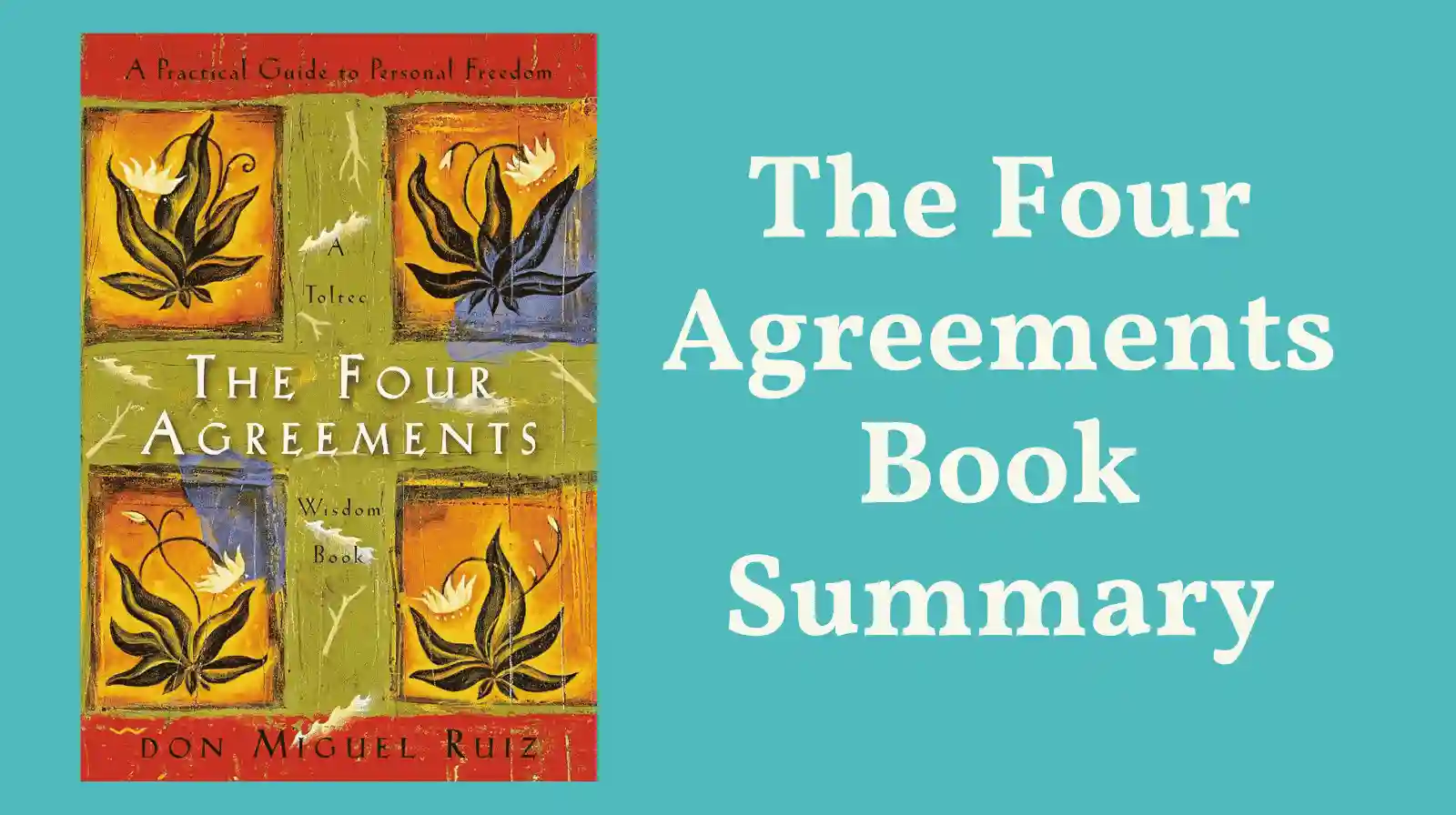
The Four Agreements is about changing the silent rules that shape your thoughts, words, and actions. Don Miguel Ruiz argues that much of our pain comes from beliefs we accepted without question. This book is best for readers who want simple rules for calmer relationships, clearer speech, and less mental noise. It is worth reading if you like short self-help books with a spiritual tone. Readers who want science-based psychology may find it too broad.
Book details
| Detail | Information |
|---|---|
| Title | The Four Agreements: A Practical Guide to Personal Freedom |
| Author | Don Miguel Ruiz, with Janet Mills |
| Published | 1997 paperback edition |
| Genre | Self-help, spiritual nonfiction, personal growth |
| Main topic | Personal freedom through 4 daily agreements |
| Best for | General readers, self-improvement readers, students, and professionals |
| Main message | Change your inner agreements, and you change your life |
| Reading difficulty | Easy |
| Recommended? | Yes, with a few limits |
The current Penguin Random House listing shows Don Miguel Ruiz with Janet Mills, a 160-page paperback, and the original paperback publication date of November 7, 1997. The publisher also places the book under self-improvement, philosophy, and spiritual nonfiction.
What is The Four Agreements about?
The Four Agreements is about 4 personal rules: be careful with your words, stop taking things personally, stop making assumptions, and always do your best. Ruiz says these rules can reduce needless pain.
The book starts with a simple idea. We learn many beliefs from family, school, culture, and fear. Ruiz calls these beliefs “agreements.” Some agreements help us. Some trap us.
The book is popular because the advice is easy to remember. You can read the 4 agreements in 1 minute, but practicing them is much harder.
This The Four Agreements book summary gives the main ideas, key lessons, themes, quotes, and an honest review for readers deciding whether to read the full book.
More Post: Hidden Pictures Book Summary
The Four Agreements summary
Ruiz begins by saying people are shaped by early teaching. As children, we accept rules about what is good, bad, right, wrong, lovable, and shameful. Over time, these rules become our inner voice.
The book then gives 4 new agreements. Each one is meant to replace old fear-based habits.
The first agreement is about speech. Words can heal, hurt, clarify, or confuse. Ruiz asks readers to use words with care.
The second agreement is about other people’s behavior. Ruiz says many reactions from others come from their own fears, beliefs, and wounds. Taking every comment personally can make life heavy.
The third agreement is about asking instead of guessing. Assumptions create conflict because we act as if our guess is true.
The fourth agreement is about effort. Your best changes from day to day. The point is to act with care, then let go of harsh self-judgment.
The final message is simple: freedom comes from changing the agreements you live by.
Chapter-by-chapter summary of The Four Agreements
Chapter 1: Domestication and the dream of the planet
Ruiz explains how people learn beliefs from the world around them. He calls this process domestication.
This chapter matters because it shows the root problem. Many people suffer because they obey old inner rules they never chose.
Practical takeaway: notice one belief you repeat often, such as “I always fail” or “I must please everyone.”
Chapter 2: Be impeccable with your word
This chapter focuses on speech. Ruiz asks readers to speak with honesty and care.
The lesson is not only about telling the truth. It is also about gossip, self-talk, blame, and promises.
Practical takeaway: before speaking, ask if your words are true and needed.
Chapter 3: Don’t take anything personally
Ruiz says other people’s actions come from their own inner world. Their praise and criticism are not full proof of your worth.
This idea can lower stress in work, family, and social life. It does not mean ignoring feedback. It means staying steady while you assess it.
Practical takeaway: when someone criticizes you, pause before reacting.
Chapter 4: Don’t make assumptions
This chapter is about the stories we invent when we lack facts. Ruiz says assumptions often create drama.
The fix is direct communication. Ask questions. Say what you mean. Confirm before you react.
Practical takeaway: when you feel hurt, ask for clarity before building a story in your head.
Chapter 5: Always do your best
Ruiz closes the 4 agreements with effort. Your best changes with sleep, health, stress, and skill.
This chapter matters because it removes shame from growth. Doing your best is not the same every day.
Practical takeaway: judge your effort by your real state, not by a perfect version of yourself.
Chapter 6: Breaking old agreements
The later part of the book discusses change. Ruiz says old beliefs lose power when you stop feeding them.
This part is more spiritual than practical. Some readers will love that. Others may want more concrete tools.
Practical takeaway: pick 1 old agreement and replace it with a clear new one.
More Post: November 9 Book Summary
Key takeaways from The Four Agreements
1. Your words shape your life
Ruiz treats speech as a serious force. Your words affect your mood, trust, and relationships.
For example, if you often say, “I’m terrible at this,” this idea means you should replace that phrase with a fairer one: “I’m still learning this.”
2. Gossip costs more than it seems
Gossip may feel small, but it spreads distrust. It also trains your mind to judge fast.
For example, if coworkers are talking about someone, this idea means you can avoid adding fuel. You can change the subject or stay quiet.
3. Criticism is information, not identity
The second agreement is one of the strongest parts of the book. It teaches emotional distance.
For example, if your manager says your report needs work, this idea means you can fix the report without turning the feedback into “I am useless.”
4. Questions prevent many fights
Assumptions are often wrong. Ruiz wants readers to ask instead of guessing.
For example, if a friend replies late, this idea means you ask if everything is okay before deciding they are angry with you.
5. Your best changes each day
Ruiz gives readers a kinder way to think about effort. Your best on a sick day may be smaller than your best on a good day.
For example, if you’re tired but still study for 20 minutes, this idea means you can respect the effort without pretending it was perfect.
6. Old beliefs can be replaced
The book says many painful beliefs are learned. That means they can be questioned.
For example, if you believe you must always say yes, this idea means you can practice saying no with respect.
7. Freedom starts with self-awareness
The book’s deeper lesson is awareness. You cannot change a pattern until you see it.
For example, if you always blame yourself after conflict, this idea means you first notice the pattern before trying to change it.
More Post: Icebreaker Book Summary
Main themes in The Four Agreements
Personal freedom
Ruiz connects freedom with inner choice. You become freer when fear and old beliefs control you less.
Speech and truth
Words are a core theme. The book asks readers to speak with care, truth, and less self-attack.
Emotional independence
The second agreement teaches readers to separate their worth from other people’s moods.
Clear communication
The third agreement is about clarity. It shows how many problems begin with guesses.
Self-discipline with compassion
The fourth agreement balances effort with self-kindness. It asks for action without harsh self-punishment.
Best ideas from the book
Use words with care
This idea matters because speech is a daily habit. Small words can build trust or damage it.
A real-life example is saying, “I need more time,” instead of making a promise you cannot keep.
The limit is that honesty still needs tact. Truth without care can become cruelty.
Stop making every reaction about you
This idea can help anxious readers. It creates space between an event and your response.
For example, if someone is rude at a store, their behavior may have nothing to do with you.
The limit is clear. Some things are personal, such as direct abuse or repeated harm. The advice should not make readers accept mistreatment.
Ask better questions
This is one of the most practical ideas in the book. It can improve work, love, and family life fast.
For example, instead of saying, “You ignored me,” ask, “Did you see my message?”
The limit is that some people still avoid honest answers. Clear questions help, but they do not fix every relationship.
Give honest effort
The fourth agreement reduces guilt. It asks you to act well in your real condition.
For example, a student who studies daily for a hard exam is doing the work, even if the result is not perfect.
The limit is that “my best” can become an excuse. Honest effort needs honest self-checking.
More Post: The Book Woman Of Troublesome Creek Summary
Best quotes from The Four Agreements
The 4 central lines are short, easy to remember, and widely listed by the author’s site:
“Be Impeccable With Your Word.”
This means your speech should carry truth and care.
“Don’t Take Anything Personally.”
This means you should not turn every comment into a verdict on your worth.
“Don’t Make Assumptions.”
This means you should ask, confirm, and speak clearly.
“Always Do Your Best.”
This means effort matters, but your best will change with your state.
Don Miguel Ruiz’s site lists these 4 agreements directly on its page for the book.
The Four Agreements review: is it worth reading?
Yes, The Four Agreements is worth reading for most self-improvement readers. It is short, clear, and easy to apply.
What works well is the simplicity. The book gives 4 rules that readers can remember during real moments. That is rare in self-help.
The weak part is the lack of depth in some areas. The book uses spiritual language and broad claims. Readers who want studies, therapy tools, or detailed case examples may feel unsatisfied.
Beginners can understand it with ease. The advice still feels useful today because it deals with speech, ego, fear, conflict, and self-judgment. Those problems have not gone away.
Who should read The Four Agreements?
This book is a good fit for readers who want simple rules for daily life. It is also good for people who feel drained by criticism, conflict, gossip, or overthinking.
It may work well as a first self-help book because it is short and direct.
- Readers interested in self-growth and inner peace
- People struggling with overthinking or people-pleasing
- Students of personal development
- Entrepreneurs and professionals who want clearer communication
- Fans of The Alchemist, The Untethered Soul, or Atomic Habits
Who might not like this book?
Some readers may find the book too simple. The 4 agreements are powerful, but the book repeats them in a spiritual style.
Readers who prefer research-based books may want something more detailed. The book gives wisdom, not a step-by-step mental health method.
Possible downsides:
- Some parts feel repetitive
- The spiritual tone may not suit every reader
- The advice can sound too broad
- It has fewer real-world examples than some modern self-help books
- It may feel too simple for advanced readers
How to apply the lessons from The Four Agreements
- Track your words for 1 day
Notice gossip, blame, exaggeration, and harsh self-talk. - Pause before taking offense
Ask yourself what else could explain the other person’s behavior. - Ask instead of guessing
Use direct questions when you feel unsure. - Define your best for today
Base your effort on your current energy, time, and health. - Choose 1 agreement per week
Practice one rule deeply instead of trying to master all 4 at once.
The Four Agreements vs similar books
| Book | Best for | Main difference |
|---|---|---|
| The Four Agreements | Simple personal rules | Spiritual, short, and easy to remember |
| Atomic Habits | Habit building | More practical and system-based |
| The Untethered Soul | Inner awareness | More focused on consciousness and thought |
| The Alchemist | Purpose and life meaning | Fictional story with spiritual lessons |
Choose The Four Agreements if you want short life rules. Choose Atomic Habits if you want behavior change tools. Choose The Untethered Soul if you want a deeper look at thoughts and awareness. Choose The Alchemist if you prefer story-based wisdom.
Common mistakes readers make with this book
Some readers finish the book too fast. The ideas look simple, so it is easy to treat them as basic quotes.
The better way is to test them in daily life. The Four Agreements lessons become real when someone criticizes you, misunderstands you, or asks for more than you can give.
Common mistakes include:
- Reading it as a list of nice sayings
- Treating every idea as universal
- Using “don’t take it personally” to avoid real problems
- Expecting quick results
- Missing the focus on daily practice
Frequently asked questions
What is The Four Agreements about?
The Four Agreements is about 4 rules for personal freedom. Don Miguel Ruiz says people can reduce needless pain by changing how they speak, react, assume, and act.
Is The Four Agreements worth reading?
Yes, The Four Agreements is worth reading if you like short self-help books with clear life lessons. It may not satisfy readers who want research-based psychology or detailed exercises.
What are the main lessons from The Four Agreements?
The main lessons are to speak with care, stop taking things personally, ask instead of guessing, and always do your best. These lessons focus on less fear, less conflict, and more self-control.
Is The Four Agreements better than Atomic Habits?
The Four Agreements is better for readers who want spiritual wisdom and simple rules. Atomic Habits is better for readers who want practical systems for changing behavior.
Why do some readers dislike The Four Agreements?
Some readers dislike it because it can feel repetitive, simple, or too spiritual. Others feel the advice needs more real-world detail.
How can I apply The Four Agreements in real life?
Start with 1 agreement. For 1 week, practice careful speech, or ask questions before making assumptions. Small daily use works better than trying to change everything at once.
My take
My honest view: The Four Agreements deserves its place as a popular self-help book. It is short, memorable, and useful in real life.
The best reader is someone who wants calmer communication and less emotional reactivity. The book is also good for people who enjoy spiritual personal growth.
The main limit is depth. It gives strong principles, but it does not give a full system for trauma, anxiety, or hard relationship patterns.
The original book is still worth reading. A summary can explain the ideas, but the full book gives the tone, rhythm, and repeated reminders that make the agreements easier to remember.

6 thoughts on “The Four Agreements Book Summary: Worth Reading?”