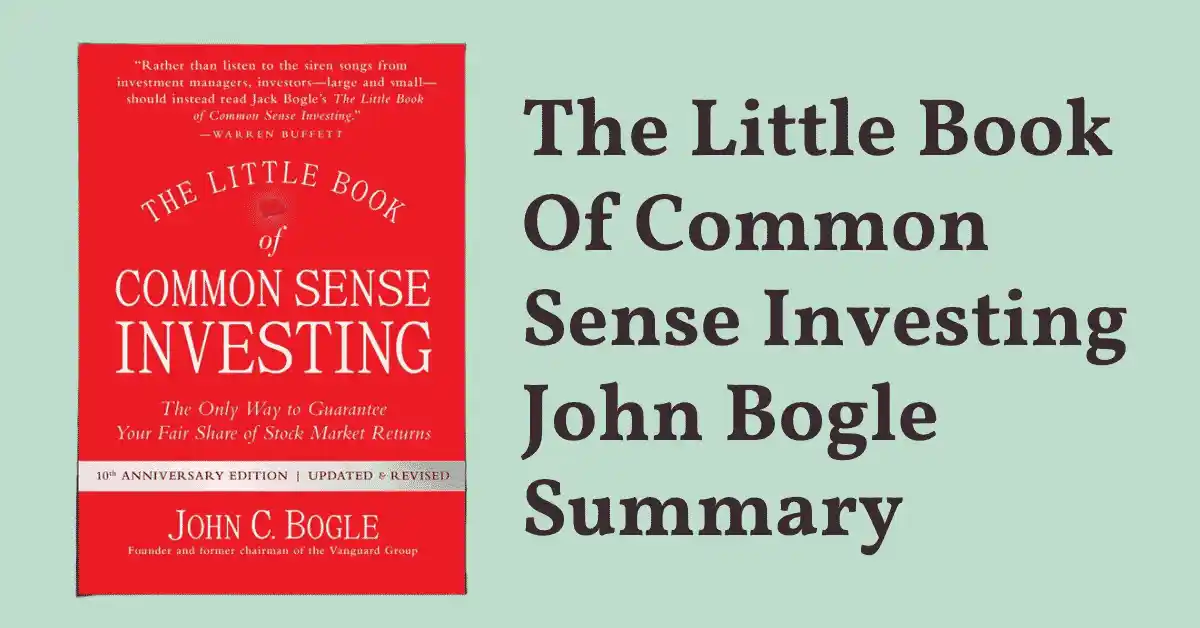
The Little Book of Common Sense Investing is about building wealth through simple, low-cost index investing. John C. Bogle argues that most investors lose money by trying to beat the market, paying high fees, and trading too much. It is best for beginners, long-term investors, students, and business readers who want a clear investing plan. It is worth reading if you want plain advice on funds, fees, patience, and market returns.
Quick book details
The details below refer mainly to the updated and revised 10th anniversary edition, which O’Reilly lists as an October 2017 Wiley book with 304 pages and a beginner reading level.
| Detail | Information |
|---|---|
| Title | The Little Book of Common Sense Investing |
| Author | John C. Bogle |
| Published | 2007, updated and revised edition in 2017 |
| Genre | Personal finance, investing |
| Main topic | Low-cost index fund investing |
| Best for | Beginners, long-term investors, students, retirement savers |
| Main message | Own the broad market, keep costs low, and stay patient |
| Reading difficulty | Easy to moderate |
| Recommended? | Yes, especially for U.S. readers learning long-term investing |
John C. Bogle founded Vanguard in 1974 and led it as chairman and CEO until 1996. His official biography says Vanguard 500 Index Fund was founded by Bogle in 1975 and was the first index mutual fund.
What is The Little Book of Common Sense Investing about?
The Little Book of Common Sense Investing is about a simple idea: most people should buy and hold a low-cost fund that tracks the whole stock market or a broad index.
Bogle’s core problem is investor behavior. People chase hot funds. They pay managers, brokers, and advisors. They trade too often. They react to fear and hype. These habits can quietly eat their returns.
His main argument is clear. The stock market gives investors the return of business over time. When costs, taxes, and bad timing enter the picture, many investors get less than that return.
Readers search for the little book of common sense investing john bogle summary because the book is famous, short, and practical. They want to know if the advice still works.
The book stays popular because it gives a simple plan. It says you do not need to guess the next winning stock. You need discipline, low costs, broad spread, and time.
The Little Book of Common Sense Investing summary
The book starts with a basic investing truth. The market as a whole owns all public businesses. If you own the whole market through a low-cost index fund, you take part in business growth.
Bogle then explains why many investors still fall behind. Active funds charge fees. Fund managers trade. Investors switch funds after good or bad years. Taxes can add more drag.
The middle of the book builds the case with data, history, and plain logic. Bogle keeps returning to one point: costs matter more than most people think. A small fee can become a large loss over decades.
The final message is practical. Buy a broad, low-cost index fund. Hold it for a long time. Add bonds based on your age, risk level, and need for stability. Avoid fads, hot sectors, and expensive promises.
The practical meaning is simple. If you are saving for retirement, a home, or long-term wealth, your plan should be boring enough that you can follow it.
Chapter-by-chapter summary of The Little Book of Common Sense Investing
The 2017 edition lists 20 chapters, including chapters on asset allocation and investment advice that were added to the updated edition. This The Little Book of Common Sense Investing chapter summary keeps each chapter short.
Chapter 1: A parable
Bogle starts with a story about investors who own businesses together. The point is that outside helpers often take a large share through fees.
The takeaway: keep more of your return by paying less to the system.
Chapter 2: Rational exuberance
This chapter explains why investors should expect business returns, not fantasy returns. Markets can rise fast, but prices can also run ahead of real value.
The takeaway: base your plan on reasonable returns.
Chapter 3: Cast your lot with business
Bogle says stock returns come from business results over time. Dividends and earnings growth matter more than short-term market mood.
The takeaway: invest in business ownership, not market noise.
Chapter 4: How most investors turn a winner’s game into a loser’s game
The stock market can reward patient owners. Investors often lose the edge through fees, timing, and mistakes.
The takeaway: your behavior can hurt your return.
Chapter 5: Focus on the lowest-cost funds
This chapter makes the cost argument direct. Lower fees leave more money in the investor’s account.
The takeaway: compare expense ratios before buying a fund.
Chapter 6: Dividends are the investor’s friend
Bogle explains why dividends matter in long-term returns. Reinvested dividends can add a lot over decades.
The takeaway: total return matters more than price gain alone.
Chapter 7: The grand illusion
Bogle argues that reported fund returns can mislead readers. Investor returns may be lower because people buy and sell at poor times.
The takeaway: fund results and your results can differ.
Chapter 8: Taxes are costs, too
Taxes reduce what investors keep. Funds that trade often may create tax bills for taxable accounts.
The takeaway: watch tax cost, not only fund fees.
Chapter 9: When the good times no longer roll
This chapter warns against assuming strong past returns will continue. High market prices can reduce future returns.
The takeaway: build a plan that can survive weak years.
Chapter 10: Selecting long-term winners
Bogle questions the idea that investors can reliably pick winning funds in advance. Past fund success often fades.
The takeaway: avoid chasing recent winners.
Chapter 11: Reversion to the mean
Strong performers often move closer to average over time. Weak performers can also recover.
The takeaway: one hot streak is weak proof.
Chapter 12: Seeking advice to select funds?
Bogle is skeptical about advice that leads investors into costly fund picking. Advice is better when it reduces mistakes and costs.
The takeaway: good advice should make investing simpler.
Chapter 13: Profit from the majesty of simplicity and parsimony
This chapter praises simple, low-cost investing. Bogle’s style is plain: own the market and keep costs low.
The takeaway: simple plans are easier to keep.
Chapter 14: Bond funds
Bogle explains the role of bonds. Bonds can reduce swings and give income, but they need cost control too.
The takeaway: bonds belong in many long-term portfolios.
Chapter 15: The exchange-traded fund
Bogle gives a cautious view of ETFs. Broad, low-cost ETFs can be fine, but easy trading can tempt investors.
The takeaway: the tool matters less than how you use it.
Chapter 16: Index funds that promise to beat the market
Some index funds use narrow rules or special methods. Bogle warns that many are closer to active bets.
The takeaway: broad and simple is safer for most readers.
Chapter 17: What would Benjamin Graham have thought about indexing?
Bogle connects indexing with Graham’s focus on discipline and reason. The chapter gives index investing a deeper value-investing link.
The takeaway: indexing can be a rational default.
Chapter 18: Asset allocation I: stocks and bonds
This chapter covers the split between stocks and bonds. Your mix should match time, risk, and goals.
The takeaway: choose a stock-bond mix you can live with.
Chapter 19: Asset allocation II
Bogle continues the asset allocation discussion. He pushes readers to think about age, need, and risk.
The takeaway: your portfolio should fit your life.
Chapter 20: Investment advice that meets the test of time
The book ends with simple advice that can last. Spend less, invest often, diversify, and avoid high-cost products.
The takeaway: good investing habits beat clever moves.
Key takeaways from The Little Book of Common Sense Investing
1. Costs can quietly destroy returns
Bogle’s strongest lesson is about cost. A 1% fee may sound small. Over 30 or 40 years, it can take a large share of your gain.
For example, if you’re choosing between two similar S&P 500 funds, this idea means picking the one with the lower long-term cost.
2. Broad index funds are enough for many investors
The book says a broad index fund gives you a share of many companies. That reduces the risk of betting too much on one firm or one manager.
For example, if you’re starting with a retirement account, this idea means using a total market index fund before buying single stocks.
3. Time in the market beats constant guessing
Bogle does not ask readers to predict next month’s winners. He wants them to own the market through good and bad years.
For example, if stocks fall this year, this idea means you keep investing if your long-term goal has not changed.
4. Past performance can fool you
A fund that did well last year may fail next year. Bogle warns that investors often buy after the good results already happened.
For example, if you’re tempted by a “top fund” list, this idea means checking cost, risk, and process first.
5. Taxes matter in taxable accounts
Taxes can reduce your real return. This matters most outside retirement accounts.
For example, if you’re investing in a regular brokerage account, this idea means favoring tax-aware funds and avoiding needless trading.
6. Simple plans reduce bad behavior
Complex portfolios can make people tinker. A simple plan is easier to track and easier to keep.
For example, if you feel confused by 12 funds, this idea means cutting back to a few broad funds.
7. Asset allocation matters more as you age
Stocks can grow wealth, but they can fall hard. Bonds can reduce swings and add balance.
For example, if retirement is close, this idea means checking whether your stock share is too high for your comfort.
Main themes in The Little Book of Common Sense Investing
Money
The book is mainly about money habits. Bogle wants readers to keep more of what the market gives them.
Discipline
Discipline appears on nearly every page. The investor’s job is to choose a sound plan and stay with it.
Simplicity
Bogle favors simple funds, simple rules, and simple behavior. Complexity often adds cost.
Patience
The book is built on long time periods. The advice works best for people who can wait.
Trust
Bogle questions the finance industry’s sales culture. He asks readers to look at incentives before buying advice.
Best ideas from the book
Own the market
Bogle’s most famous idea is to own a broad market index. You get the market return before costs.
A real-life example is a worker adding money each month to a total U.S. stock market fund. The limit is clear: broad funds still fall when the whole market falls.
Keep fees low
Fees are certain. Future returns are not. That makes cost one of the few things investors can control.
A real-life example is choosing a fund with a 0.03% fee over one with a 1% fee. The limit is that low cost alone does not make every fund good.
Avoid performance chasing
Bogle shows why buying last year’s winner can be a weak plan. Markets change. Managers change. Luck fades.
A real-life example is moving all your money into a hot tech fund after a big year. The limit is that some skilled managers exist, but finding them early is hard.
Use bonds for balance
Bonds can lower portfolio swings. They can also give income. Bogle treats them as part of a serious long-term plan.
A real-life example is adding bond funds as you near retirement. The limit is that bonds can lose value when rates change.
Treat investing as ownership
Bogle asks readers to see stocks as claims on real businesses. This view reduces panic and hype.
A real-life example is holding through a bad market because businesses still earn, sell, and grow over time.
Memorable ideas from The Little Book of Common Sense Investing
Exact wording can vary by edition, so I would rather give the book’s memorable ideas than fake exact quotes.
- Costs matter. The less you pay, the more you keep.
- Broad ownership beats guesswork for many investors. A total market fund can remove the need to pick winners.
- Trading often can hurt you. The more you react, the more room you give emotion.
- The market return is powerful. The hard part is getting close to it after costs.
- Simple investing is hard because patience is hard. The plan is easy to understand, but hard to follow.
The Little Book of Common Sense Investing review: is it worth reading?
This The Little Book of Common Sense Investing John Bogle summary would be incomplete without a clear verdict. Yes, the book is worth reading for beginners and long-term investors.
What works well is the clarity. Bogle explains fees, funds, taxes, and patience in plain language. He also writes with real industry experience, which gives the book more weight than a basic money blog.
What feels weak is the repetition. Bogle returns to the same points many times. Some readers may feel they understood the message after 50 pages.
Beginners can understand it. Readers who want stock-picking tips, crypto ideas, or fast money tactics may feel bored. The advice still feels useful because fees, behavior, and diversification still shape investor returns.
Who should read The Little Book of Common Sense Investing?
This book is a strong fit for readers who want to invest without turning money into a second job. It is also good for students who want a first investing book with a clear point of view.
It can also work for entrepreneurs and professionals who earn money but do not want to spend hours picking funds.
- Readers interested in index funds
- People confused by mutual funds and ETFs
- Students of finance or personal money
- Retirement savers using a 401(k), IRA, or brokerage account
- Fans of A Random Walk Down Wall Street or The Bogleheads’ Guide to Investing
Readers who enjoy simple life advice may also like The Four Agreements Book Summary, though that book is about personal conduct rather than money.
Who might not like this book?
Some readers may find the book too repetitive. Bogle has one main idea, and he supports it from many angles.
Other readers may want more detail on asset location, international funds, factor investing, or tax planning. The book gives a strong base, but it does not answer every modern investing question.
You may not like it if you want:
- Fast trading ideas
- A deep guide to bonds
- A full retirement withdrawal plan
- Advanced tax strategy
- A story-driven finance book
For a more emotional reading break, The Book Woman Of Troublesome Creek Summary has a very different style and audience.
How to apply the lessons from The Little Book of Common Sense Investing
- Check your current fund fees. Look at the expense ratio for every fund you own.
- Choose broad funds first. Start with total market or broad index funds before narrow funds.
- Set a stock-bond mix. Pick a mix based on your age, goals, and risk comfort.
- Automate your investing. Add money on a set schedule so emotion has less control.
- Review once or twice a year. Rebalance if needed, but avoid constant changes.
The Little Book of Common Sense Investing vs similar books
| Book | Best for | Main difference |
|---|---|---|
| The Little Book of Common Sense Investing | Index fund beginners | Strong case for low-cost market ownership |
| A Random Walk Down Wall Street | Readers who want market theory | More academic and broader in scope |
| The Bogleheads’ Guide to Investing | Practical portfolio builders | More step-by-step for everyday investors |
| The Intelligent Investor | Value investing students | More focused on stock analysis and investor mindset |
Choose Bogle’s book if you want the clearest case for index funds. Choose A Random Walk Down Wall Street if you want more market history and theory. Choose The Bogleheads’ Guide to Investing if you want more daily-life steps.
For readers who enjoy emotional fiction summaries too, November 9 Book Summary is a lighter internal read after a finance-heavy article.
Common mistakes readers make with this book
Some readers finish the book and still chase hot funds. The book’s lesson only works when behavior changes.
Another mistake is treating Bogle’s advice as one exact portfolio for every person. The stock-bond split still needs personal judgment.
Common mistakes include:
- Reading it too fast
- Ignoring fees in old retirement accounts
- Buying narrow ETFs and calling them index investing
- Expecting smooth returns every year
- Forgetting that bonds have risk too
Frequently asked questions
What is The Little Book of Common Sense Investing about?
The Little Book of Common Sense Investing is about using low-cost index funds to build long-term wealth. John Bogle argues that broad market ownership, low fees, and patience can beat most active fund strategies after costs.
Is The Little Book of Common Sense Investing worth reading?
Yes, it is worth reading if you want a simple investing plan. It is best for beginners, retirement savers, and anyone tired of fund-picking noise.
What are the main lessons from The Little Book of Common Sense Investing?
The main lessons are to buy broad index funds, keep costs low, avoid performance chasing, reduce taxes when possible, and stay invested for the long term. The book also teaches that investor behavior can matter as much as fund choice.
Is The Little Book of Common Sense Investing better than A Random Walk Down Wall Street?
Bogle’s book is better if you want a shorter and more direct case for index funds. A Random Walk Down Wall Street is better if you want more theory, market history, and detail.
Why do some readers dislike The Little Book of Common Sense Investing?
Some readers dislike the repetition. Others want more advanced advice on taxes, international investing, or retirement income. The book is clear, but its message is narrow.
How can I apply The Little Book of Common Sense Investing lessons?
Start by checking your fees, choosing broad index funds, and setting a stock-bond mix. Then automate your investing and avoid changing your plan after every market move.
My take
The Little Book of Common Sense Investing John Bogle summary comes down to one plain lesson: own the market at low cost and stay patient.
My honest view is that the book is one of the best first reads for U.S. investors. It gives you a strong filter for judging funds, advisors, and market hype.
The main limit is repetition. Bogle keeps pressing the same point because he believes investors keep making the same mistake.
The original book is still worth reading. A summary can give you the idea, but the book gives you the conviction to follow it when the market gets rough.



3 thoughts on “The Little Book Of Common Sense Investing John Bogle Summary”